

Traditionally, the bullpen was viewed as a final destination for starters who struggled or needed a reset, but its role has shifted significantly in recent years. Early-season stars like Mariano Rivera, who began with ten starts as a rookie, or veterans such as John Smoltz and Derek Lowe, who transitioned to bullpen roles late in their careers, exemplify the bullpen’s past utility. More recently, prospects like Edwin Diaz and Mason Miller experienced bullpen assignments to accelerate their development or aid their teams immediately.
This bullpen-to-starter arc is becoming increasingly common among young pitchers, including Hunter Brown, Garrett Crochet, and Joey Cantillo. While Miller remains a reliever due to his dominance out of the bullpen, players like Crochet and Cantillo have successfully moved back into starting roles after refining their approach in relief appearances.
How the Bullpen Encourages Simplified, Aggressive Pitching
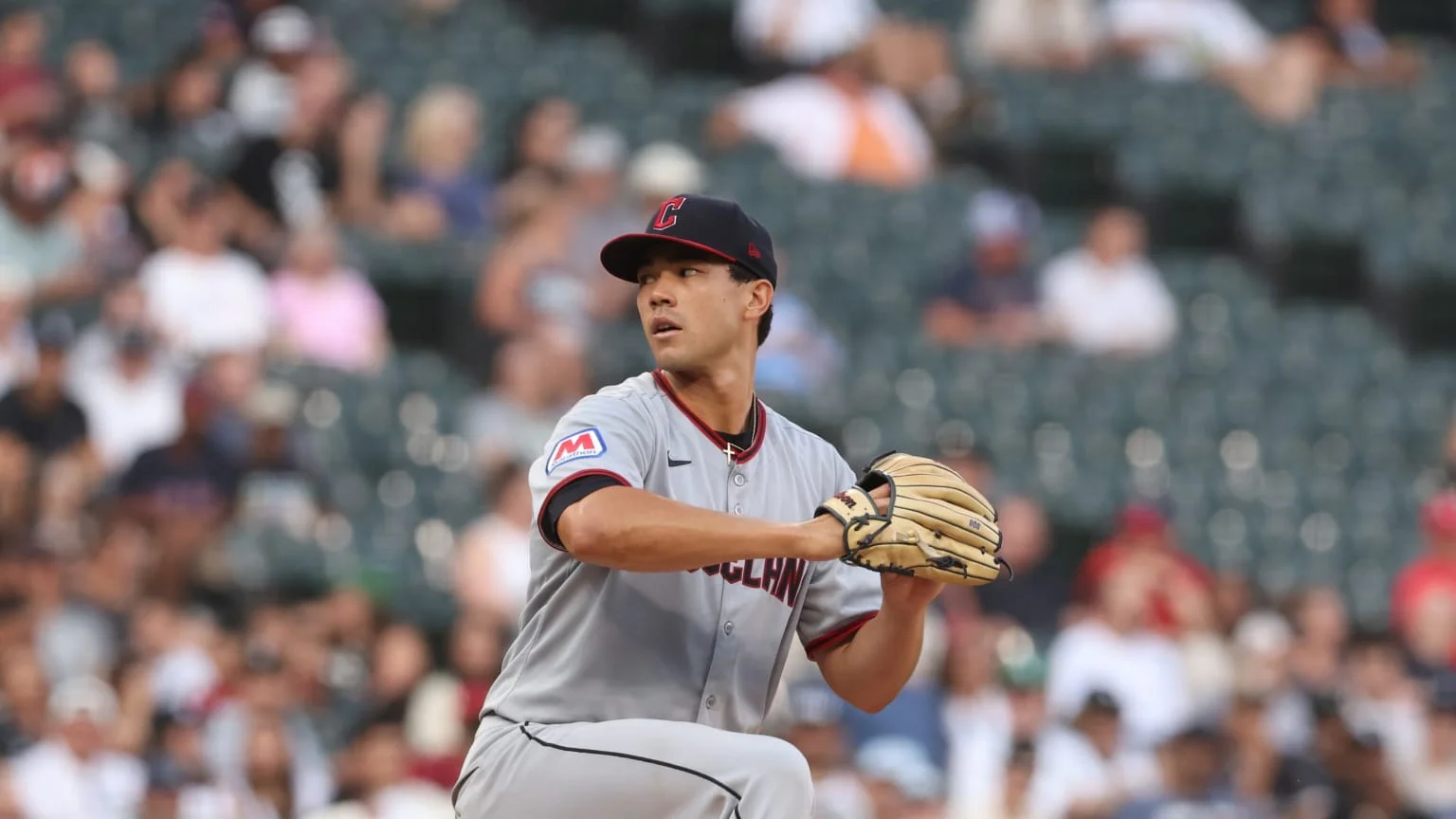
The bullpen often demands a streamlined emphasis on attacking the strike zone, forcing pitchers to make quicker decisions and focus on execution rather than prolonged strategy. Cleveland Guardians’ Joey Cantillo adopted this mindset during his early appearances out of the bullpen this season, pitching 28.1 innings in relief before transitioning to the rotation.
Reid Detmers, who recently moved to the bullpen, explained the urgency of relief pitching:
It’s more of just attacking with my stuff. As a starter, you kind of work around guys, like you’re trying to hit the corners and stuff. Where, in the bullpen, you need to attack.
—Reid Detmers, MLB Pitcher
Similarly, Dodgers reliever Ben Casparius, who began as a starter, highlighted how bullpen experience sharpened his focus:
I think the relief side of things has helped with some of my starts too, in just focusing on one pitch at a time and not projecting or looking ahead towards the next inning. It’s just gotten me into a mindset of, every inning, here’s my best stuff.
—Ben Casparius, MLB Pitcher
The accelerated pace of relief work demands a sense of urgency and maximizes intensity immediately, lessons Cantillo has absorbed into his approach when he became a starter.
Joey Cantillo’s Shift from Bullpen to Starting Rotation
Throughout the early part of this season, Cantillo internalized the idea that relief pitching leaves no time to settle in. He described this urgent mindset during a recent series against the Mets:
I think the biggest thing that I kind of put upon myself is like, ‘Hey, you don’t have time to settle in,’ When you’re coming out of the bullpen, you could be in the fifth inning, could be the fourth inning, could be the eighth inning. You don’t know how many pitches you have. There’s a sense of urgency from pitch one, like, ‘Hey, let’s get ahead; value each pitch.’
—Joey Cantillo, Cleveland Guardians Starting Pitcher
Statistically, this shift showed some results: Cantillo reduced his walk rate from a high 15% in the minors last year to 11.9% in MLB innings this year, and down further to 8.76% in a smaller sample after joining the starting rotation. Although this improvement is gradual, his attack-first mentality has become central to his pitching strategy.
Reflecting on his command earlier in the season, Cantillo admitted:
I didn’t do a great job of throwing strikes [earlier in the season]. It’s kind of why I always say, everyone knows it, but this game is simple when you’re getting ahead of guys and you’re throwing strikes.
—Joey Cantillo
He is now applying this mentality consistently, even after tough innings, like his August 3 start versus the Twins where he began with four hits but quickly shifted to attacking aggressively:
It’s something I’m trying to bring to starting. You know, the start the other day [August 3rd against the Twins], I had a tough first inning, four hits to start the game, but I attacked in the zone to start the game and had a sense of urgency. You don’t know how many pitches you’re gonna have, even though it’s a start, so let’s attack from the beginning. Kind of bringing that mindset into it. But, at the end of the day, it’s still baseball. You’re still just trying to get outs.
—Joey Cantillo
Adjustments in Pitch Selection: Embracing the Curveball
Cantillo’s pitching evolution is not only mental but also technical, highlighted by a greater reliance on his curveball. After a demotion to Triple-A in May, he received specific guidance to increase usage of that pitch, which has become a key weapon as a starter.
I’ve thrown a little less fastballs, and I’m trying to use my curveball more. When they sent me down [to Triple-A in May], they stressed to throw that curveball more.
—Joey Cantillo
The curveball stands out for its impressive movement, boasting 21 inches of vertical break and nearly nine inches of glove-side movement at 76.6 mph, placing it in the 96th percentile across Major League Baseball. Although the pitch generates a solid 34% called strike plus whiff rate (CSW), it has been more effective in disrupting hitters’ timing rather than producing swinging strikes, especially against right-handed batters.
Against righties, Cantillo’s curveball registers a 6.3% swinging strike rate, with room for improved command. Recently, he has tweaked sequencing by keeping the curveball away from hitters and using it more often in two-strike counts. Cantillo views this pitch as a tool for disruption rather than overpowering, stating:
I need to have good fastball execution, good fastball command in the zone, and then throw that curveball to both sides of the plate. When I’m landing that in the strike zone, I think it just gives hitters something else to have to think about before they see a fastball or change-up.
—Joey Cantillo
Incorporating the Slider and Expanding Arsenal vs. Left-Handed Batters
As a reliever, Cantillo rarely threw his slider, but with deeper outings as a starter, facing more left-handers requires diversifying his pitch mix. The slider, clocked at 84 mph, serves as a complementary pitch against lefties and offers deceptive movement that plays well alongside the curveball.
Out of the bullpen, I think there were times I didn’t really throw the slider. Now that I’m pitching deeper into games, I’m gonna see a few more lefties, so I gotta start throwing that slider. You gotta put in the hitter’s mind a little bit like, ‘Hey, this guy throws this pitch a little bit’ and establish that.
—Joey Cantillo
This pitch has been highly effective in his limited usage, recording a 17% swinging strike rate against left-handed opponents, no hard-hit balls allowed, and a low opponent batting average of .200 with a .350 expected weighted on-base average (xwOBA). Its slower velocity compared to the curveball makes it a valuable weapon to create timing disruption.
Dominant Foundation: Four-Seam Fastball and Changeup
Central to Cantillo’s success are his four-seam fastball and changeup. Though known more for his changeup, his fastball is his primary pitch and uniquely effective due to elite extension—he releases the ball approximately seven and a half feet ahead of the pitching rubber, nearly a foot closer to home plate than the MLB average of 6.5 feet. This additional extension makes his 91.5 mph fastball appear as if it is thrown in the mid-90s, increasing its perceptible velocity and impact on hitters.
Cantillo attributes this to early training methods:
I did a lot of Tom House when I was young, and a lot of that stuff was kind of about getting your hand far out there. Stride length was also really what we stressed when we were younger. Now, [extension] is not something I think about. It’s just kind of how I throw. The extension plays, but that’s not something I’ve ever really thought about or trained for. I’m thankful I have it, obviously.
—Joey Cantillo
Despite this advantage, Cantillo is working on regaining velocity lost this season and making adjustments to consistently throw his fastball in the strike zone:
I’m not quite throwing as hard as I used to, and I’m working on that stuff. It’s little adjustments we’re making day by day. I think for me, it’s, can we continue to see that fastball get back up to where I know it can be back into the mid-90s and throwing it in the zone.
—Joey Cantillo
The Changeup’s Role and Unique Grip
Cantillo’s changeup, noted for generating a 24.3% swinging strike rate, is a critical weapon despite its lack of typical “depth” or movement. Rather than relying on excessive drop or horizontal break, its effectiveness stems from the velocity differential compared to his fastball and the deception created by similar arm action and release point, enhanced by his extension.
Cantillo recognized that throwing the changeup aggressively in the strike zone yields more success than trying to generate chases outside the zone, often avoiding pitches that dive too far below the strike zone:
I think recently, the way it’s played, and this was something that was told to me when I first came up last year, is eliminating the change-ups that are really down under the zone. I think it plays best in the zone. It’s not like a super depthy pitch. Yes, it goes down, but the change of speed is what helps it play well. So really, I just trying to be aggressive with it and throw it in the strike zone.
—Joey Cantillo
The changeup achieves only 14.7 inches of total break and drops about 33 inches, which is less than typical changeups in the major leagues, along with limited horizontal movement. Still, its tunnel-like quality coming out of Cantillo’s hand makes it difficult for hitters to detect.
He throws the changeup inside the strike zone 44% of the time as a starter, with 59% of those pitches landing low in the strike zone and 36% over the middle of the plate, rather than targeting the corners. As a reliever, he used the pitch in the strike zone less frequently, only 38%, which highlights the strategic shift accompanying his new role.
Cantillo shared his approach to targeting with the changeup:
For the most part, I’m trying to keep it simple and be pretty middle with [the changeup]. If I’m way ahead in the count, that’s probably where I’ll shift my sights down, but I think when I’m having the most success, it’s very aggressive. No matter what the count is, I’m throwing it through the heart of the plate, through the catcher, and letting the action take it to where it is, but kind of stressing more contact with the pitch.
—Joey Cantillo
Mastering the Vulcan Changeup Grip
Cantillo’s changeup is thrown using a distinctive Vulcan grip, named after the Star Trek Vulcan salute, where the baseball is lodged between the split formed by the middle and ring fingers. This grip functions similarly to a split-finger changeup, adding to the pitch’s unique feel and movement.
He recalled the origins of the pitch’s grip and his development:
My high school coach taught it to me, but I didn’t have to throw it that much in high school, and I didn’t know where it was going at all. Then, when I got drafted by the Padres, our throwing program was, like, ‘You’re gonna throw change-ups. No matter how far you throw, you’re gonna throw change-ups every day at 90 feet.’ The first couple of months of rookie ball, I’d throw it, and I had no idea where it was going. You’re splitting it deep in your fingers, so the feel for it took a little bit, but I think it’s like anything else. You start throwing it as hard as you can, and you get a feel for throwing it and making an adjustment. That’s kind of a day-by-day thing. There are days when I gotta raise the sights, and there are days when I gotta lower the sights.
—Joey Cantillo
The time spent in the bullpen sharpened Cantillo’s ability to attack the strike zone with his changeup, boosting his effectiveness and opening a critical avenue for growth in his starting role.
Consistency and Opportunity Ahead for Cantillo and the Guardians
Looking forward, Cantillo is committed to improving his consistency, a hallmark of sustained success at the Major League level. He expressed his aspirations in clear terms:
Honestly, I think [my goal for the final two months is] just continuing to get better. There’s been some inconsistencies, and I think, like everybody else here, I want to be as consistent as possible. That’s what makes a good big leaguer.
—Joey Cantillo
Amid changes to the Cleveland Guardians’ roster, including Luis L. Ortiz placed on paid administrative leave following an illegal gambling investigation and the trade of ace Shane Bieber to the Blue Jays, Cantillo’s spot in the rotation is firmly established. He is pitching every five days for a team that ranks third in baseball over the past 30 days and currently holds one of the last playoff positions in the American League. The Guardians have earned victories in four of Cantillo’s last six starts, a reflection of his growing impact.
On the importance of his role, Cantillo stated:
Honestly, up here, it’s, it’s a good day if you win the baseball game. You know, I contribute to the team once every five days. It’s do your job, pitch deep into the game, give the team a chance to win. I think if I’m consistent, and in the process, I’m filling up the strike zone, being aggressive with the change-up, good things are going to happen.
—Joey Cantillo
His next five starts, scheduled against strong lineups such as the Braves, Diamondbacks, Rays, and Red Sox, present opportunities for further growth and offer promising outlooks for fantasy baseball managers.