


The Buffalo Bills are facing a challenging situation as they try to finalize their receiver group for the 2025 season. While the top three receivers—Khalil Shakir, Keon Coleman, and Joshua Palmer—appear secure, the competition among the remaining candidates has created a complicated scenario for head coach Sean McDermott.
The team typically keeps five receivers, occasionally expanding to six spots, leaving limited room for players like Curtis Samuel, Elijah Moore, Tyrell Shavers, and Laviska Shenault. Each of these players has a strong argument for making the roster, complicating the decision-making process.
Curtis Samuel’s status is especially precarious given his contract situation. With a three-year, $24 million deal and $15.02 million guaranteed, including a $6.91 million base salary set for 2025, releasing Samuel would free up minimal salary cap space—only about $600,000. The decision thus comes down to whether his expected contributions justify his salary commitment.
Special Teams Roles and Salary Cap Considerations Could Tip the Scale
Elijah Moore offers a different profile with a fully guaranteed one-year contract worth $2.5 million, along with versatility as a slot receiver and a key special teams contributor, especially in return roles. In a scenario where Buffalo maintains just five receivers, Moore’s multifaceted skill set could be valuable.
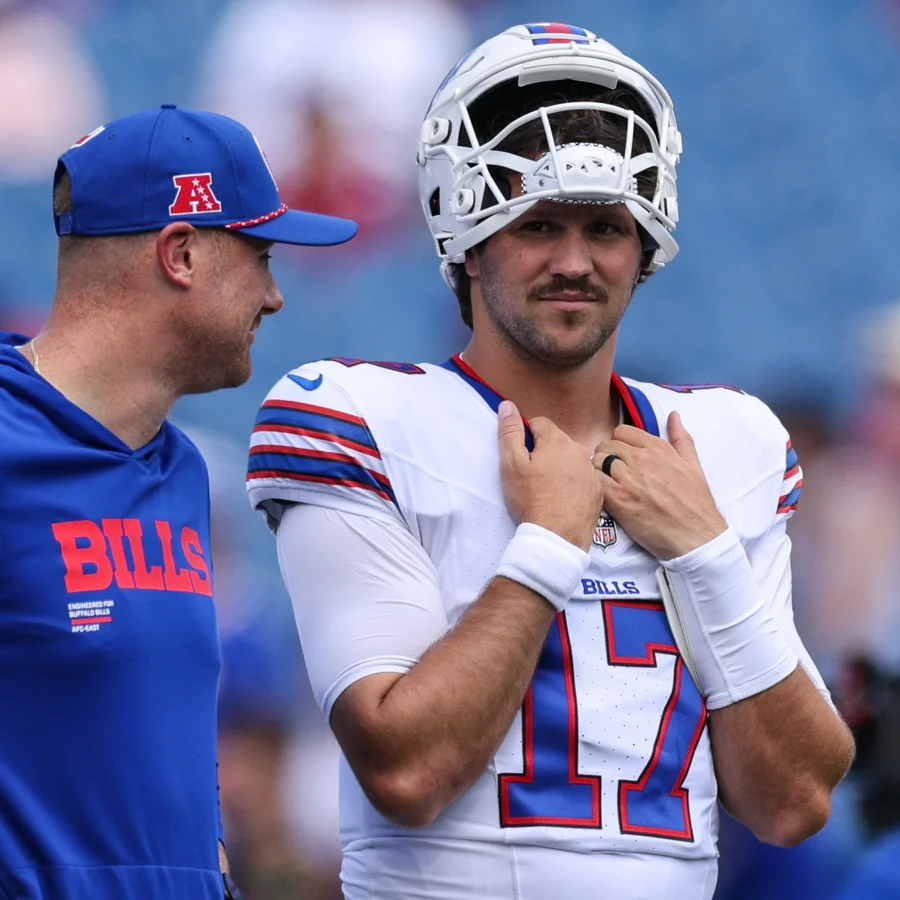
Tyrell Shavers has gained momentum during training camp, showing the ability to play multiple receiver positions. However, his limited involvement in essential special teams units until late in the preseason opener raises concerns, as these roles often help determine who secures the fifth or sixth receiver spots by contributing to punt protection or kickoff coverage units.
Laviska Shenault adds complexity to the equation. While he has not stood out as a receiver during camp, his extensive special teams presence, demonstrated in a game against the Giants, highlights his utility. Additionally, Shenault provides natural depth at the X receiver position and holds a salary with a manageable cap hit, giving Buffalo affordable insurance on the roster.
McDermott’s final roster decisions will likely hinge on fine margins—such as a crucial return, a vital special teams stop, or the tactical advantage of preserving cap space later in the season.
How James Cook’s Role May Ease Pressure on Buffalo’s Receivers and Josh Allen
Amid the uncertainty at wide receiver, another roster move could ease the burden on quarterback Josh Allen. Running back James Cook recently secured a four-year, $48 million contract extension after a standout 2024 campaign with 1,009 rushing yards on 207 carries (4.9 yards per carry) and 16 rushing touchdowns, plus 258 receiving yards and two receiving scores.
With Cook anchoring a run-focused and play-action offensive strategy, Allen may face less pressure to carry the offense through heavy passing volume. This shift reduces the need for Buffalo’s fourth receiver to produce large receiving numbers and instead emphasizes qualities like fitting the offensive scheme, contributing on special teams, and providing reliability.
This subtle strategic change could play a key role in resolving the Bills’ crowded wide receiver competition as McDermott balances talent, roles, and salary cap constraints heading into the 2025 season.