
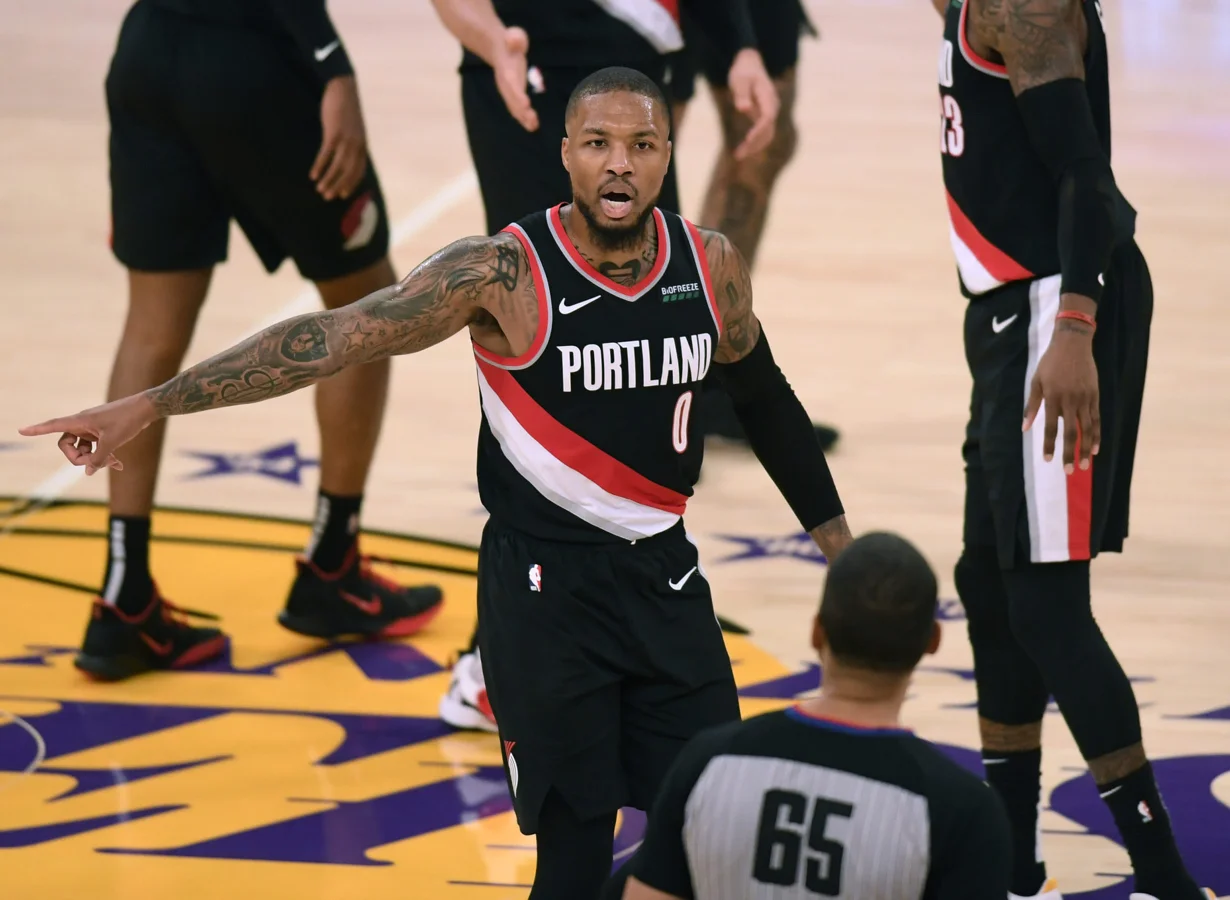

The Portland Trail Blazers, led by star Damian Lillard, face a precarious future as the city of Portland commits $800 million in bonds toward building a Major League Baseball stadium rather than investing in a modern <a href=”https://www.buzzineintl.com/category/basketball/nba/”>NBA arena. This decision, approved earlier this summer by Oregon lawmakers, raises serious questions about the Blazers’ long-term viability in the city, threatening to replicate the painful loss experienced by Seattle’s former NBA team, the SuperSonics.
Portland’s Sports Scene at a Crossroads Over Baseball and Basketball Priorities
The crux of Portland’s dilemma lies in balancing the interests of the established NBA franchise—the Trail Blazers—and the significant push to secure an MLB expansion team. Oregon’s recent passage of Senate Bill 110, which authorizes $800 million in future-tax backed bonds for a new baseball stadium at South Waterfront’s Zidell Yards, signals the city’s strong financial commitment to Major League Baseball. However, the funding structure, reliant on prospective income taxes from players and personnel of the anticipated MLB team, means the money will not come from current city revenues.
Blazers owner Tom Dundon, who also leads the <a href=”https://www.buzzineintl.com/category/hockey/nhl/”>NHL’s Carolina Hurricanes, finds himself navigating conflicting priorities. As David Samson highlighted on Nothing Personal with David Samson,
“It is sort of big news that the Carolina Hurricanes owner is going to bid about $4 billion as a valuation of the Trailblazers.”
Despite Duchon’s pledge of loyalty to the franchise, the question remains whether such declarations will withstand pressure when a venue renewal or relocation decision becomes unavoidable.

The Trail Blazers extended their lease at the aging Moda Center through 2030, but concerns loom beyond that date, as Samson warns,
“but after 2030, the Trailblazers really have no place to play.”
The Moda Center, opened in 1995, now ranks among the oldest and most outdated arenas in the NBA, suffering from dilapidated infrastructure and fan experience deficits when compared to newer venues in San Francisco, Sacramento, and Milwaukee.
Historical parallels to the Seattle SuperSonics’ relocation are haunting. When Clay Bennett purchased the SuperSonics in 2006, he publicly denied any plans to move the team. Yet, two years later, the franchise was uprooted to Oklahoma City, leaving a lasting wound for the region and its basketball fans. For Portland, the stakes are equally high, with fears growing that the city’s focus on an MLB expansion may overshadow the Blazers’ needs.
Challenges With the Moda Center Highlight the Blazers’ Precarious Position
Though the Moda Center still functions adequately, it is becoming increasingly clear that its future viability is limited. The arenas driving today’s NBA revenues and fan engagement are state-of-the-art facilities that attract top talent, premium sponsorships, and immersive fan experiences. Portland’s venue, by contrast, suffers leaks, aging concourses, and design shortcomings that compromise its competitiveness.
Samson expressed urgency on this matter, stating,
“Because while we’re here in 2025, you’d say, oh, we got five years. What’s the big deal? These things take years.”
The five-year lease extension buys time but does not solve the fundamental problem: there is no clear plan or funding for a replacement or restoration of the arena beyond 2030.
With $800 million redirected toward baseball stadium bonds, the question becomes: where will the billions needed for a modern NBA arena come from? This financial tug-of-war places the Blazers’ future in jeopardy and fuels skepticism about Portland’s commitment to keeping its basketball franchise.
The Growing Pressure of MLB Expansion Efforts in Portland
Portland’s pursuit of a Major League Baseball expansion team, championed by commissioner Rob Manfred during his final term ending in 2028, represents a significant gamble for the city. Multiple other cities, including Nashville, Charlotte, Salt Lake City, and Montreal, are also vying for MLB expansion, intensifying competition for the limited slots.
The city’s MLB bid centers on the proposed ballpark located on 33 acres of prime South Waterfront real estate, a show of bold intent. However, the cost of building the stadium is expected to reach approximately $2 billion, with ownership responsible for the majority of funding beyond the $800 million authorized by the state. According to Desert.com,
“the bill notes the expected cost of building an MLB stadium in Portland is approximately $2 billion, meaning the remainder of the funding for a ballpark will fall on the team.”
This raises serious concerns about whether Portland, a mid-market city, can sustain two enormous sports infrastructure projects simultaneously. While cities like New York and Los Angeles have the economic scale to support multiple high-profile venues, Portland’s economy and population base may struggle to keep pace with such demands.
Damian Lillard and the Blazers’ Competitive Outlook Amid Infrastructure Uncertainty
For Damian Lillard, his teammates, and the Blazers’ management, the off-court issues cast a long shadow over the team’s competitive journey. The franchise is currently in transition, gradually moving from the Dame-led era toward developing a younger core that could contend for future playoff success. Yet, off-court instability—particularly surrounding arena financing and ownership commitments—risks undermining the team’s appeal to free agents and coaches.
Owner Tom Dundon’s $4 billion acquisition of the Trail Blazers, while significant, reveals the stakes involved. Known for his sharp business acumen rather than sentimentality, Dundon faces a tough calculus, balancing financial realities against community and fan expectations. The presence of limited local partners in his ownership group offers some goodwill, but it cannot fill the void left by aging infrastructure or political uncertainty.
NBA Commissioner Adam Silver has publicly dismissed relocation rumors, with Samson confirming,
“However, the Trailblazers aren’t going to relocate. Adam Silver right now has no interest in relocation. He is all about expansion.”
Nevertheless, fans recall similar assurances offered to Seattle, which ultimately failed to prevent the SuperSonics’ departure.
The Risk to Portland’s Identity and the Broader Implications
The Trail Blazers have been a cornerstone of Portland’s identity for over 50 years, representing much more than sports. Their potential loss or diminished status would reverberate widely across the community, damaging the city’s cultural fabric and economic ecosystem.
The current direction, which favors MLB expansion over NBA reinvestment, highlights the challenging choices Portland faces. Attempting to fund two multi-billion-dollar stadium projects in a midsize market risks stretching resources too thin and alienating loyal supporters of one or both leagues. The potential consequence is a scenario in which neither the baseball nor the basketball franchise secures a strong, sustainable home—echoing the cautionary tale of Seattle’s lost SuperSonics.
For now, the Blazers’ fans are urged to trust owner Dundon’s declarations of permanence. Yet, the long-term outlook remains fragile, with unresolved arena questions and political winds shifting rapidly. The “Damian Lillard Blazers MLB Crisis” continues to unfold as a tense and uncertain saga where the future of basketball in Portland rests precariously on the city’s sports priorities.