
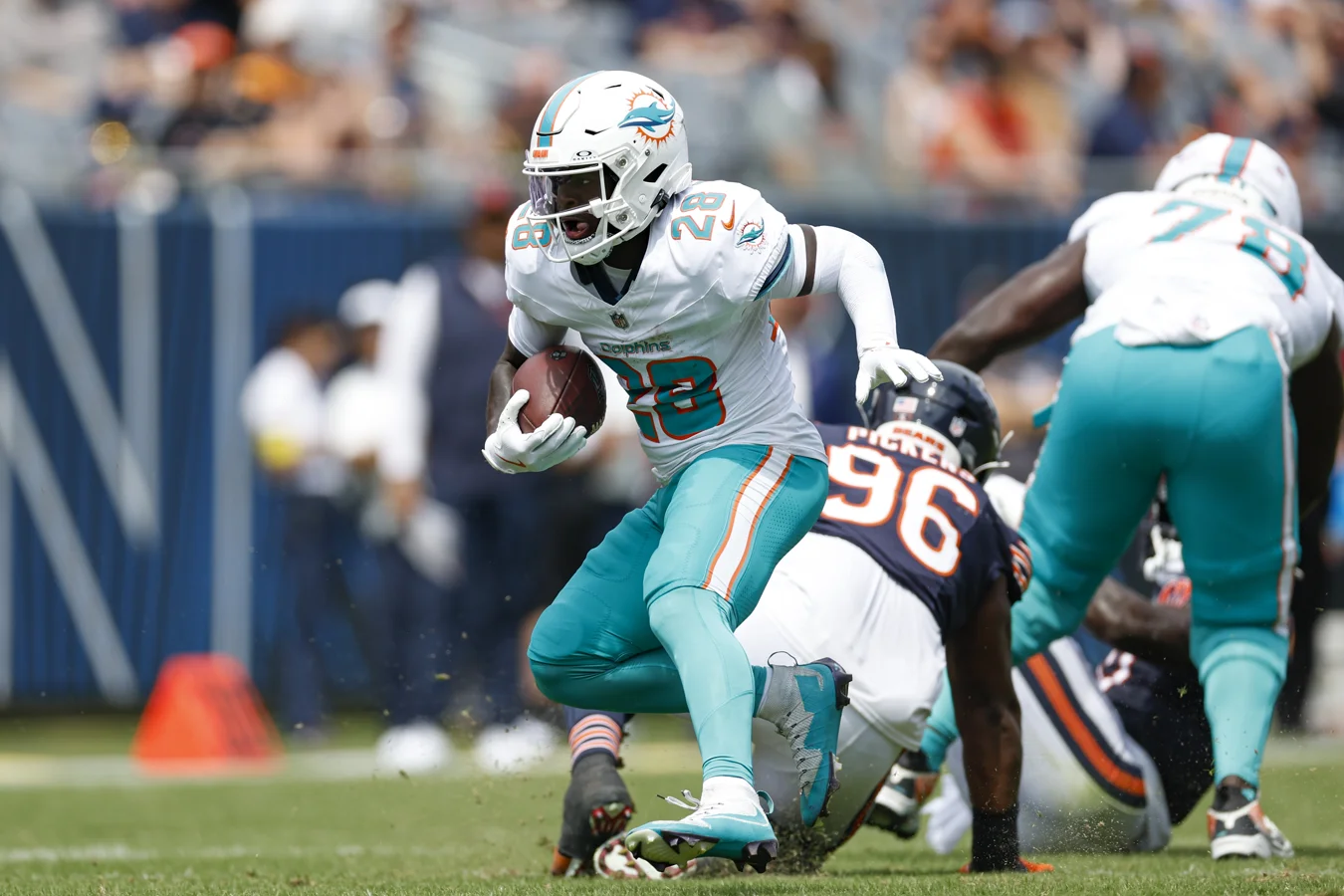

The Miami Dolphins offense, already under scrutiny during the offseason, now faces uncertainty due to De’Von Achane’s injury concerns as the regular season approaches. The 23-year-old running back, considered a vital element of Miami’s offense, sustained a lower-body soft tissue injury that jeopardizes his readiness for Week 1 against the Indianapolis Colts.
Details on Achane’s Injury and Team’s Outlook
Following Miami’s preseason game in Detroit, head coach Mike McDaniel revealed to reporters that Achane had suffered a soft tissue injury affecting his lower body. While the coach indicated the recovery timeline could range from several days to weeks, he expressed cautious optimism about Achane’s availability for the season opener. However, McDaniel’s vague update has raised concerns among observers about the running back’s ability to suit up when the regular season begins.
Running Back Depth and Challenges Beyond Achane
Achane has been arguably the most impactful player in Miami’s offense since his 2023 breakout, but the Dolphins’ depth at the running back position appears limited. Raheem Mostert, who previously complemented Achane, is no longer with the team, leaving Miami’s backfield thin in 2025. Jaylen Wright, a third-year player, recorded modest numbers last season, gaining only 249 yards on 68 carries. Beyond Wright, Miami added Oklahoma State’s Ollie Gordon III through the sixth round of the draft, although he is unlikely to see significant action this year.
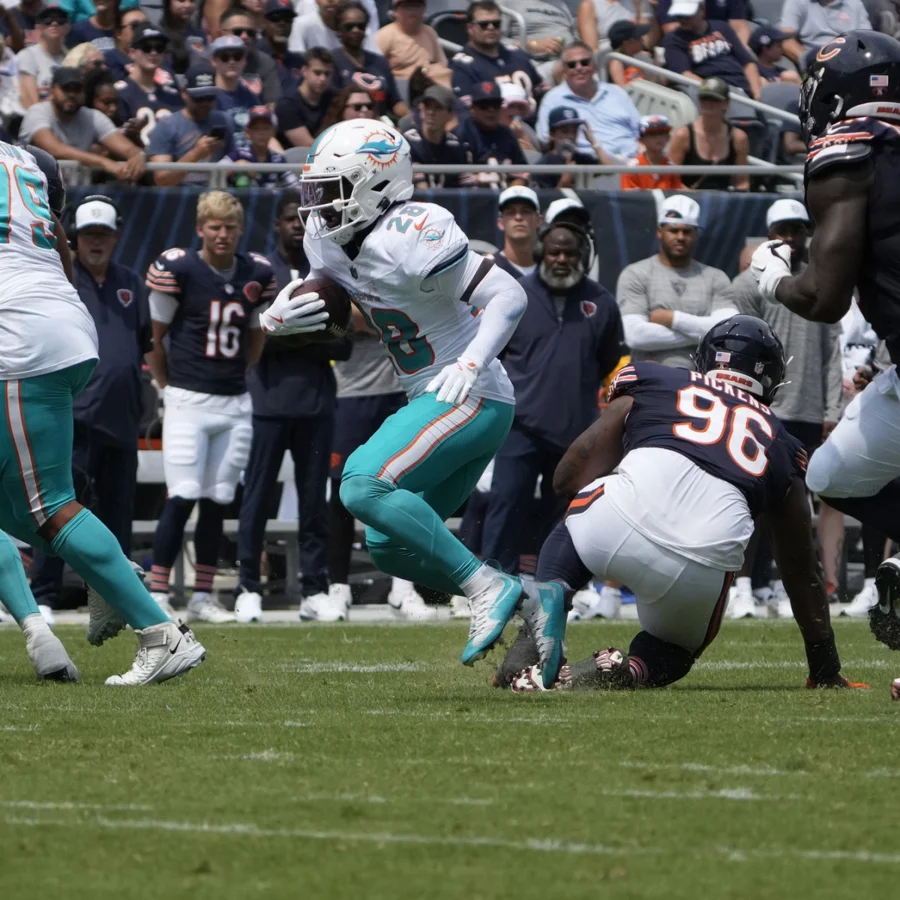
With Alexander Mattison sidelined for the season due to a long-term injury, Miami’s remaining available backs include Mike Boone and Aaron Shampklin, neither of whom have surpassed 100 rushing yards in recent campaigns. This scarcity heightens the importance of Achane’s health, as the Dolphins cannot afford to lose their leading rusher for an extended period.
Potential Consequences if Achane Misses Time
Miami’s offense has historically relied heavily on its passing game, but the running back’s role remains crucial, especially given the inconsistencies at quarterback with Tua Tagovailoa and the receivers like Waddle and Tyreek Hill. Without Achane, the Dolphins may struggle to maintain offensive balance. While Wright has shown flashes as a change-of-pace option, he lacks the experience and production expected of a starter. Should Wright be forced into a more prominent role, the team‘s overall offensive effectiveness could significantly decline.
Last season, Achane played all 17 games, but injury issues have marred parts of his career. In 2023, a knee injury sidelined him for six contests, but Mostert’s presence helped to cushion the impact. This season, with fewer reliable backs available, Miami faces a precarious situation if Achane misses any meaningful time.
The Broader Impact on Miami’s Offensive Outlook
Even before Achane’s injury surfaced, Miami’s offense was considered one of the league’s most uncertain units due to concerns surrounding Tagovailoa’s injury history and uneven performances from leading receivers. Achane’s current health questions add to a growing list of challenges confronting the Dolphins as they prepare for the new season.
If Achane’s ailment proves more serious than initially indicated, the Dolphins may struggle to compete at a level expected by their fans and analysts. Such a scenario risks casting the Dolphins as a team significantly below average, further complicating their efforts to turn around their offensive struggles.
Looking Ahead for Miami’s Offense
The Dolphins must monitor Achane’s recovery closely and prepare contingency plans to mitigate potential setbacks. The running back’s availability will likely shape Miami’s offensive strategy moving forward, emphasizing the critical nature of his role. With the team’s backfield depth thin and uncertainty lingering around offensive leaders, Achane’s health status could determine the trajectory of Miami’s 2025 campaign.