
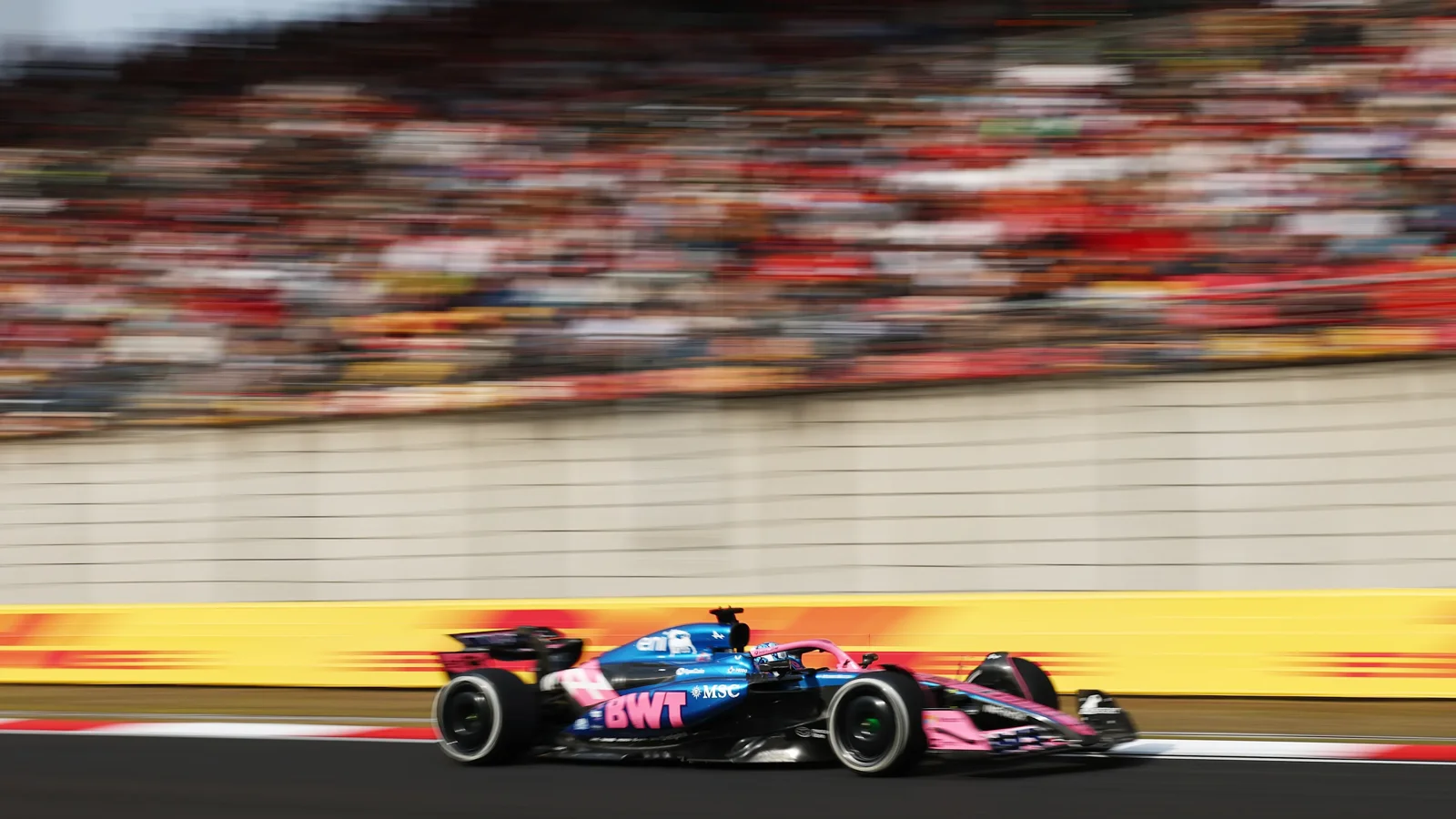

In the 2025 Formula 1 season, Alpine has emerged as the highest-scoring team occupying the last place in the constructors’ championship, accumulating a record 20 points. Despite being at the bottom of the standings after 14 grands prix, their points total is unprecedented for a team in this position, highlighting a unique situation in the fiercely competitive F1 field.
The accumulation of 20 points by Alpine this season surpasses previous last-place teams under different eras’ scoring systems. For instance, Toro Rosso gathered eight points in 2009 over 17 races, but even recalculated under today’s scoring, that total would reach 29 points. Alpine’s performance marks a significant achievement given how the points system and race attrition levels have evolved.
Comparing Historical Performance of Backmarker Teams
For context, the 2009 Toro Rosso team earned its limited points through drivers Sébastien Bourdais and Sébastien Buemi with finishes in the lower top eight. Qualifying trends offer further insight—Toro Rosso advanced past Q1 in 14 of 34 sessions that season, whereas Alpine’s drivers have progressed out of Q1 18 times in the current count of 34 sessions including sprints, or 16 out of 28 in traditional qualifying rounds.
Alpine’s points haul has been almost entirely driven by Pierre Gasly, who secured the team’s best finish of sixth place at Silverstone. Their second drivers, Jack Doohan and Franco Colapinto, have underperformed relative to Gasly, never breaking into the top 12 on race Sundays this year. This puts additional pressure on the team to improve overall consistency if it hopes to avoid finishing last.

The Challenge from Haas and Other Recent Backmarkers
Alpine’s battle to escape last place remains difficult, with Haas currently holding a 15-point advantage. Haas’s total of 12 points from the 2023 season represents the second-highest scoring last-placed team tally in recent history, achieved over a 22-race calendar. Drivers Nico Hülkenberg and Kevin Magnussen contributed to that total, with Hülkenberg’s seventh place in Melbourne and standout qualifying performances such as a second place in Canada highlighting the team’s occasional competitiveness.
In qualifying terms, Haas drivers reached the final qualifying segment, Q3, 14 times in 2023, though translating strong qualifying positions into race day results often proved elusive. A notable example was Hülkenberg’s promising start from second in Canada, which faded to seventh before a safety car intervention ended his chance of scoring points.
Other Noteworthy Last-Place Teams Over the Years
Looking further back, Minardi’s 2005 season stands out as a notable example of a last-placed team scoring points, collecting seven points mainly due to the unusual circumstances at the six-car United States Grand Prix. Despite this, Minardi was generally the definitive backmarker that year, with their highest qualifying results peaking at 13th place for Patrick Friesacher in Monaco and Christijan Albers in Japan. Their best finishes outside the Indianapolis GP were 12th place results by Friesacher in Bahrain and Albers in Belgium.
Historically, there have been thirteen occasions when the last-placed team earned championship points, spanning nine different teams. The first recorded instance dates back to 2002 when Arrows picked up two points thanks to sixth-place finishes by Heinz-Harald Frentzen. Since then, teams such as Minardi (2004, 2005), Spyker (2007), Toro Rosso (2009), Manor (2016), Sauber (2017, 2024), Williams (2018, 2019, 2022), Haas (2023), and currently Alpine have all managed to score points despite finishing last in the standings.
Significance of Alpine’s Record and Outlook for the Season
Alpine’s position as the best last-placed team highlights the shifting dynamics of Formula 1 competition, where even the weakest teams are managing to extract points, reflecting increased performance parity or changing race conditions. While Pierre Gasly’s individual efforts have underpinned Alpine’s points, the lack of contribution from their second drivers presents a clear weakness.
Looking ahead, Alpine faces significant challenges to climb out of last place, particularly with Haas holding a substantial points lead. The team’s ability to improve qualifying consistency and race finishes, especially from Doohan and Colapinto, will be critical. Nonetheless, Alpine’s record points total for a last-place team already marks the 2025 season as a unique chapter in F1 history.