
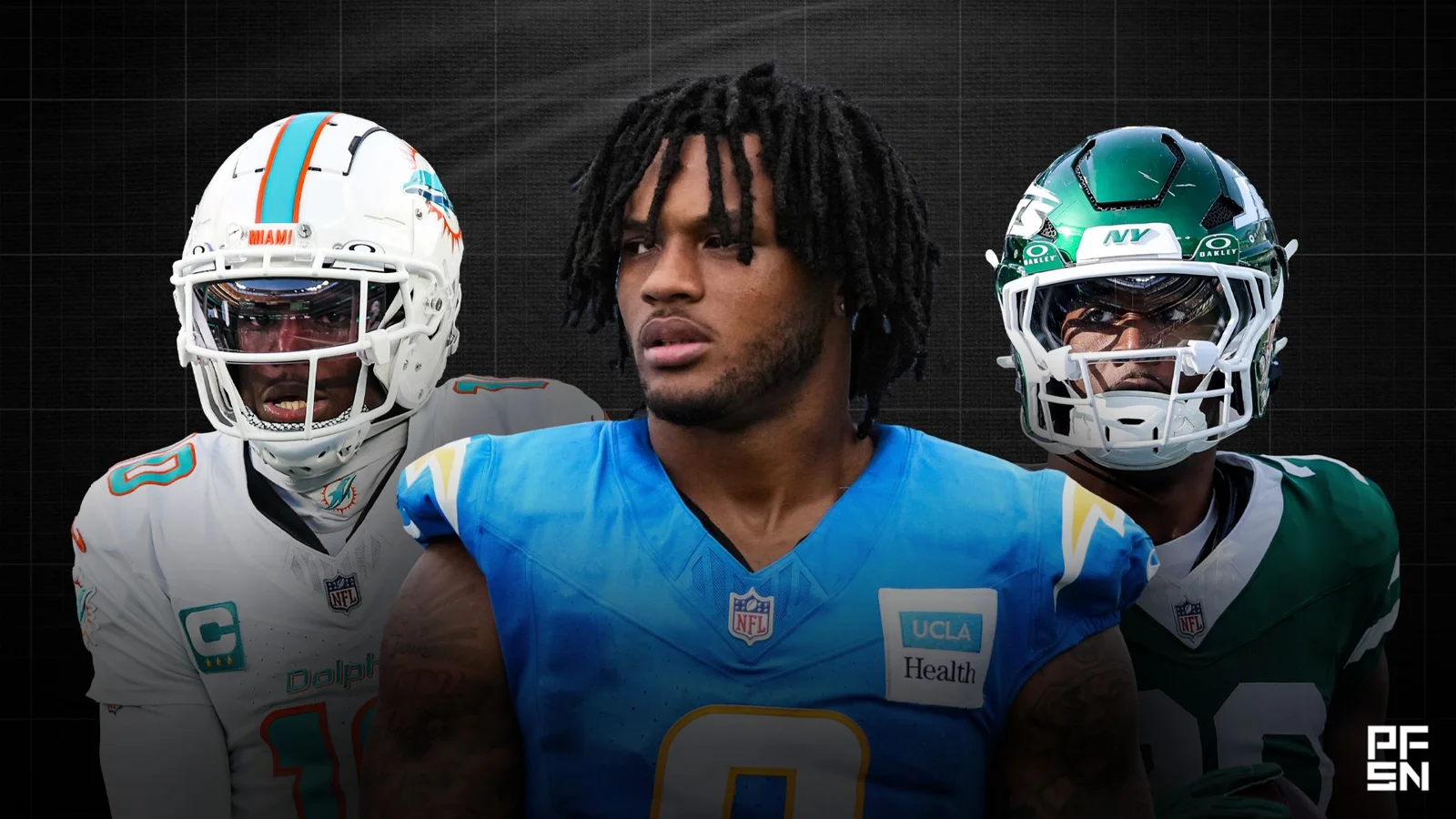

Each fantasy football season features players whose draft value appears overstated compared to their realistic potential. Factors such as inflated hype, shifting team roles, or prior accomplishments often push these players higher in drafts than their expected output might justify. This article explores why Breece Hall fantasy football bust status is becoming a serious concern, alongside why seasoned stars Tyreek Hill and Mark Andrews present significant risks in 2025 drafts.
Tyreek Hill’s Declining Usage and Aging Speed
Tyreek Hill’s performance faltered noticeably in the 2024 season, affected in part by injuries to both himself and quarterback Tua Tagovailoa. Entering his 31-year-old season, Hill’s reliance on elite speed raises concerns as such explosiveness naturally diminishes with age. His target share dramatically decreased from 37.8% in 2023 to just 24.1% in 2024, while his efficiency dropped as well, with yards per catch falling from 15.1 to 11.8 and yards after catch nosediving from 690 to 306.
Further complicating Hill’s outlook is uncertainty around his rapport with Tagovailoa, especially after Hill made pointed remarks late in the previous season. With the possibility of Hill being traded or signed elsewhere before or during the season, his current average draft position (ADP) of 25 carries considerable risk for fantasy managers.
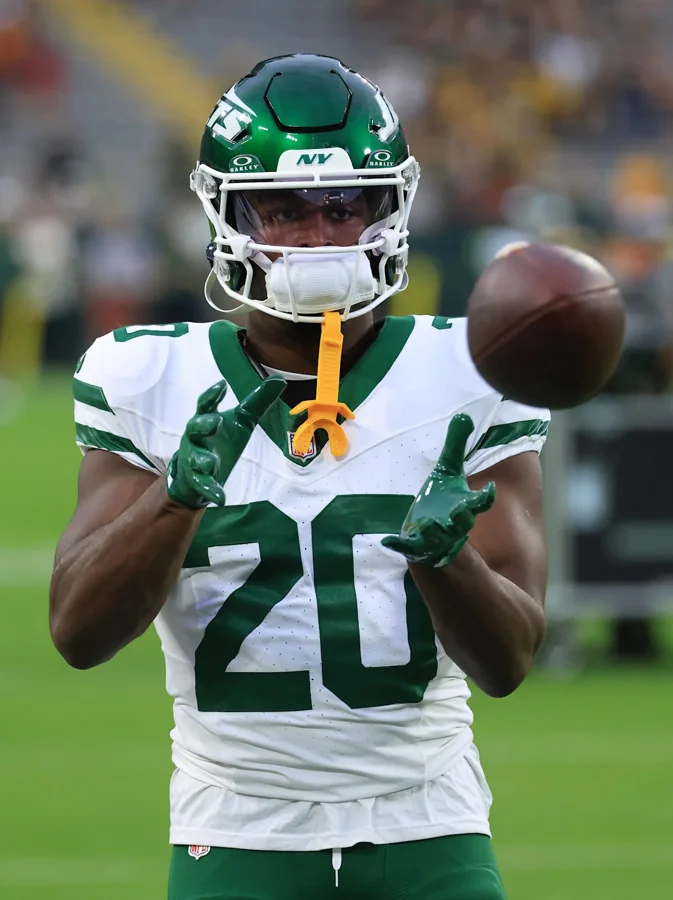
Why Breece Hall’s Value Is Deteriorating With the Jets
Breece Hall’s fantasy outlook has dimmed due to the arrival of Justin Fields, whose tendency to handle many designed run plays and scrambles reduces opportunities for running backs. Fields also rarely delegates check-down passes, previously boosting Hall’s value as a receiving back. In 2024, Hall posted a career-low average of 4.2 yards per carry on 209 rush attempts for 876 yards, with a notably high 21.3% stuff rate, ranking 30th among 40 qualifying backs.
The New York Jets’ offensive line struggled significantly, earning a poor 64.0 (D) grade and limiting the rushing game’s effectiveness. Running backs averaged just 0.78 yards before contact per rush, placing 23rd, with a running back win rate (RBWR) even lower at 29th. Combined with head coach Aaron Glenn’s tendency to split backfield work and overall offensive difficulties, Breece Hall becomes a questionable second-round pick unless he falls toward the fifth or sixth rounds.
Mark Andrews Faces Challenges Maintaining Top-Tier Tight End Status
Mark Andrews experienced a career-low target share in 2024 but nonetheless secured 11 touchdowns. However, these scoring numbers are expected to regress amid the rise of Isaiah Likely, the continuing progress of wide receiver Zay Flowers, Baltimore’s addition of DeAndre Hopkins, and Andrews entering another season older. His target share fell to 15%, ranking 20th among tight ends, which coincided with his finishes of 20th in targets, 14th in receptions, and ninth in yards.
These metrics suggest Andrews’ receiving role is diminishing, despite the touchdown total that bolstered his fantasy production last year. Maintaining top-tier tight end status in 2025 will be challenging.
Baker Mayfield’s Expected Regression Following Career Year
Baker Mayfield delivered a surprising 2024, achieving career highs with 41 touchdown passes, 4,500 passing yards, and 22.3 fantasy points per game, ranking him as the QB4 last season. Yet, his touchdown tally was an outlier, eclipsing his previous best by 15 scores. This spike likely inflates expectations that may not be sustainable, especially with star receiver Chris Godwin possibly beginning the season on the physically unable to perform (PUP) list.
Baker Mayfield had a touchdown rate of 7.2% last year.
There’ve been 15 quarterbacks since 2011 with next-season data who were +/- 0.5% in TD rate to Mayfield’s 2024 number. Every single one scored fewer fantasy points the following year. The group averaged a drop of 4.2 PPG.
— JJ Zachariason, Analyst
Mayfield also faces instability with a new offensive play-caller for the fourth consecutive season, adding to the uncertainty. Fantasy managers should be wary of drafting him early, instead considering him only if he falls near pick 100 or later.
The Significance of These Risks for 2025 Fantasy Draft Strategy
The examples of Breece Hall, Tyreek Hill, Mark Andrews, and Baker Mayfield illustrate common pitfalls in fantasy drafts where player values appear disconnected from their real-world roles and production trajectories. Hall’s diminished role in a run-heavy offense featuring Justin Fields signals caution for running backs from similar contexts, while Hill and Andrews highlight how aging and roster changes can erode the value of even established stars.
Fantasy managers aiming to optimize drafts in 2025 should examine current ADPs critically, resisting hype driven by previous seasons and touchdown outliers. Recognizing these red flags can prevent costly picks and help identify safer, more sustainable options as the season approaches.