
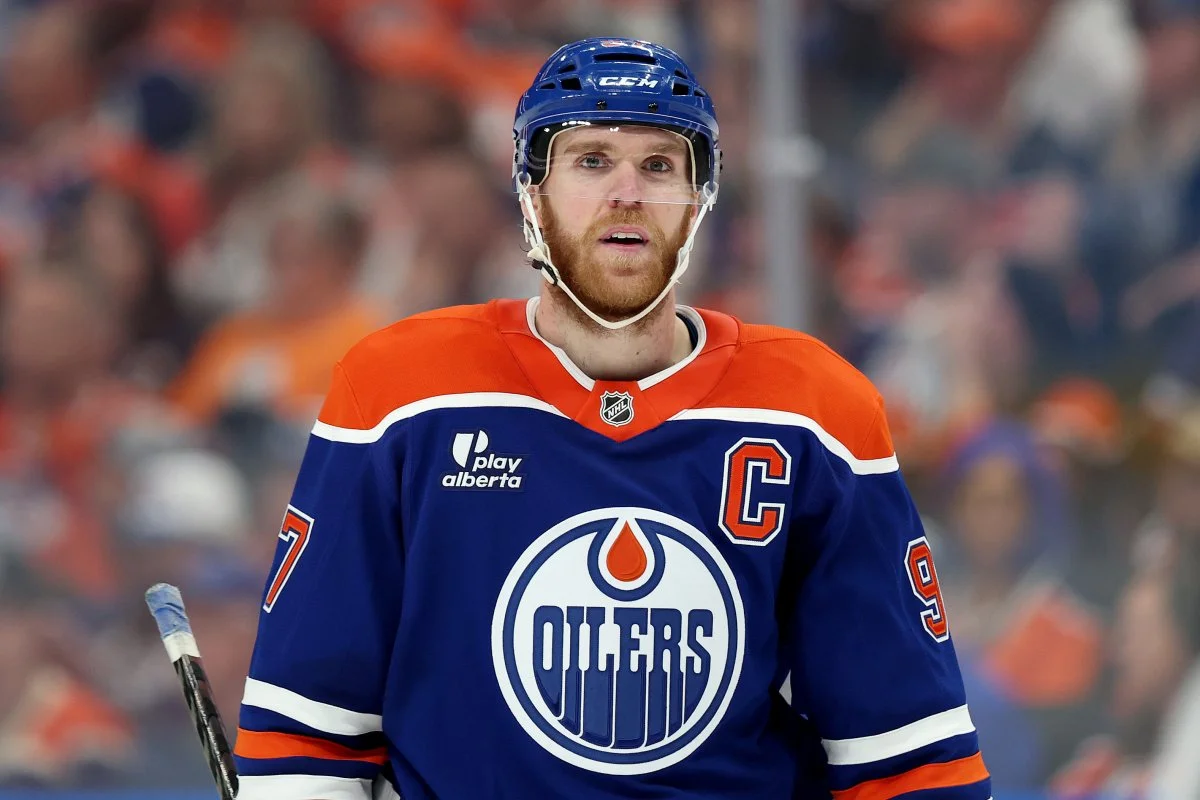

The Edmonton Oilers secured the top pick in the 2015 <a href=”https://www.buzzineintl.com/category/hockey/nhl/”>NHL Draft Lottery, selecting Connor McDavid as their franchise cornerstone with hopes of ending years of underperformance. Since then, the team has returned to prominence with consistent playoff appearances post-pandemic, including two Stanley Cup Final trips and multiple deep runs in the Western Conference. Despite this progress, the Oilers have yet to capture the Stanley Cup, hindered largely by critical management errors that have undermined McDavid’s championship potential.
Failures in Drafting and Player Development Hindered Long-Term Success
The Oilers’ inability to draft and cultivate talent beyond McDavid has been a persistent weakness, significantly weakening their roster depth. Although first-round selections such as Jesse Puljujarvi, Kailer Yamamoto, Evan Bouchard, Philip Broberg, and Dylan Holloway were promising between 2016 and 2020, only one remains with the team, underscoring poor development and a lack of trust in emerging players. Post-first round, the franchise struggled to integrate any impactful talent, with Ryan McLeod—now departed—being the lone notable exception.
Draft day has also been marked by costly missteps. In 2021, the Oilers traded down from the 20th pick, bypassing highly rated goalie Jesper Wallstedt to select Xavier Bourgault at 22nd overall. Bourgault failed to meet expectations, while Wyatt Johnston, chosen shortly after, is emerging as a top-level talent. Such decisions have long-term ramifications, depriving Edmonton of valuable assets at crucial positions.
One of the most damaging moves was a 2015 trade by then-GM Peter Chiarelli, who sent two picks to the New York Islanders for defenseman Griffin Reinhart. The Islanders used one of those picks to select Mat Barzal, who developed into a prolific scorer with 462 points in 530 games, whereas Reinhart barely made an impact in Edmonton. This transaction remains a glaring example of erratic decision-making that deprived the Oilers of a potential key contributor alongside McDavid.
Letting Key Young Players Leave Damaged Team Depth
Another major managerial error surfaced during the 2023-24 season when the Oilers failed to re-sign promising young forwards Dylan Holloway and defenseman Philip Broberg. Both players departed via offer sheets, a move that undercut the team’s youth movement ambitions. Instead of prioritizing their homegrown talent, Edmonton opted to sign veterans Jeff Skinner and Viktor Arvidsson, who carried similar cap hits yet contributed limited playoff effectiveness and were frequently scratched.
This choice replaced youthful speed and potential with experienced players past their prime, detracting from the team’s overall pace and dynamism. Holloway and Broberg could have provided more meaningful playoff impact, making their departure a significant setback tied directly to management’s undervaluation of promising talent.
Choosing Ken Holland Over Bill Zito Shaped the Franchise’s Direction
After dismissing Peter Chiarelli, the Oilers hired Ken Holland as general manager in 2019, turning down Bill Zito, who was also in contention. While Holland brought experience, Zito went on to build the Florida Panthers into championship contenders, orchestrating trades to acquire stars like Matthew Tkachuk, Sam Bennett, and Brad Marchand and winning consecutive Stanley Cups.
The franchise’s lingering struggle to break through the Stanley Cup barrier raises questions about this pivotal hiring decision, as Zito’s success with the Panthers contrasts sharply with the Oilers’ inability to surround McDavid with an elite supporting cast. This choice reflects a missed opportunity to accelerate Edmonton’s ascent to the league’s elite.
Heavy Contracts for Darnell Nurse and Jack Campbell Constrain the Salary Cap
Financial commitments to defenseman Darnell Nurse and goaltender Jack Campbell have further restricted the Oilers’ roster flexibility. Nurse’s eight-year contract with a $9.25 million cap hit, combined with a full no-movement clause through 2027, limits the team’s ability to address other roster needs. While a reliable NHL defender, Nurse’s compensation reflects an elite-level salary that he has not consistently justified.
Similarly, the signing of Jack Campbell to a five-year, $5 million contract in 2022 was a gamble that failed to pay off, culminating in a buyout after a disappointing performance marked by a 3.53 goals-against average and .886 save percentage. This misstep burdened the Oilers with dead cap space through 2030, impeding investment in key positions such as goaltending. Although the 2022 free-agent goalie market was thin, alternatives like Marc-Andre Fleury and Darcy Kuemper were overlooked, intensifying the opportunity cost.
Goaltending Remains a Persistent Weakness Despite Team’s Advances
Goaltending has long been Edmonton’s Achilles’ heel, dating back to the post-darkness era when Cam Talbot provided stability but not enough to crown a championship. Talbot’s playoff performances, including a .924 save percentage in 2017, offered hope but ultimately revealed that the team lacked the complete roster to contend.
Currently, fans hope for similar goaltending reliability from Stuart Skinner, but the position remains unaddressed adequately. While recent Stanley Cup Final appearances indicate progress, goaltending inconsistencies continue to hold the Oilers back from securing the ultimate prize.
The underlying factor in all these challenges is management, which extends beyond just the general managers. Owner Daryl Katz and former CEO Bob Nicholson have also played roles, particularly Nicholson’s decisions to hire Chiarelli and Holland, which significantly impacted the team trajectory. The organization failed to immediately build a competitive roster around McDavid, wasting valuable time during the player’s prime years. Although the Oilers have increased their competitiveness and are beginning to contend at the highest level, these compounded managerial shortcomings have so far denied Connor McDavid and Edmonton multiple championship rings.