
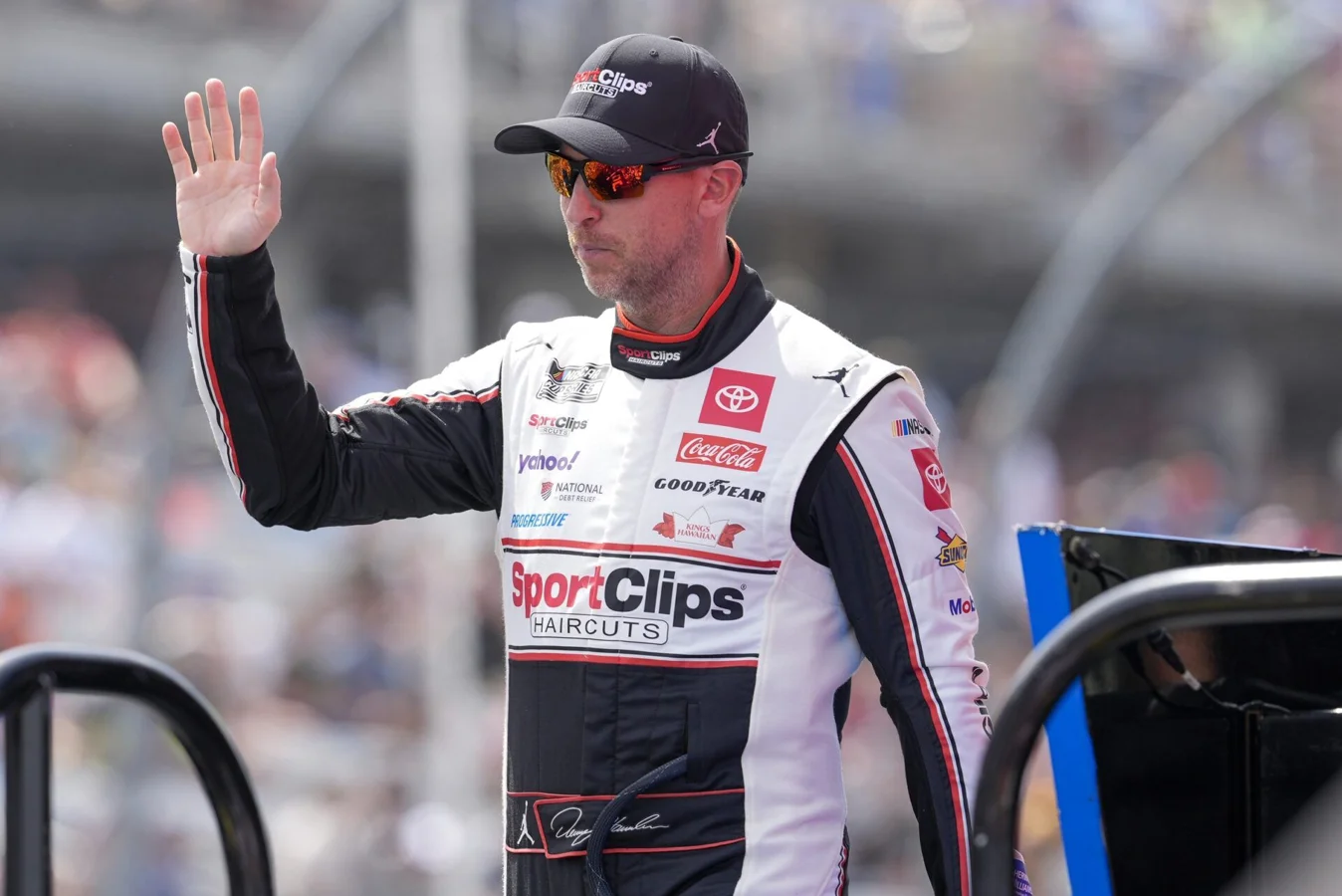

NASCAR Cup Series driver Denny Hamlin has voiced strong concerns about the sport’s open telemetry data system, arguing that it dilutes the essence of driver skill. As of late 2024 and early 2025 events at tracks like Las Vegas Motor Speedway and Richmond, this debate has heightened within the <a href=”https://www.buzzineintl.com/category/motorsports/nascar/”>NASCAR community. Hamlin’s remarks highlight tensions surrounding how widespread access to detailed telemetry reshapes competition.
Telemetry data, now available to all teams, captures throttle input, brake pressure, steering angles, and other key metrics. While this technology aids strategic preparation, Hamlin warns it removes an element of mastery that once separated elite drivers. This development is central to ongoing discussions about the balance between technology and raw talent in modern NASCAR racing.
The Evolution of Telemetry and Its Influence on Racing Dynamics
Historically, NASCAR drivers studied rivals through hours of video footage and race replays, piecing together subtle performance cues. This process was slow and imprecise, relying on observation of braking points and driving lines. The introduction of SportsMEDIA Technology (SMT) drastically changed this approach by providing exact data traces of throttle and brake use, steering angles, and line positioning.
One visible example of SMT’s influence occurred before a recent Richmond race, when Shane van Gisbergen, a road course champion adapting to NASCAR’s oval circuits, openly credited Hamlin’s telemetry data for improving his performance. By studying Hamlin’s precise driving patterns, van Gisbergen achieved his best qualifying position to that date on a short track, demonstrating how telemetry access translates directly into competitive gains.
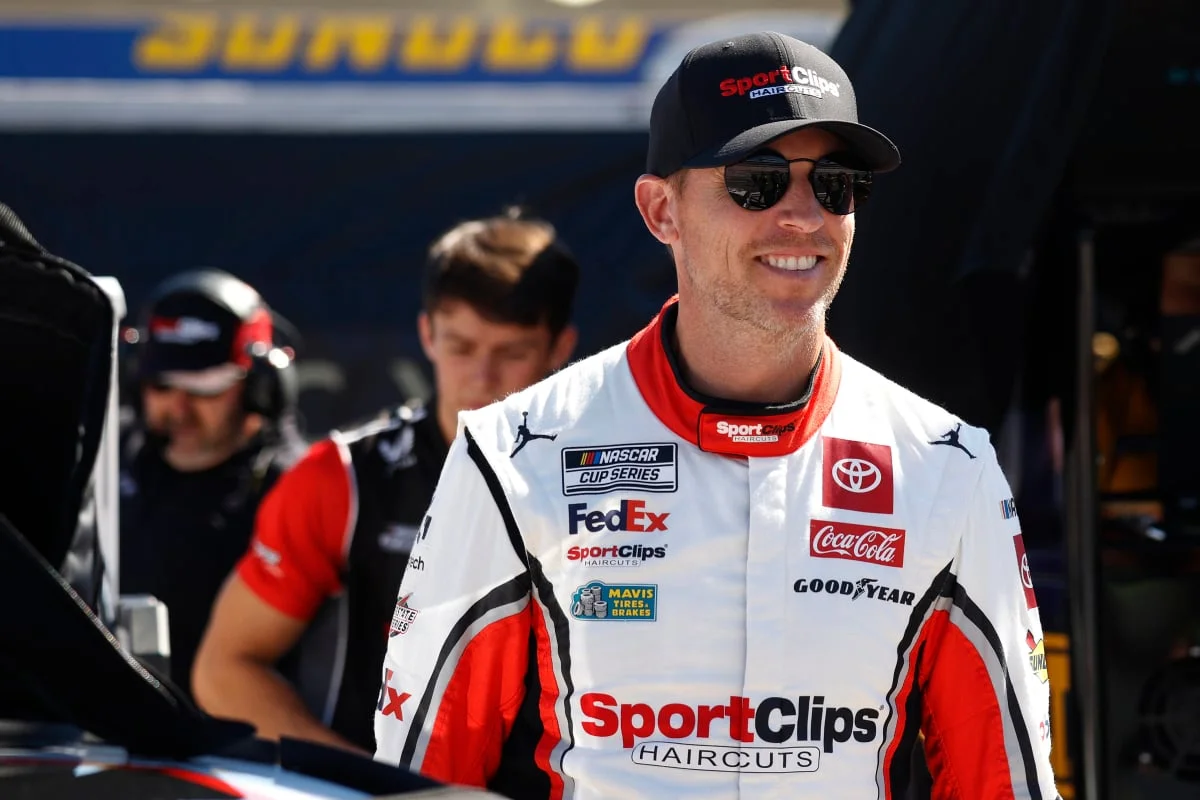
As the 2025 NASCAR season unfolded, drivers like van Gisbergen leveraged telemetry more extensively, embracing data analysis as a core part of race preparation. This widespread availability of detailed driving feedback fuels faster lap times but raises questions about whether outcomes now reflect skill or data mastery.
Hamlin’s Reflections on the Shared Telemetry Era Within NASCAR
On his podcast, Actions Detrimental, Hamlin expressed mixed feelings about how SMT’s universal sharing affects competition. He acknowledged that exclusive telemetry historically created a performance gap, especially at short tracks such as Martinsville and Richmond, where he maintained a distinct advantage.
He noted,
“certainly… create a disparity of speed between the drivers,”
emphasizing how open access to data has narrowed these gaps considerably.
SMT overlays throttle position, brake pressure, steering inputs, gear use, speed, and GPS data, essentially handing out a detailed playbook of how elite drivers approach corners. Hamlin described this transparency as removing strategic secrets once fiercely guarded within teams.
Telemetry’s roots in NASCAR go back to 2001 when SMT first used sensors to record inputs like RPM and throttle under the car’s rear window. However, the formal policy to share telemetry openly between teams started in 2018, which sparked intense debate. Veteran Kyle Busch framed this shift bluntly, stating,
“I’ve spent 13 years in this sport to figure out how to drive a racecar… Now you’re gonna hand that on a piece of paper to a young driver… they’ll figure it out.”
Hamlin also admitted the benefits of telemetry when used internally among teammates. He credited access to Kyle Busch’s data for improving his own performance on mile-and-a-half tracks where he had room to grow, acknowledging a mutual exchange of insights.
“I got better by following Kyle, which is he made me better on the mile-and-a-halfs. I made him better on the short tracks. I think I’m confident of that,”
Hamlin said, underscoring the dual-edged nature of the technology.
However, Hamlin’s unease stems from telemetry being shared across the entire field rather than kept within teams. He questioned NASCAR’s choice to make this data open to all, saying,
“I guess. It’s a double-edged sword… you’re gonna give away my proprietary information. Like, that’s the only stuff that should be shared within our team. Like, you shouldn’t be giving out all my data to other teams. That doesn’t seem right…”
Hamlin estimated that universal telemetry access erodes roughly 25% of the performance gap between the fastest and slowest drivers, drastically shrinking the advantage once achieved through personal technique and intuition.
The Growing Role of Data and Technology in NASCAR’s Competitive Environment
In today’s NASCAR landscape, data-driven strategy plays an increasingly dominant role. With each Next–Gen car generating over 1.3 terabytes of telemetry per race, teams receive around 600,000 sensor messages every second. This volume of information, transmitted through ultra-low latency networks, supports real-time analysis by artificial intelligence and cloud computing platforms.
Teams use this data to fine-tune every mechanical and strategic variable. For example, Richard Childress Racing’s engineer Eric Kominek pointed out,
“calculate fuel mileage to within 100 feet”
using live telemetry inputs. This precision marks a significant evolution from past eras.
The reliance on telemetry and technological systems brings undeniable advantages but also raises concerns about the impact on racing’s core values. Hamlin, reflecting on the shift to the Next–Gen era, fears the influx of data may overshadow the sport’s traditional emphasis on driver intuition, feel, and adaptable skills.
A Comparison Between Past Legends and Modern Data-Centric Racers
Hamlin’s unease includes a nod to NASCAR’s past when champions like Jimmie Johnson and Tony Stewart dominated through seat-of-the-pants driving ability rather than data analysis. Stewart, in particular, was known for his raw talent and instinctive car control, traits that defined a generation of racers.
Contrastingly, today’s drivers including Tyler Reddick and William Byron routinely rely on in-depth telemetry reviews long before hitting the track. Their preparation involves dissecting throttle patterns, brake inputs, and steering angles to replicate and improve ideal laps. This marks a fundamental difference in how talent is nurtured and expressed in the modern sport.
Balancing Tradition and Innovation in NASCAR’s Telemetry Debate
The ongoing discussion about telemetry highlights a broader challenge for NASCAR: how to balance technological progress with preserving the human element of racing. While telemetry enables teams and drivers to optimize performance more scientifically, it risks minimizing the creative problem-solving and instinctive decisions that have historically enthralled fans.
Hamlin’s critique serves as a reminder of these tensions, raising questions about whether open data sharing ultimately enhances competition or simply levels the playing field to a point where distinct driving styles blur into algorithm-driven strategies. With the sport’s growing reliance on telemetry, the future may depend on how NASCAR regulates data sharing and supports driver development.
As telemetry continues to evolve, its influence will shape how drivers prepare, compete, and differentiate themselves. Hamlin’s stance invites a reflection on what qualities make a true champion and whether technology should serve as a tool or a crutch in that pursuit.