
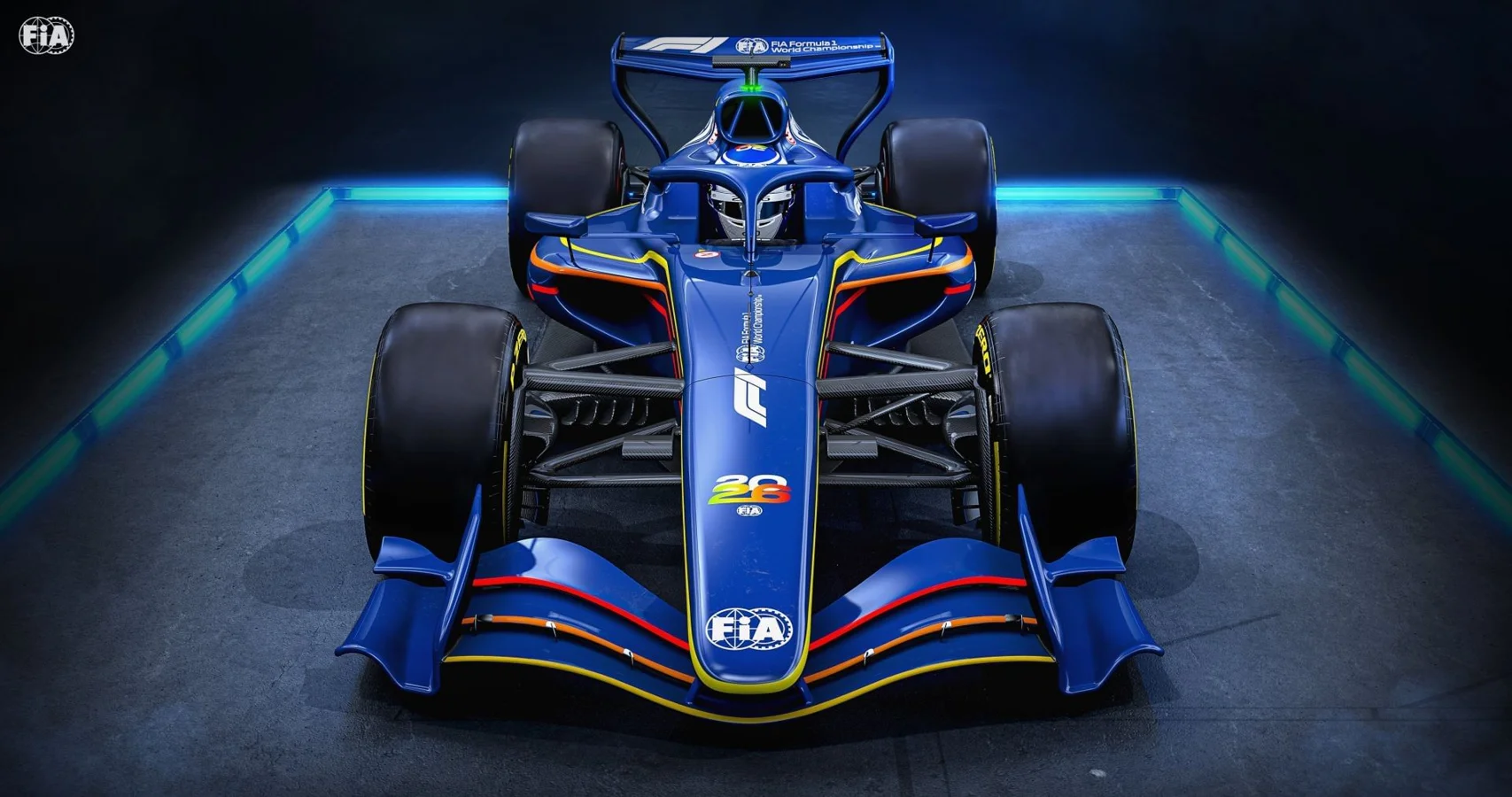

As Formula 1 teams prepare for the major technical changes planned for 2026, including updates to both chassis and power units, concerns have arisen regarding the complexity and impact of these changes on racing dynamics. FIA Single Seater Director Nikolas Tombazis emphasized that the F1 2026 evolving technical regulations are still under development to prevent any “unnatural” issues on the track, such as drivers having to slow down artificially on straights due to energy limits.
Driver Concerns Shape Ongoing Regulation Adjustments
Several prominent drivers, including Max Verstappen, Charles Leclerc, Alex Albon, and Lance Stroll, have publicly shared their apprehensions following early simulator testing of the 2026 cars. They worry that the new technical rules could make the sport overly complicated for fans to understand and may force drivers into managing races more through energy conservation than pure racing skill. Verstappen, who first expressed concerns two years ago, highlighted the risk of cars running out of electric power before completing a lap or drivers being forced to downshift on straights to manage limited energy.
Despite these concerns, Tombazis conveyed optimism that the final outcome will be more balanced. In an interview with Autosport, he acknowledged the challenges with the shift towards greater electric power and less internal combustion engine (ICE) contribution in the new power units.
Obviously when you have a much bigger proportion of electrical power and a smaller proportion of ICE power, and you don’t have batteries that are discharging over the entire race distance, then energy management becomes a bit more of a challenge,
—Nikolas Tombazis, FIA Single Seater Director
Now the opportunity of these new cars for the participating manufacturers is to develop the batteries, the electrical systems, and so on. I think we will see some innovation on the electrical side of the engine next year, which I think will be good. But clearly there are some challenges with the energy management, and the noises that we hear are usually related to that.
—Nikolas Tombazis, FIA Single Seater Director
Technical Rules to Evolve, but Engine Fundamentals Will Remain
While many changes are expected throughout the coming months, the core engine formula for 2026 will not be altered. Tombazis explained that the FIA is aware of the complexities that arise when increasing electric power share and decreasing ICE output, and adjustments in the regulations are ongoing to address these challenges without changing the fundamental engine specifications, which are already locked in.
We haven’t finished the rules yet in that respect,
Tombazis confirmed.
The rules are evolving and we knew of these issues from day one. The moment you reduce one power, and you increase the other one, we knew that there were issues to address.
—Nikolas Tombazis, FIA Single Seater Director
The FIA continues to seek input from power unit (PU) manufacturers as part of an approval process, which means changes cannot be made unilaterally or overnight. However, Tombazis emphasized that the regulations at the start of next season will differ somewhat from those today, reflecting ongoing refinement.
We have to go through an approval process with the PU manufacturers, so we can’t just unilaterally make a change tomorrow,
—Nikolas Tombazis, FIA Single Seater Director
But by and large, when we address specific problems, teams and PU manufacturers tend to be relatively helpful. I think what we have now and what we’ll have at the beginning of next year is not exactly the same thing. I’m not saying it will be completely different, but there will definitely be a lot of evolution between now and the start.
—Nikolas Tombazis, FIA Single Seater Director
Although engine hardware will not change, the conversation around the 2026 regulations is heavily influenced by political considerations, as manufacturers with strong projects may resist alterations that could dilute their advantage, while others seek modifications to improve competitiveness.
Obviously, one of the difficulties is that it isn’t always easy to get everyone to agree,
Tombazis admitted.
When teams and manufacturers discuss these matters, they think of a combination of the good of the sport and their own competitive position. Of course, one bit influences the other, so unavoidably, there will be different opinions. At the moment, the technical specification of the engines, the electrical part, and all of that is set in stone. That’s not changing.
—Nikolas Tombazis, FIA Single Seater Director
FIA Focuses on Improving Energy Management to Avoid Race Disruptions
Since changes to the engine formula are locked, the FIA’s scope for adjustments lies in regulating energy recovery and deployment strategies, including track-specific limits on energy harvesting and discharge rates. These ‘turn-down ramp rate’ rules and variable energy harvesting allowances aim to provide teams with flexible tools to optimize performance without compromising racing spectacle.
I think there’s a general feeling that all of these topics will have very strong levers on which to react. Those things have to do with the maximum power, how quickly it will reduce on the straights, the energy that you can recover, etc. There are all sorts of levers that we can play on, and that we are playing on,
—Nikolas Tombazis, FIA Single Seater Director
One particular goal is to prevent the ‘unnatural’ driving behaviors that could emerge if cars run out of electric power on long straights or if drivers have to modulate throttle input to conserve energy.
There will be quite a lot of new provisions in order to manage the energy better and to make sure that cars are not decelerating on the straights, doing funny things, or, let’s say, doing unnatural things,
—Nikolas Tombazis, FIA Single Seater Director
What we don’t want, is a situation where they have to lift off, for example, on the straights or anything like that. We will absolutely, categorically, make sure that they don’t have to lift off in a particular area in order to do something with the energy or whatever. When they need to go faster, drivers will keep the pedal to the metal, as they say.
—Nikolas Tombazis, FIA Single Seater Director
Transparency Varies Among Power Unit Manufacturers
Another complication in fine-tuning the 2026 regulations comes from differing levels of cooperation from manufacturers. While some power unit suppliers openly share data and collaborate closely with the FIA, others remain protective of their technical plans.
Not all teams and PU manufacturers are as transparent with us in their data. Some are very secretive about what they’re doing, while some others are very open and very helpful in proposing things. We are taking a lot of those ideas on board,
—Nikolas Tombazis, FIA Single Seater Director
This discretion is understandable given the competitive stakes, as any regulatory tweaks may alter the competitive landscape significantly. Nonetheless, Tombazis reiterated that many of the drivers’ concerns stem from snapshots of the simulation experience rather than a full understanding of ongoing negotiations and adjustments.
I think it’s important to convey that, because some people, including the drivers testing in the simulator, don’t follow the evolution of our discussions with the teams in detail. Maybe they only get a snapshot,
—Nikolas Tombazis, FIA Single Seater Director
But the reason they’re driving the simulator is precisely to identify these problems, so we can solve them. If we didn’t have drivers in the simulator, we wouldn’t have all this feedback. We can do quite a lot with simulations ourselves, but you actually need a driver in a car and get a lot of feedback. That’s what is going on these months.
—Nikolas Tombazis, FIA Single Seater Director
While the foundation of the 2026 power unit regulations remains firm, ongoing refinements aim to ensure that next year’s Formula 1 season avoids “unnatural” situations on the track and preserves the spirit of competitive, exciting racing. The careful balancing act between technical innovation and raceability will continue to define the lead-up to 2026 F1’s new era.