
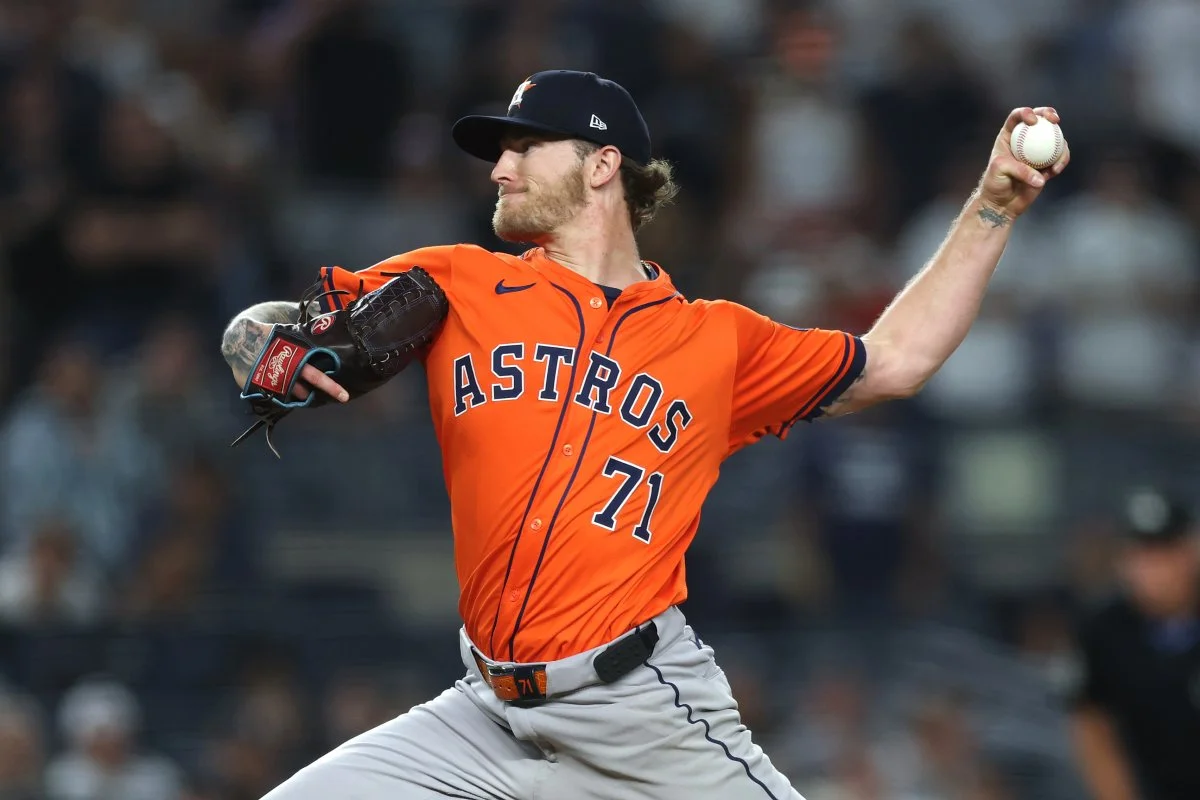

The Houston Astros and Philadelphia Phillies, both leading their divisions, are now facing significant uncertainty after sidelining crucial pitchers due to injuries. On Tuesday, Astros closer Josh Hader was placed on the 15-day injured list with a shoulder strain, later confirmed as a shoulder capsule sprain. Meanwhile, the Phillies announced on Saturday that Zack Wheeler is on the injured list with a blood clot near his right shoulder. Both teams must navigate the remainder of the regular season—and possibly beyond—without two of their top pitching assets.
The Seriousness of Zack Wheeler’s Condition and Early Signs
Of the two injuries, Zack Wheeler’s blood clot presents a greater threat, with potential health and career consequences if left untreated. Thankfully, Philadelphia’s medical staff identified the clot before it became more critical. Wheeler had displayed signs of decline since throwing a demanding 108-pitch, one-hitter game on July 6 against the Cincinnati Reds. Following his performance, his velocity decreased and his ERA and FIP rose, notably during his scheduled August 8 start that had to be delayed due to shoulder soreness.
Although his MRI at the time showed no damage, Wheeler’s velocity was at a season low across all six of his pitches when he finally returned to the mound on August 10. His command remained elusive throughout the outing.
“Zack Wheeler grinded his way through 5 innings to get his 1st win in more than a month … but his velocity was down significantly and his fastball command continued to elude him. There will be a lot of eyes on his next start.” —Paul Casella, MLB Analyst
Efforts to Manage Wheeler’s Symptoms Before Diagnosis
Both Wheeler and Phillies manager Rob Thomson initially downplayed concerns about the pitcher’s reduced velocity. Wheeler’s velocity slightly improved in his August 15 start, but he continued to struggle with command and failed to pitch more than five innings for the second consecutive outing, a first for him this season. After the game, Wheeler reported a sensation of “a little heaviness” in his right shoulder, prompting further medical evaluation. Subsequent examination revealed the blood clot, and head athletic trainer Paul Buchheit noted that some symptoms had evolved recently.
“Doctors were great in helping to diagnose and expedite that diagnosis this morning.” —Paul Buchheit, Head Athletic Trainer
Dave Dombrowski, Phillies president of baseball operations, praised the team‘s medical staff for their quick response.
“I commend Paul and the doctors here to find this because it could have been a much more trying situation than what it is.” —Dave Dombrowski, Phillies President of Baseball Operations
Medical Procedures and Treatment Outlook for Wheeler
Wheeler is scheduled for additional tests and evaluations at Thomas Jefferson University Hospital in Philadelphia. The team has not yet provided an estimate for his return, with manager Rob Thomson acknowledging the uncertainty ahead.
“I’m thinking a lot about Zack and his family because this is not a hamstring injury or something like that.” —Rob Thomson, Phillies Manager
An update from the Phillies on Monday revealed Wheeler underwent a successful thrombolysis procedure to dissolve the clot. The team stated that further treatment plans and a recovery timeline are yet to be determined.
“Further treatment and a subsequent timeline of recovery for Wheeler is to be determined.” —Philadelphia Phillies Official Statement
Possible Surgery and Recovery Challenges in Wheeler’s Future
In some cases, blood clots in pitchers result from compression of blood vessels under the collarbone, akin to thoracic outlet syndrome (TOS), requiring surgery to remove the first rib. Historian Will Carroll highlighted several pitchers who faced similar conditions and successfully returned after such surgeries, including Aaron Cook, Alex Cobb, Dillon Gee, and Mike Foltynewicz.
“The surgery path, if taken, is essentially the same as TOS surgery. The difference is that Wheeler is older than most pitchers who’ve gone through it, which raises the stakes. At 35, recovery time isn’t just about healing, it’s about how much is left in the tank once he’s back. He does profile well as the kind of pitcher that could coast in his late career like a Max Scherzer or Clayton Kershaw.” —Will Carroll, Medical Analyst
Wheeler’s age adds complexity since recovery now evaluates not only healing but how much pitch effectiveness remains. Despite this, his style suggests he might maintain competitiveness similar to other veteran pitchers relying on craftiness over power.
Wheeler’s Durability and Performance Leading Up to Injury
Before this injury, Wheeler had proven remarkably durable, with only two IL appearances in seven seasons—once in 2019 for shoulder fatigue and again in 2022 for forearm tendinitis. Since 2019, only three pitchers have surpassed Wheeler’s 188 starts, and no one has pitched more innings than his 1,174.1. His dominance is reflected in his superior WAR rankings, including a Baseball Reference WAR lead over key pitchers like Gerrit Cole.
During the current season, Wheeler has remained an elite performer. After finishing second in last year’s NL Cy Young voting, he earned a third All-Star nod while leading the NL in expected ERA (2.44), strikeouts (195), strikeout rate (33.3%), and strikeout-to-walk differential (27.7%). He ranks highly in FIP (2.98), WAR (4.0), and ERA (2.71) as well.
Impact on Phillies’ Rotation and Postseason Outlook
Wheeler is the Phillies’ ace and is expected to start Game 1 of the playoffs. His postseason resume is impressive, having pitched brilliantly in five opening series starts over three postseasons, with a 2.18 ERA and 2.72 FIP in 70.1 innings. Losing him is a massive setback for Philadelphia’s playoff aspirations, despite a current five-game lead in the NL East and a 99.1% probability to make the playoffs. The Phillies possess a strong supporting rotation, with Cristopher Sánchez and Ranger Suárez also performing at All-Star levels.
Sánchez is second in NL WAR (4.3) and third in ERA (2.45), while Suárez ranks among the top 15 NL pitchers with at least 100 innings in ERA and FIP (3.28 and 3.27). Jesús Luzardo adds solid depth with a 4.21 ERA, 3.11 FIP, and 3.5 WAR (fifth-best in the league).
However, the Phillies received disappointing news with Aaron Nola, who returned from a three-month injury absence only to struggle severely. On his first outing back, he was hammered for six runs in 2.1 innings, pushing his season ERA to 6.92 and FIP to 4.87—both career worsts. Nola also experienced career lows in strikeout rate and a career-high in home runs allowed.
Rotation Adjustments and Bullpen Updates for Philadelphia
The Phillies had planned to employ a six-man rotation, including Nola and swingman Taijuan Walker, who has a 3.34 ERA and 4.73 FIP over 91.2 innings. Now, they will likely maintain a five-man rotation, keeping top prospect Andrew Painter in Triple-A Lehigh Valley as he recovers from UCL tear and Tommy John surgery. Painter has struggled recently, with a 5.15 ERA and 4.86 FIP across his last three starts in the minors.
The Phillies lost some depth in their recent trade of prospect Mick Abel to the Twins for Jhoan Duran. Duran had a scare when he was struck on the ankle by a comebacker but recovered quickly, returning to record a save just days later.
Josh Hader’s Injury Timeline and Season Performance
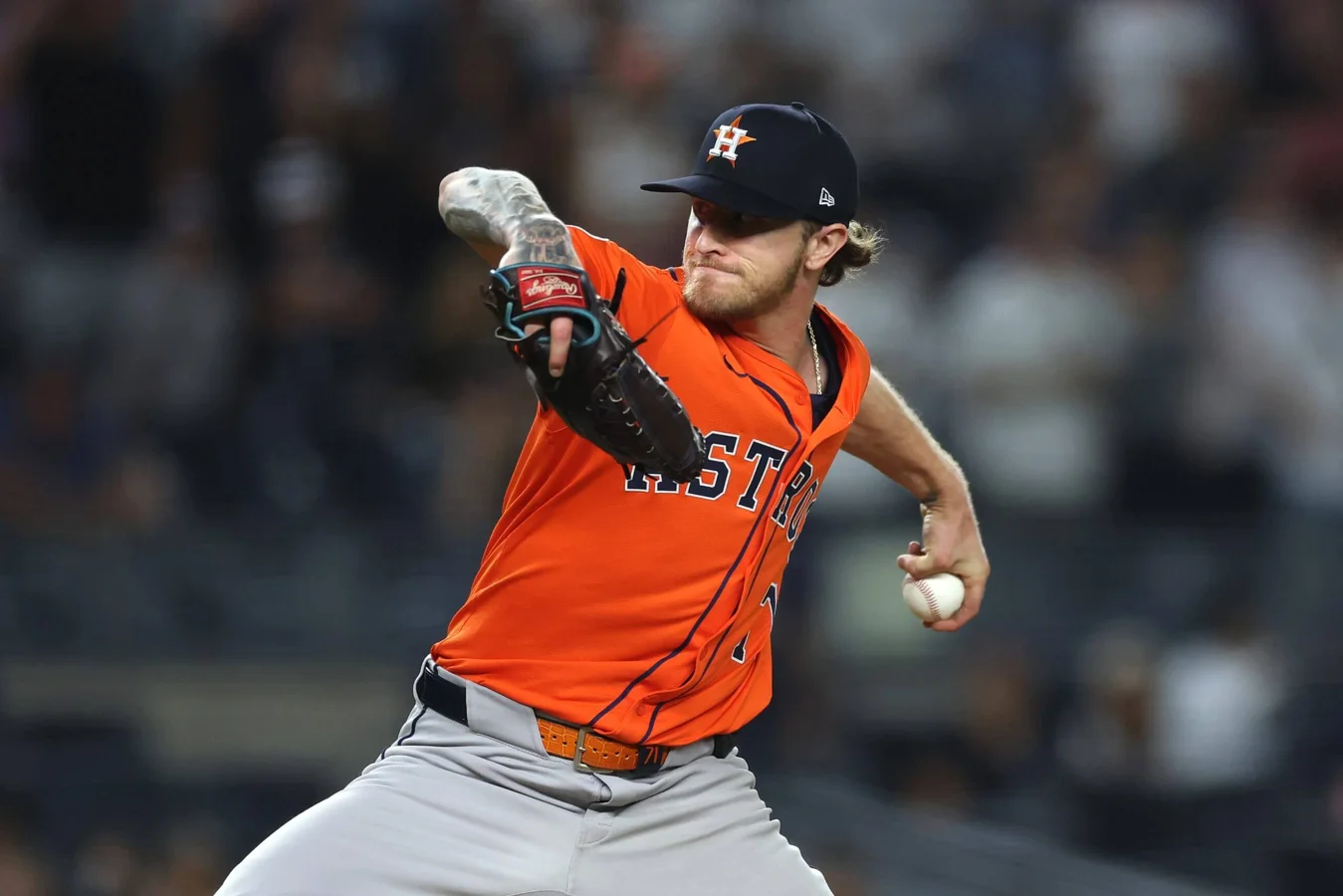
Josh Hader last appeared on the mound on August 8, delivering a team-high 36 pitches over two innings in a victory against the Yankees. On August 11, Astros manager Joe Espada revealed Hader’s unavailability due to shoulder discomfort and ongoing tests. The following day, Hader was placed on the 15-day injured list with a left shoulder strain, marking his first significant IL time apart from a COVID-related stint in 2021.
Further medical consultation indicated Hader would be sidelined beyond the 15-day minimum. The Astros’ Friday update confirmed the left-hander will be shut down from throwing for three weeks, focusing on rest and strengthening exercises. After clearance, Hader anticipates needing an additional three weeks to rebuild his throwing capacity, potentially timing his return for the postseason—assuming no setbacks emerge.
Hader’s injury interrupts what has been a strong campaign. This year, he made his sixth All-Star team and converted 28 of 29 save opportunities while posting a 2.05 ERA and 3.23 FIP. Using his slider more frequently than ever—41.4% compared to 27.4% last season—Hader has been dominant. His 36.9% strikeout rate ranks third among relievers with at least 40 innings, and his BABIP is .202, with nearly identical expected batting average and expected ERA, highlighting his genuine effectiveness.
Astros Bullpen Strength and Rotation Challenges
Hader’s excellence has been a key factor in the Astros’ bullpen standing as one of baseball’s best. The bullpen leads the majors with a 27.1% strikeout rate and ranks 10th in ERA (3.75) and 11th in FIP (3.89). Still, it showed vulnerability on a recent Sunday when five relievers surrendered 11 runs over five innings against the Baltimore Orioles. Starter Cristian Javier, returning from Tommy John surgery, left after just two innings due to illness, but outfielder Chas McCormick provided some relief by pitching a scoreless inning.
The Astros bullpen has managed to stay effective despite pitching just 434 innings—the fifth-lowest total in the majors. This is remarkable given their starter injuries: only Hunter Brown and Framber Valdez have made more than 14 starts, while Ronel Blanco and Hayden Wesneski are out following Tommy John surgeries. Spencer Arrighetti missed four months due to a broken thumb, and Lance McCullers Jr. is now on his third injured list stint, totaling 80 days, currently sidelined with a blister. Brandon Walter is also out with elbow inflammation.
Despite these setbacks, Houston’s rotation remains among the best, ranking third in the majors and first in the American League in rotation WAR (11.8) and seventh in innings pitched (672), helping to alleviate bullpen strain.
Reliever Depth and Closing Duties Amid Hader’s Absence
The Astros currently have six relievers with at least 40 appearances, putting them among six MLB teams with that many active bullpen arms. If Bennett Sousa joins them soon, Houston would become one of just three teams with five relievers surpassing 50 innings alongside the San Diego Padres and Cincinnati Reds.
Aside from Hader, righties Bryan Abreu and Kaleb Ort and lefties Bennett Sousa, Bryan King, and Steven Okert remain available and are expected to handle high-leverage situations. Newcomer Enyel De Los Santos, recently signed as a free agent, has already contributed in key moments. Manager Joe Espada has not yet named an official replacement closer, but Sousa—who has four saves, second on the team—and Abreu have both secured saves in Hader’s absence. King and Okert also recorded saves earlier this season, meaning any of them could assume ninth-inning duties.
Implications for Astros’ Playoff Prospects and Season Outlook
The loss of Hader deals a significant blow to the Astros, who currently hold a slim 1.5-game lead over the Seattle Mariners with a 69-55 record. With their division lead narrow and the season’s final weeks ticking away, the team’s room for error is minimal. Both the Astros and Hader remain hopeful for a return come October, but the combination of his absence and the competitive division race heightens the stakes in the final stretch.