
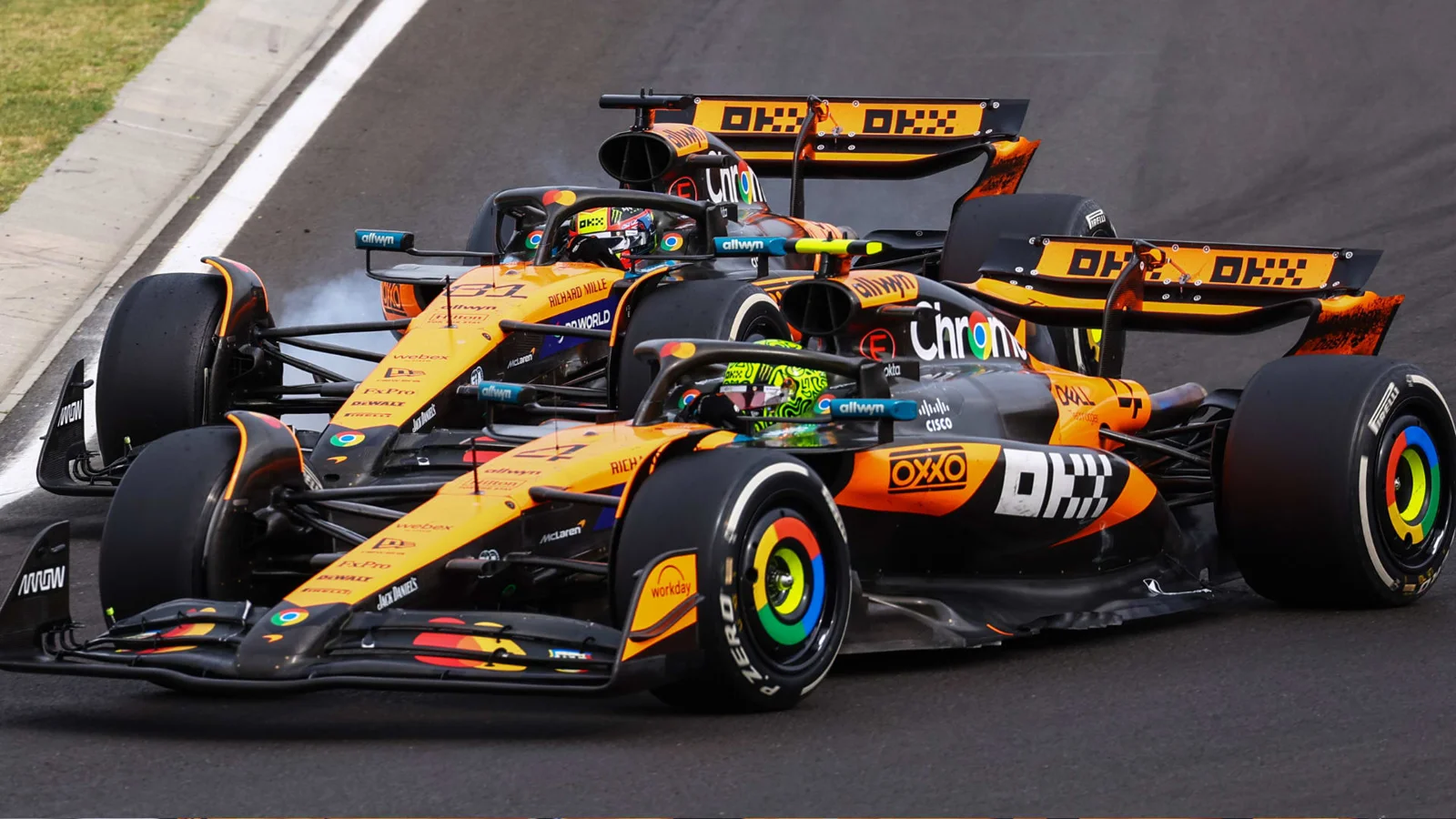

Since assuming leadership of McLaren ahead of the 2023 season, Andrea Stella has spearheaded a profound transformation within the team that culminated in McLaren’s overwhelming 2024 dominance in Formula 1. By guiding a critical technical restructuring and fostering a culture of collaboration, Stella helped McLaren secure its first constructors‘ championship in nearly four decades, with the team winning 11 of the first 14 grands prix this year, establishing unprecedented consistency and performance.
Stella, trusted by McLaren CEO Zak Brown, has been instrumental in redefining the team’s approach through difficult but strategic decisions, overseeing what many now regard as McLaren’s most competitive era since its heyday. His leadership has been vital in steering the papaya squad from regular podium finishes in 2023 to outright F1 supremacy in 2024.
Reshaping McLaren’s Technical Leadership for Lasting Success
One of Stella’s key initiatives was the introduction of a restructured technical leadership setup. This involved appointing specialized technical directors for separate performance sectors, a move intended to leverage expertise while encouraging unified decision-making. Neil Houldey took on the role of technical director of engineering, Mark Temple became performance technical director, and Peter Prodromou assumed responsibility for aerodynamics. This structure was further strengthened by incorporating Rob Marshall, a former Red Bull engineer, as chief designer, whose expertise proved pivotal in McLaren’s technological advancement.
By balancing the recruitment of high-impact talent such as Marshall with the empowerment of long-standing McLaren engineers, Stella aimed to blend fresh insights with institutional knowledge. The flattened leadership model promoted shared responsibility among key figures and was dependent on collective agreement rather than top-down command.
The first step was to look at the team with a map, and understand what is world championship material and what is not,
Stella explained.
But also, to identify who are the key leaders that will have to lead their own areas. And the final bit was believing in a model based on collaboration.
I still remember when we announced that we were going from one to three technical directors, there were so many questions about who makes the decisions. For me, who makes the decisions has never been a problem, because my normal way of looking at things is so collaborative that who doesn’t have those kinds of attributes is just not, simply, at the table in the first place.
Decisions normally tend to be just a critical mass of information accumulated, rather than having a dictator that at some stage will make a decision. Zak and I believed that this is possible. And since then we have added Rob Marshall, which is then a fourth TD, and the dynamics have not changed.
But the cultural foundation and behavioural attributes should never degrade, otherwise this model starts to suffer. So, it requires a lot of a lot of presence, a lot of understanding of what’s going on in the business to protect this way of working.
Building a Culture of Collaboration and Shared Ownership
Stella places heavy emphasis on teamwork and the human side of the organization. Despite his understated nature, he credits the team’s success to the collective effort and the importance of collaborative relationships within McLaren.
Well, first of all, I came onboard, but I’ve never led alone,
he said in a conversation at the Hungarian Grand Prix.
Zak and I, we’ve always been pretty much working in unison, very connected, and then we created around us a group of leaders with whom we are very united.
There’s nothing in this business that you do alone, even when it comes to the difficult decisions or analysing the team to understand how you should improve it. Where are the areas that should be consolidated and, if anything, strengthened? And where are the areas where you need a little bit of a revolution, because otherwise we are never going to get where we want – or not fast enough?
This has always been teamwork, obviously, it’s not too wide a team, but Zak and I are very well supported from a people analysis and technical point of view.
It’s the human interactions that give real meaning to what we achieve.
Stella Reflects on Leading McLaren to World Championship Glory
Stella’s tenure has seen McLaren’s resurgence not only in terms of results but also through a renewed team spirit and widespread pride across the entire organization. He highlights the significance of collective contribution and the shared feeling of ownership among the more than 1,000 people who make up the team.
Definitely, contributing to bringing a championship to McLaren has been one of the highlights,
Stella reflected.
Not only in the sense of the legacy of the McLaren Formula 1 team, which is obviously overwhelming as to how prestigious and gratifying this may be, but I also think of the 1000 people and the way this has been celebrated.
I’ve won many championships [at Ferrari, as a performance engineer], but for this one everyone was just so happy, because I think everyone felt: ‘That’s something I own, that’s something I earned, that’s something I contributed to, I grew up together with the team.’
He concluded,
There is almost more satisfaction in the journey than in the achievement. Ultimately, it’s the human interactions that give the real meaning and sense to what we achieve.
Looking Ahead: Sustaining McLaren’s Momentum
With McLaren firmly established as the dominant force in F1 following their successful 2024 season, the challenge ahead will be maintaining this winning trajectory. Stella’s collaborative leadership style, combined with a strong technical structure and an empowered team, positions McLaren well to defend their title and adapt to future challenges, including the upcoming 2026 regulation changes in Formula 1.
McLaren’s evolution under Stella demonstrates how strategic leadership, cultural transformation, and technical innovation can work in harmony to restore a legacy team to the pinnacle of motorsport. The endurance of this revitalized team dynamic will be closely watched as F1 continues to evolve.