
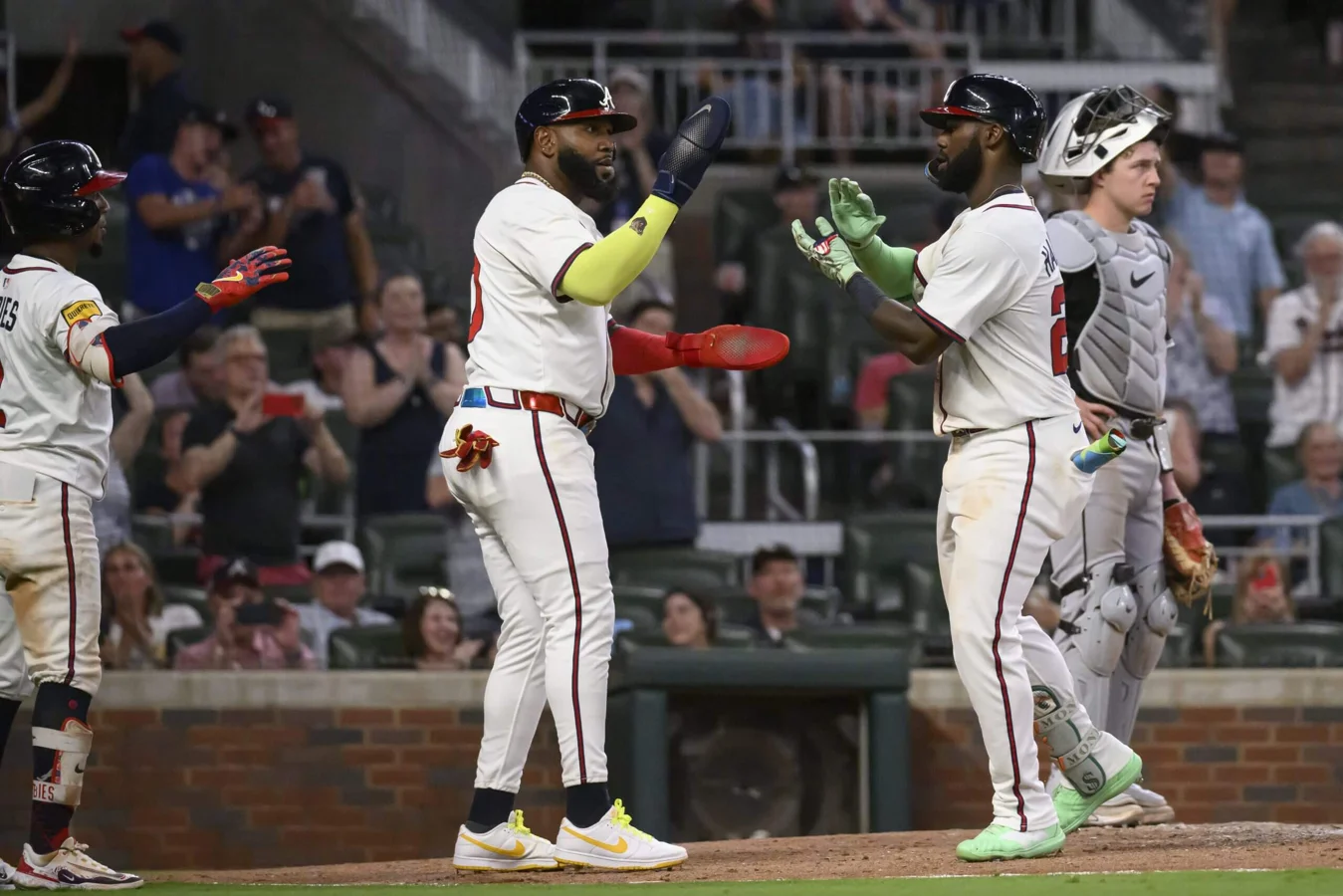

At the All-Star break, Michael Harris II faced what appeared to be the worst offensive season of his professional career. Though his defensive abilities remained solid, his hitting metrics were alarmingly poor, with a wRC+ of just 47 and a batting line of .210/.234/.317. He struggled to reach base and showed little power, walking at a league-low rate and hitting only six homers, resulting in a negative WAR of -0.8. Among Major League players, only two Colorado Rockies, Brenton Doyle and Michael Toglia, had worse numbers.
A Dramatic Shift: Harris Emerges as a Top Hitter in the Second Half
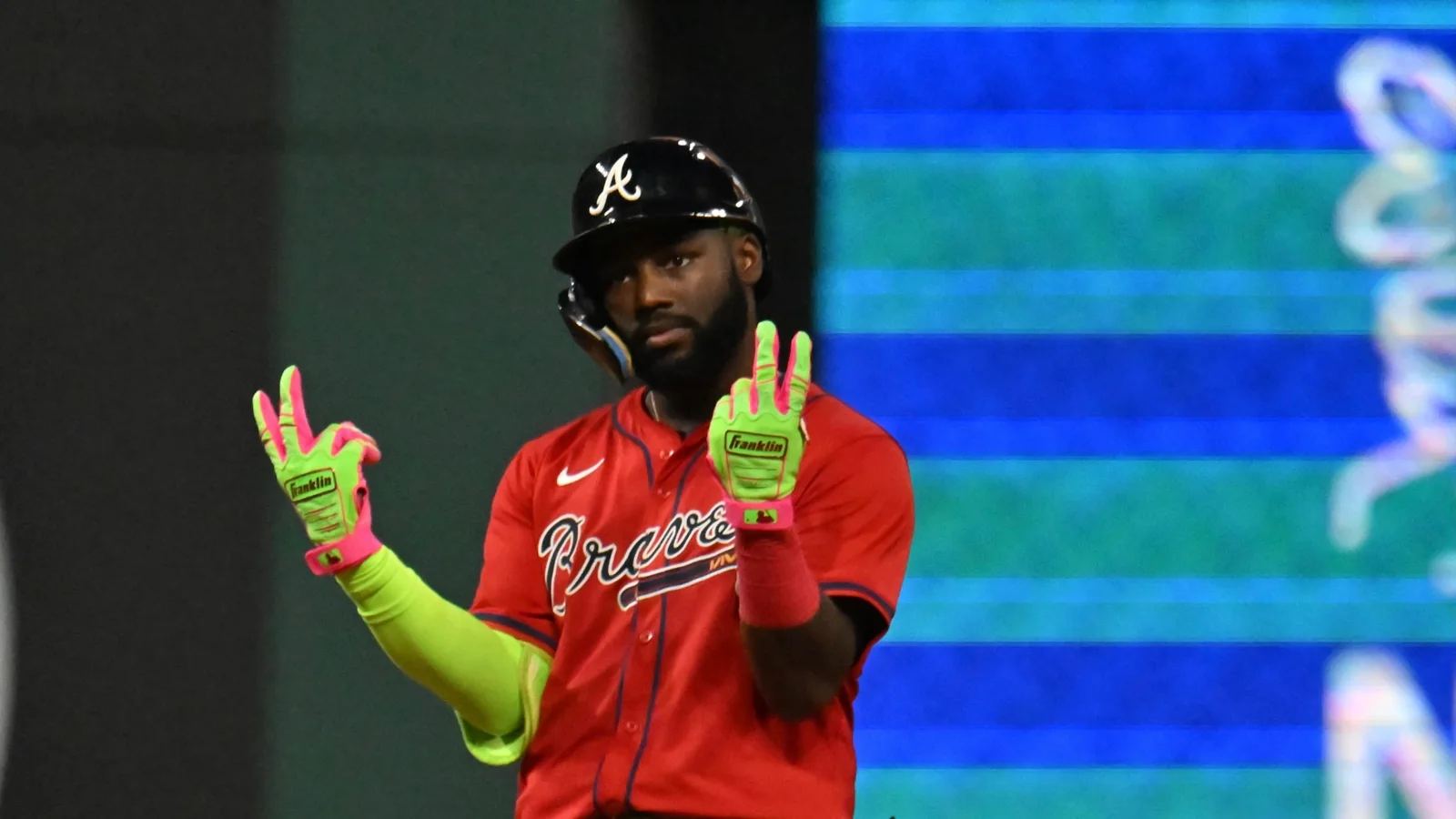
Since the All-Star break, Harris has transformed into one of the best hitters in baseball. Over the course of 30 games, he compiled 2.2 WAR mainly from his offensive performance. His batting line soared to .398/.413/.732, generating an extraordinary 217 wRC+. Remarkably, Harris hit nine home runs after the break, surpassing his total prior to the All-Star game. Only Nick Kurtz and Shea Langeliers have posted better offensive numbers over this span.
This stark contrast has puzzled many observers, who find it difficult to reconcile Harris’ early-season struggles with his current dominance. In fact, Harris accumulated over 150% of his projected 2025 WAR in just the second half of the season. Between the time this story was first filed and its publication, he went 4-for-4 with a home run, boosting his wRC+ by 16 points and WAR by 0.3.
Examining the Extremes of Harris’ Performance
While short-term results can be volatile, sustaining a 200-plus wRC+ over a month is exceedingly rare and points to more than mere luck. Conversely, maintaining a 47 wRC+ over half a season also reflects genuine struggles. To understand this paradox, analysts closely reviewed Harris’ approach and results throughout the season.
One of Harris’ biggest challenges has been his propensity to chase pitches outside the strike zone. Since breaking out as the 2022 Rookie of the Year, he has been a swing-happy hitter with walk rates below 5%, chasing around 40% of pitches outside the zone. This aggressive style helped him succeed when he made good contact, but fatigue of this approach showed in 2024 with diminished power, lower batting average on balls in play (BABIP), and an overall poor offensive output at season’s midpoint.
The Cyclical Nature of Harris’ Hitting Slump
The downward spiral was easy to illustrate: Harris’ aggressive swings led to more poor contacts, which deepened his slump. Rather than adjusting by reducing aggression, he intensified it, further worsening his results. It was assumed that dialing back his approach to previous norms might reverse the slump, but in fact, this was not what happened exactly.
Nor could his resurgence be chalked up solely to luck on batted balls. Although Harris is slightly outperforming expected statistics, the bigger story lies in the quality of his contact. He has been hitting the ball harder and elevating his fly balls more often, driving substantially more valuable outcomes. This remarkable statistical improvement resembles a blockbuster hit rather than a statistical anomaly.
How Harris Adjusted His Approach at the Plate
The key to Harris’ comeback is simple but strategic: he has focused on attacking the best pitches to hit more often. Not all pitches are created equal, and where a pitch crosses the strike zone dramatically impacts hitting success. Contact made on pitches near the center of the plate—the so-called “heart of the plate”—produces a .403 wOBA and a .611 slugging percentage, comparable to elite hitters like Manny Machado and Vladimir Guerrero Jr.
The quality of contact decreases as pitches move away from the center. The “shadow zone,” near the edges of the strike zone, yields a .327 wOBA; pitches in the “chase zone,” outside the strike zone, represent a .255 wOBA; and the “waste zone,” rarely swung at, provides only a .250 wOBA and a .301 slugging mark. Pitches caught in the heart of the plate create star-level results, while those far from the zone often lead players toward release or demotion.
Harris’ Plate Discipline Evolves with Greater Selectivity
Harris has shifted his focus to swinging more frequently at pitches in the optimal hitting zones. Data comparing his first and second half of the season reveal he now directs roughly 60% of his batted balls at pitches over the heart of the plate, up sharply from about 45% earlier. He is also making more contact overall within the strike zone.
This refined selectivity enhances his chances for meaningful contact. When batting with favorable counts early in an at-bat or when ahead in the count, Harris aggressively attacks pitches over the heart of the plate – a strategy that previously was less consistent. For example, after the break, Harris swung at 26 of the 27 pitches right down the middle thrown in disadvantageous hitter’s counts, matching league norms. What makes Harris’ approach effective now is more frequent success early in the count as opposed to desperation swings later.
The Sustainability of Harris’ Hot Streak and Underlying Fluctuations
Despite his current torrid hitting numbers, experts caution that Harris’ recent success level, with a .600 wOBA and .600 xwOBA on center–zone contact, is unlikely to be sustained long term. This level of excellence has been glimpsed briefly before during hot streaks in his career, but it usually regresses closer to career averages. What makes the current surge unusual is its intensity and duration.
Harris’ overall 2025 batting line is likely to settle near prior career levels, around a 92 wRC+ and close to 20 home runs by season’s end. However, the route to these numbers has been anything but typical, marked by pronounced swings from below-average performance to dominance.
Comparisons to Similar Players Illuminate Hitting Volatility
The unpredictable nature of Harris’ performance is mirrored by other aggressive hitters, such as Pete Crow-Armstrong. Like Harris, Crow-Armstrong is a contact-oriented, free-swinging player with low walk and strikeout rates. Yet Crow-Armstrong mirrored Harris’ pattern of early-season success plummeting to extreme lows in the second half, illustrating how such hitters’ outcomes can wildly fluctuate despite consistent approaches.
Other hitters displaying similar wide divides between halves include Ceddanne Rafaela and Julio Rodríguez, highlighting that these fluctuations may often be random rather than directly linked to aggressive swinging alone.
Analyzing the Relationship Between Aggressiveness and Performance Variability
To test the common idea that swing-heavy hitters experience more volatile results, an analysis of 2024 players with at least 200 plate appearances in each half showed no meaningful correlation. The correlation between chase rate and variability in wRC+ from one half to the next was negligible, as was the correlation with total swing rate. In fact, players who chased pitches most often displayed nearly identical average changes in wRC+ compared to those who chased least.
This suggests that while aggressive hitting can lead to more balls in play and thus variability in small samples, over time most players regress toward their talent level. The inherent randomness in batted ball results and sample sizes play a critical role in producing extreme performance swings.
Implications for Michael Harris II’s Future Performance
Harris’ journey teaches that short-term slumps or hot streaks do not fully define a player’s true talent. Despite this strange season, his underlying skills in plate discipline, chase rate, and power are expected to produce results broadly consistent with his career norms by year’s end. Projections estimate a return to roughly a 109 wRC+ level, reflecting solid but not superstar offensive production. What remains extraordinary is the path he’s taken to get there.
Predicting what lies ahead is difficult. Harris’ ability to attack favorable pitches early in counts keeps him dangerous at the plate but also exposes him to swings and misses. His approach combines risk and reward, resulting in dramatic variance in individual game outcomes.
Recognizing Baseball’s Unpredictable Nature Through Harris’ Example
Rather than uncovering a definitive pattern for aggressive hitters, Harris’ season underscores baseball’s constant unpredictability and complexity. His cycle from struggling to excelling is a reminder that the sport defies simple categorization or forecasts. Sometimes, observers must accept the unpredictable ebbs and flows inherent in the game.
“Michael Harris is one of the best hitters in baseball.” —Anonymous Analyst
“OK, fine, that’s just the breaks of the game.” —Analyst Reflecting on Harris’ Season