
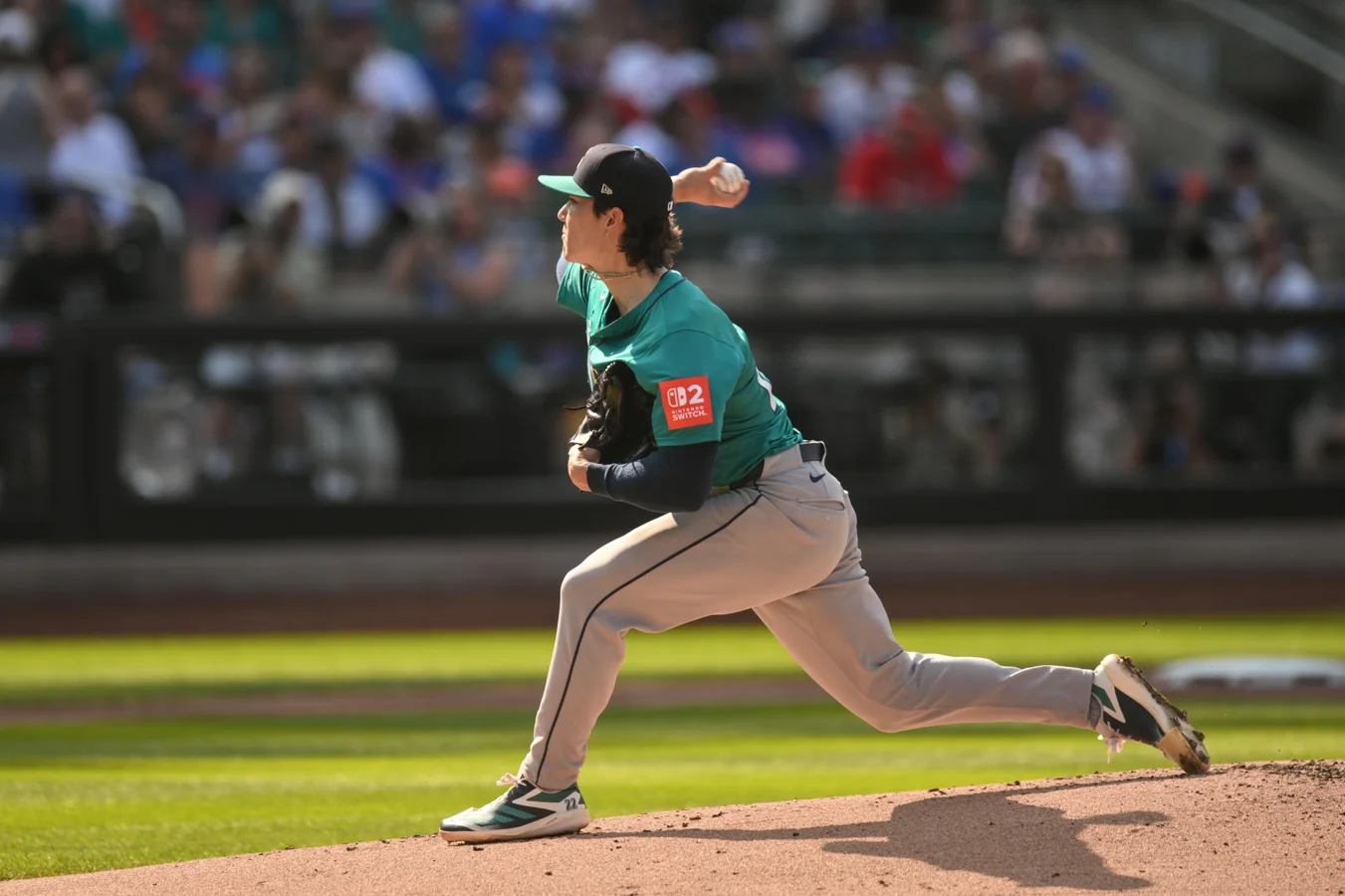

The 2025 MLB season has reached a crucial stage, and among the standout stories is Bryan Woo’s historic pitching streak, which has captured the attention of baseball fans and analysts alike. On Saturday against the Mets, Woo extended his record-breaking run by making his 24th consecutive start this season with at least six innings pitched and no more than two walks allowed. This achievement marks the first time in Major League Baseball history that a pitcher has opened a season with such a streak, underscoring Woo’s remarkable skill and consistency.
Woo’s feat not only sets a new standard but places him among legendary pitchers like Christy Mathewson and Cy Young, who accomplished similar but not identical milestones over a century ago. At just 25 years old, Woo has emerged from relative obscurity as a sixth-round draft pick in 2021 from Cal Poly, evolving into one of the most efficient and reliable starters in the game.
Details of Woo’s Dominance and Style of Play
Throughout his streak, Woo has showcased a blend of precision pitching and durability, qualities that have been rare in today’s era of quick bullpen pulls and cautious pitch counts. Against the Mets recently, Woo struck out eight batters and allowed only one run across six innings, although he faced 101 pitches, which is above his season average of 3.64 pitches per batter. Despite the grueling outing, Woo remained composed and credited the hitters’ discipline.
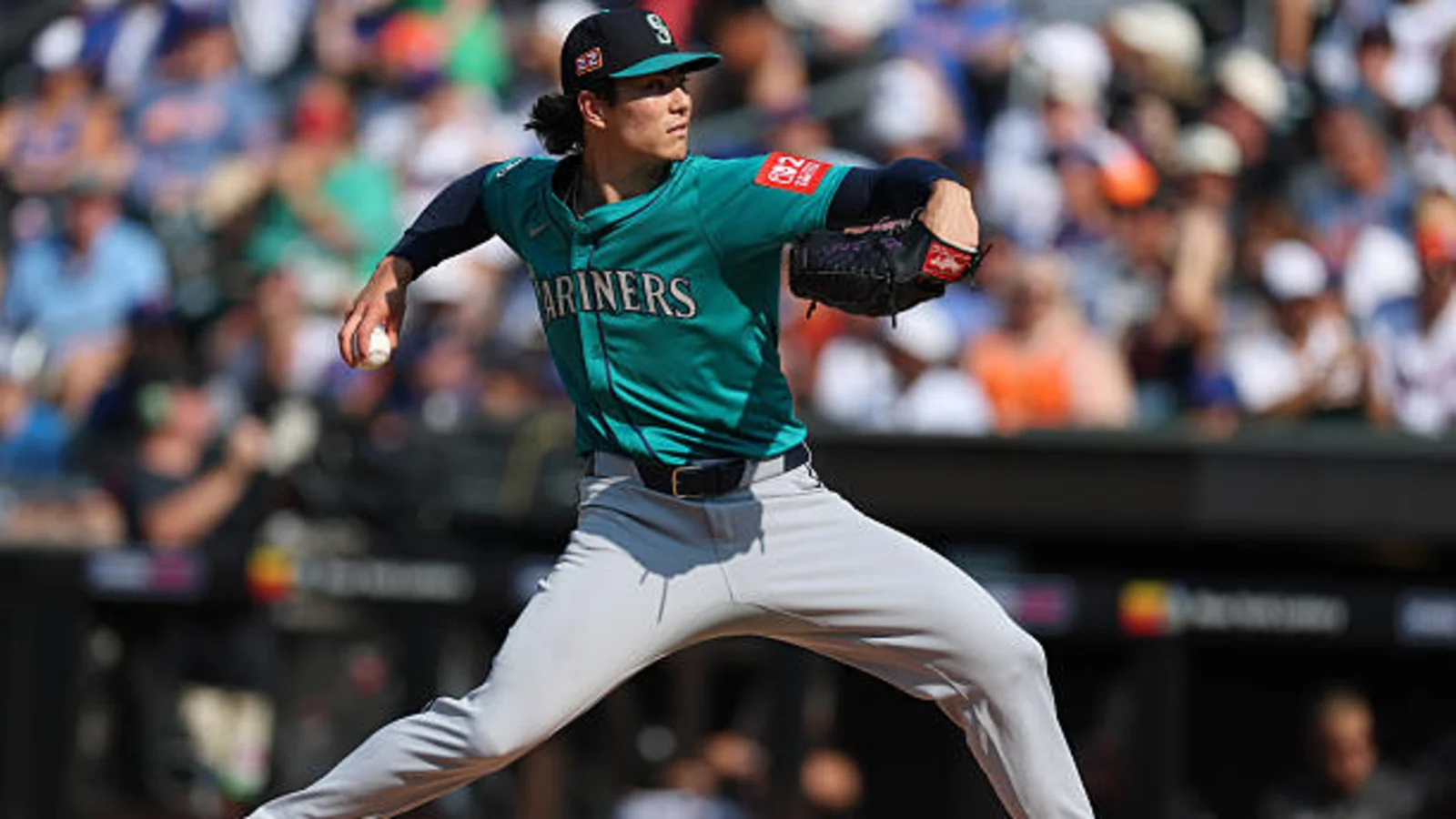
There were a couple of long ABs,
Woo said after Saturday’s game (via MLB.com).
You can live with getting singled to death, so long as I’m making good pitches and they are putting good swings on good pitches, it’s a tip of your cap situation.
—Bryan Woo, Mariners pitcher
Woo’s effectiveness stems from a well-rounded arsenal. His four-seam fastball is notable not for raw speed but for exceptional rise, deceiving hitters with its vertical movement. Complementing the fastball, Woo relies on a sinker that generates ground balls early in counts and a slider that frequently induces swings and misses. His aggressive approach to pitching inside the strike zone allows him to maintain pitch efficiency, and this fearlessness has made him an innings-eating force in a time when many starters rarely last beyond five frames.
This season, he has consistently combined command and endurance, a balance that has allowed him to consistently deliver quality starts. His streak of 24 starts with six or more innings and a maximum of two walks highlights his extraordinary control and stamina, outpacing even elite contemporaries and linking him with some of the best pitchers in history.
Historical Context of Woo’s Record-Breaking Streak
Before Woo, the last pitcher to start a season with at least 24 consecutive six-inning starts was Zack Greinke in 2015, who completed 32 such starts during his Cy Young runner-up campaign. However, no other pitcher has matched Woo’s combination of innings and limited walks over such a long stretch to open a season.
The previous comparable streaks—including those involving legendary figures such as Christy Mathewson in 1908 and Cy Young in the early 1900s—occurred well over a century ago, underscoring the rarity of Woo’s accomplishment in modern baseball. Across multiple seasons, pitchers like Roy Halladay and Curt Schilling achieved 26 consecutive starts meeting similar durability and control benchmarks, but these did not begin a season and thus fall into a different statistical category.
Woo’s emergence shines a light on the potential of effective pitcher development. While he struggled at Cal Poly with a high ERA and control issues, the Mariners’ coaching staff helped him refine his mechanics and pitch selection, turning him into a standout performer who combines efficient pitch counts with high strikeout potential.
Orioles’ Trevor Rogers Rebounds Amid Team Struggles
While Bryan Woo’s historic streak captures national headlines, other pitchers have shown promising signs of turnaround this season. The Baltimore Orioles, mired in a disappointing campaign under interim manager Tony Mansolino, have found hope in left-hander Trevor Rogers. Once a promising prospect from last year’s trade deadline, Rogers has rejuvenated his form after a rough start with Baltimore.
Since earning a permanent spot in the Orioles’ rotation in mid-June, Rogers has ranked second in WAR among pitchers, trailing only Cristopher Sánchez. Over his last five starts, Rogers has delivered at least six innings with one or fewer runs allowed, striking out seven batters in seven innings against the Red Sox in a recent outing.
Nobody knew this was going to come,
Mansolino admitted after the Monday game (via MLB.com).
What he’s doing right now is ace-type.
—Tony Mansolino, Orioles interim manager
Rogers recovered from knee issues that sidelined him early in the season and sharpened his approach on the mound. He altered his pitch mix by incorporating more sinkers and fewer four-seam fastballs against right-handers, while doing the opposite against left-handed hitters. Additionally, he introduced a sweeping breaking ball, a pitch with a significant whiff rate that complements his existing arsenal of four-seamers, sinkers, changeups, and sliders.
Although his home run rate is expected to regress from an unusually low level, Rogers’ improvements in velocity and pitch variety suggest a sustainable resurgence. He offers the Orioles a much-needed positive note amid a challenging season and figures to be a key part of the team moving forward.
Rockies Nearing an Unfavorable Run Differential Mark
In contrast to individual successes, the Colorado Rockies continue to endure one of the most difficult seasons in MLB history. Despite a recent surge, winning six of their last eight games, the Rockies remain far behind with a staggering minus-333 run differential through 126 games. This figure is the worst in the Modern Era and nearly doubles that of the second-worst team this season, the Nationals.
The Rockies’ struggles extend both at home and on the road, with a run differential per game of approximately -2.88 at Coors Field and -2.40 away. While Coors Field is often cited as a hitter-friendly park, these defensive and pitching woes have affected the team across all settings.
Historically, the 1899 Cleveland Spiders hold the all-time worst run differential at minus-723, but their situation was unique due to ownership conflicts that led to asset stripping. Among modern teams, the Rockies’ current numbers put them on pace to break records for futility over the last century.
To surpass the 1932 Boston Red Sox’s historically bad run differential of -345, the Rockies need to be outscored by at least 12 more runs in their remaining 36 games, a feasible but disheartening prospect. Although their record has improved from an initially catastrophic start, projecting 116 losses, the team still faces challenges to avoid matching or exceeding previous records of poor performance.
Looking Ahead: Impact of Woo’s Streak and Team Dynamics
Bryan Woo’s historic streak not only elevates his standing within the Mariners and the league but also serves as a symbol of successful pitcher development in the modern game. His ability to consistently deliver deep outings with exceptional control at a young age bodes well for Seattle’s playoff ambitions as the season draws to a close.
For the Orioles, Trevor Rogers’ revival amid a disappointing team campaign highlights the value of individual persistence and adjustment, providing hope for a franchise seeking to rebuild and contend in the near future. Meanwhile, the Rockies’ ongoing run differential woes emphasize the challenges of roster construction and competitiveness in today’s MLB environment.
As the 2025 season enters its home stretch, Woo’s steady excellence will remain a focal point, potentially influencing how teams approach pitcher development and in-game strategy, while the Orioles and Rockies’ narratives underscore the contrasting fortunes that define this year’s major league landscape.