
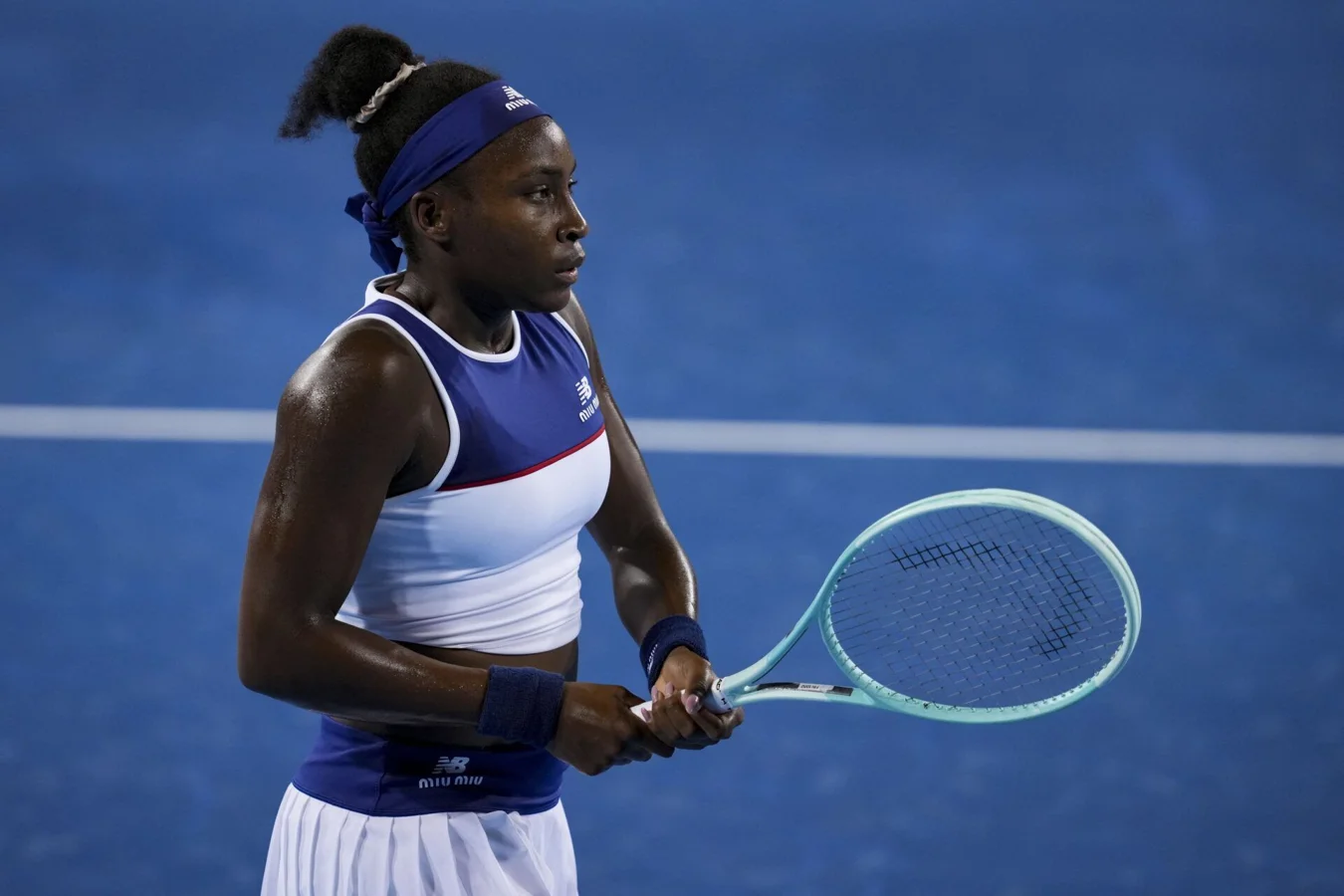

Coco Gauff‘s serving challenges have drawn increased attention as the 2025 US Open nears, with frequent double faults undermining her performance in recent tournaments. Her former coach, Brad Gilbert, has pinpointed specific technical changes that could help resolve these issues and improve her consistency on serve.
The American tennis star’s serve has been a significant vulnerability, most notably during the Canadian Open, where she committed 42 double faults in just three matches. Although her service game showed minor improvement at the Cincinnati Open, it faltered dramatically in her quarterfinal match against Jasmine Paolini, where 16 double faults affected her chances of advancing further.
Gauff’s recent decision to part ways with coach Matthew Daly, who had been working on her grip and serve mechanics since late last year, reflects her ongoing search for solutions to these inconsistencies. Following this change, she continues training with long-time coach Jean-Christophe Faurel while adding biomechanics expert Gavin MacMillan to her support team. MacMillan’s successful experience assisting Aryna Sabalenka with similar serving struggles makes him a valuable addition for Gauff’s efforts to stabilize her serve.
During intensive practice sessions at Flushing Meadows, the two-time Grand Slam winner has concentrated on refining her serve with MacMillan’s guidance. Gilbert highlighted that adapting grip and mechanics could be crucial improvements but requires commitment and patience. According to a tennis insider reporting Gilbert’s viewpoint on X, the timeline for such mechanical changes is approximately four to six weeks. Gilbert also recommended that Gauff’s second serve find an ideal speed range between 80 and 85 mph, to provide both safety and effectiveness.
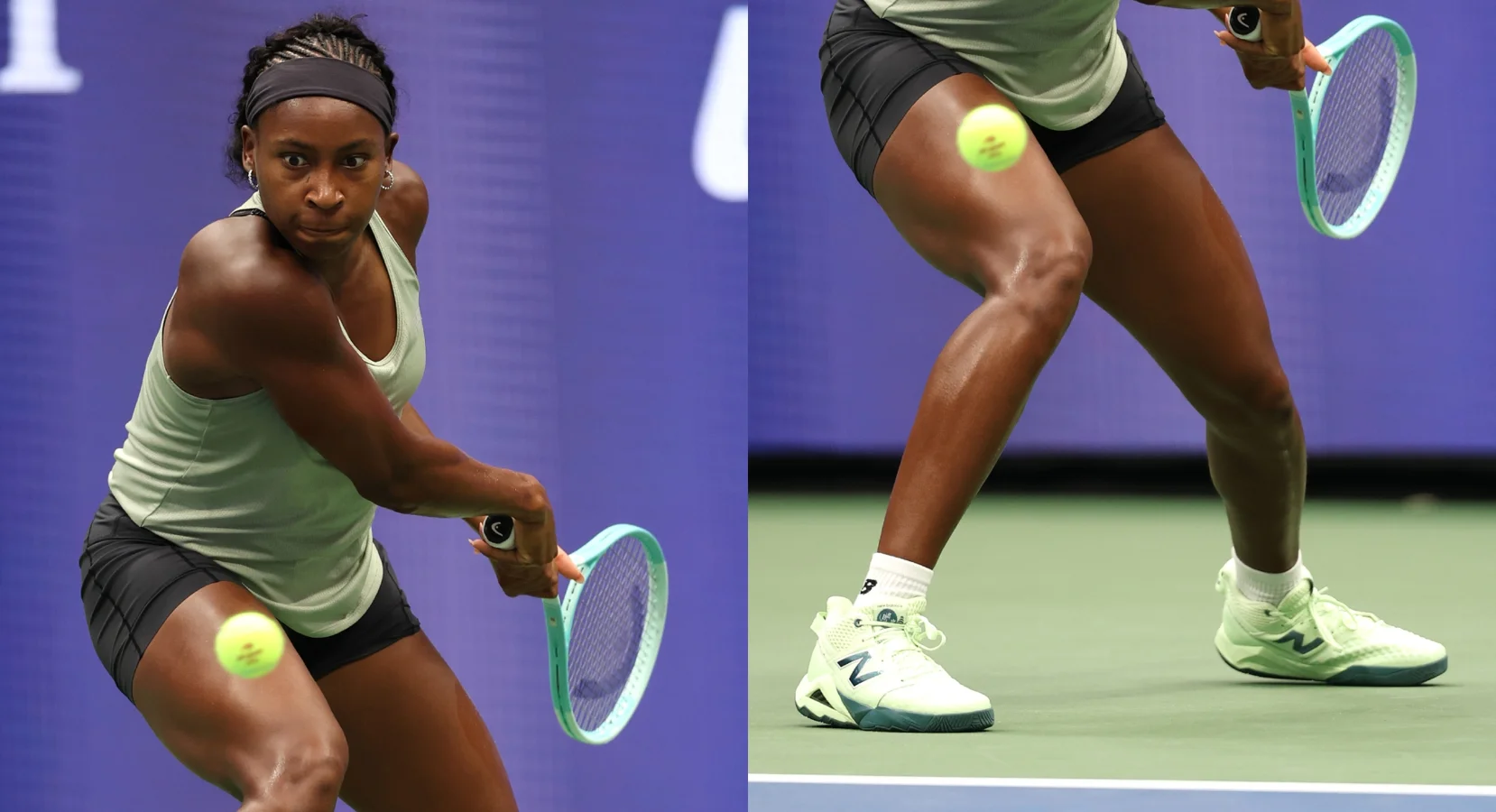
“The player has to be willing to make the grip changes and that for mechanical changes you need 4-6 weeks. He added that she needs an 80-85 mph safety kick 2nd serve, not faster, not slower.” —Amy Lundy Dahl, ESPN
With a 35-12 record this season, Gauff aims to leverage this critical period before the US Open to address her serve’s instability, seeking a turnaround that could restore her to title-contending form.
Brad Gilbert Offers Perspective on Gauff’s Recent Coaching Transitions
The recent coaching adjustments in Gauff’s camp, notably her split from Daly and integration of MacMillan, drew questions about the stability within her team. Brad Gilbert responded by placing these moves within the context of professional tennis, where player results often dictate strategic changes.
Addressing concerns raised by fans regarding frequent coaching shifts at the elite level, Gilbert pushed back against the narrative that Gauff changes coaches frequently, emphasizing that the tennis world is fundamentally results-driven.
“It’s a results business, she actually hasn’t switched that much.” —Brad Gilbert, Former Coach
Gauff’s determination to rebound following a surprising early departure at Wimbledon led her to focus intensely on the North American hard-court season. Despite hopes of strong performances, her service woes persisted at the Canadian Open, preventing her from advancing beyond the fourth round. Her run at the Cincinnati Open was more promising, reaching the quarterfinals before a hard-fought loss to Paolini highlighted ongoing technical difficulties and mental resilience.
Meanwhile, Iga Świątek’s victory in Cincinnati pushed Gauff down to No. 3 in the women’s rankings, intensifying pressure as the US Open approaches. However, Gauff’s career so far shows she often uses setbacks as motivation rather than deterrents.
Implications for Gauff’s US Open Prospects and Future Outlook
The combination of new technical coaching and the focused efforts on serve improvement suggest Gauff is committed to overcoming this challenging phase. The US Open, played in front of a supportive home crowd at Flushing Meadows, provides an ideal stage for Gauff to translate these adjustments into concrete results.
As she seeks her third Grand Slam title, the input from biomechanics specialist MacMillan alongside the oversight of Jean-Christophe Faurel provides a balanced approach to addressing her serve issues without losing sight of her overall game development. Gilbert’s insights on the necessary timeline for these technical fixes underline the urgency, but also the realistic progression needed for sustainable improvement.
Ultimately, resolving her serving struggles could be the pivotal factor that elevates Gauff back into contention for major championships and strengthens her positioning among the sport’s elite. How well she adapts to these changes in the next few weeks will be closely watched by both fans and analysts as the US Open draws closer.