
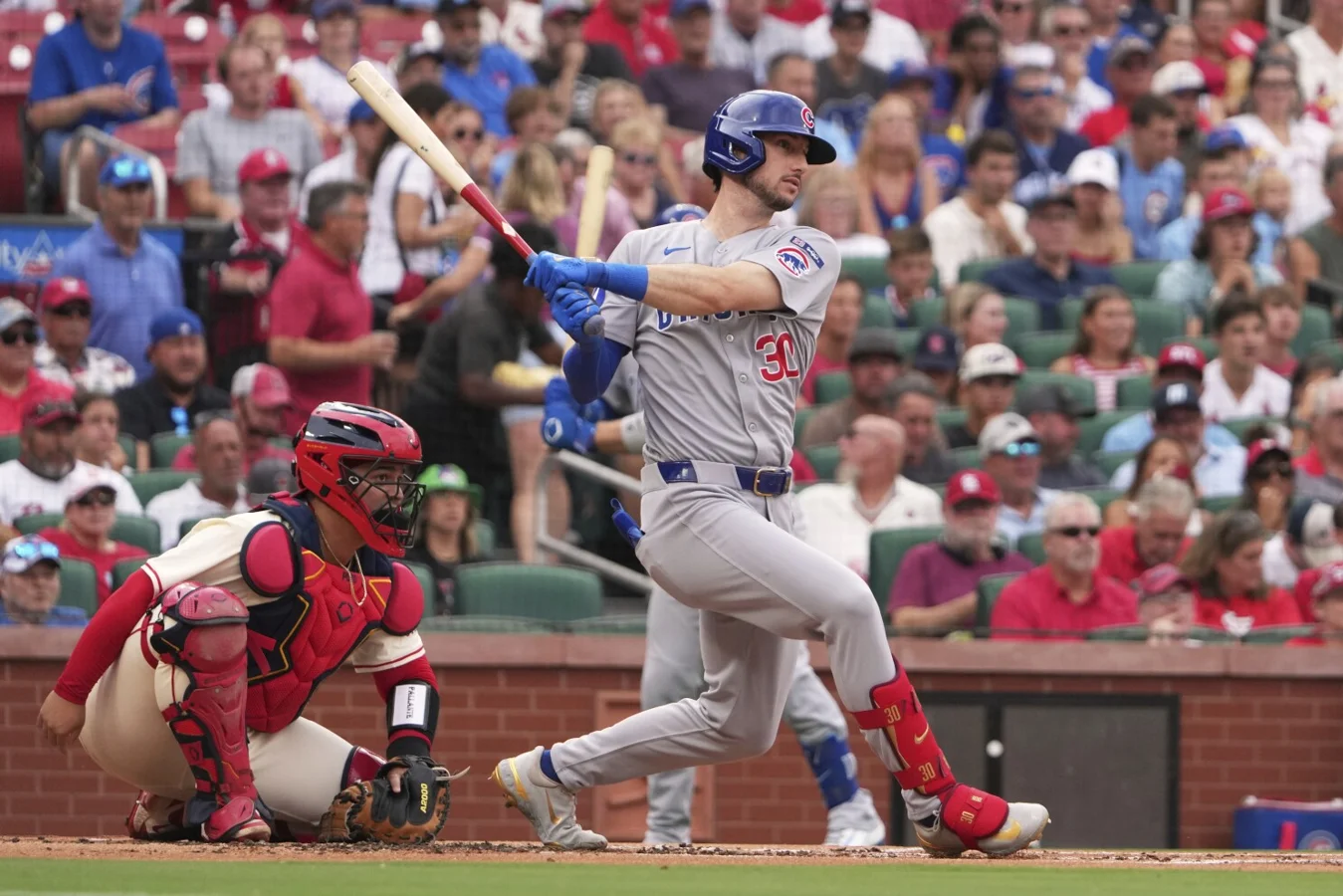

Kyle Tucker, recognized as one of the Chicago Cubs’ top players, has been experiencing a significant performance slump in recent weeks, complicating his otherwise solid season. Although his overall statistics remain impressive, with a .261 batting average, .374 on-base percentage, .447 slugging, and 18 home runs, his current streak has seen him falter at the plate, which is causing frustration for both the player and fans alike.
Despite his strong season metrics, including a weighted Runs Created Plus (wRC+) of 131, 25 stolen bases, and a Wins Above Replacement (WAR) close to peers such as Kyle Schwarber and Juan Soto, Tucker has been unable to maintain his form. Over the past seven games, he is just 2-for-25 and has managed only 8 hits in 54 at-bats throughout August. Notably, he hasn’t recorded a home run in over a month, and his last extra-base hit was in July, marking a striking power outage for the Cubs’ slugger.
Visible Signs of Frustration On and Off the Field
Tucker’s mounting struggles have visibly affected his composure during games. In one instance, he didn’t run out a ground ball to first base, an uncharacteristic display of frustration for a player of his caliber. Additionally, fans witnessed Tucker slam his helmet to the ground after flying out in a lopsided loss to the Milwaukee Brewers. These moments elicited boos from the crowd at Wrigley Field, reflecting the growing tension surrounding his slump.
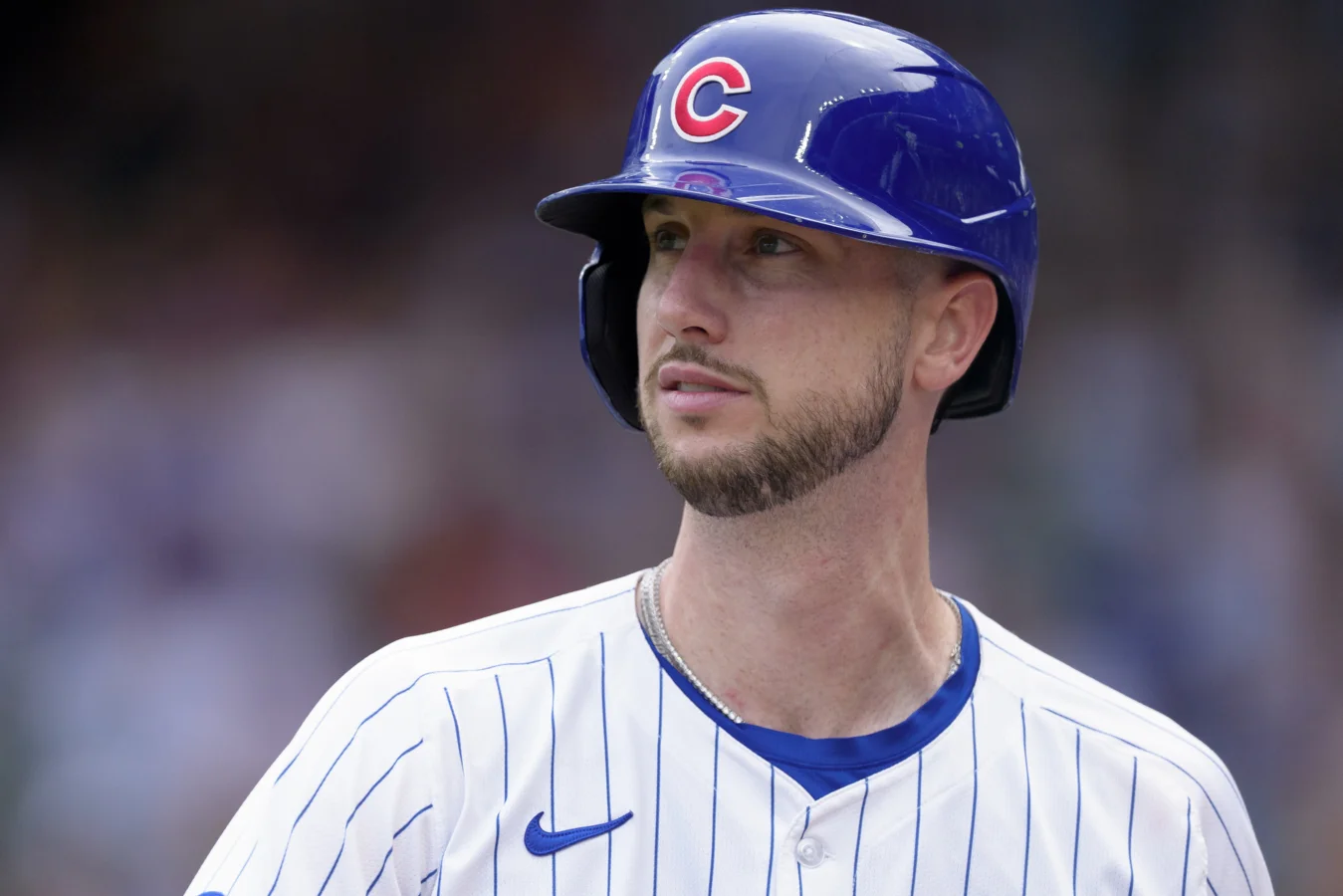
Manager Craig Counsell’s Decision to Bench Tucker
In response to Tucker’s ongoing difficulties, Cubs manager Craig Counsell has opted to bench the star outfielder temporarily. Counsell emphasized the need for the player to reset, stating,
“[H]e’s trying. It’s just not clicking. We’re going to have to take a little step back here, for sure, and just give him some days off to reset him.”
This move prioritizes Tucker’s mental and physical recuperation during a crucial stretch of the season.
Taking Tucker out of the lineup allows the Cubs to relieve pressure on him and the team without jeopardizing playoff positioning, given the current standings.
Cubs’ Playoff Status Enables Strategic Rest for Tucker
The decision to rest Tucker is supported by the Cubs’ strong likelihood of making the postseason. After Monday’s games, Chicago holds a 92.5% chance to secure a wild card berth, a slim 4.2% chance to win the division, and only a 3.3% risk of missing the playoffs altogether. This gives the team flexibility to afford Tucker the necessary time off without risking a playoff spot.
With approximately six weeks left in the regular season, the Cubs can focus on managing players’ health and performance carefully, viewing rest as a prudent investment for the postseason run.
Lingering Finger Injury Possibly Affecting Tucker’s Play
One factor potentially contributing to Tucker’s decline is a jammed finger sustained on June 1. During a failed stolen base attempt, he awkwardly rolled over his right hand after sliding into second base, leading to an injury that, while not severe enough for the injured list, may be hindering his swing mechanics. He has opted not to use this injury as an excuse, but the timing of his slump aligns closely with its onset.
While Tucker wears a sliding glove on his left, dominant hand, the injury to his right finger—critical for grip and bat control—could subtly interfere with his hitting. Analysts note his average bat speed has dropped since the injury, which correlates with a marked decrease in the quality of his contact. MLB.com’s Jordan Bastian observed that Tucker’s rate of groundballs has surged, while his bat speed has notably slowed, indicating possible compensation for the discomfort.
Historically, injuries to small body parts have had outsized effects on athletes. Bill James once described an injury elsewhere in a player’s body that ultimately harmed pitching performance, illustrating how bodily compensation can impact athletic execution.
Bat Speed Decline and Adjustments at the Plate
Tucker’s bat speed has declined from 72.4 mph, comparable to hitters like Eugenio Suárez, down to 71.0 mph, similar to Daniel Schneemann. While some hitters succeed with lower bat speed, Tucker’s power production has deteriorated in tandem, reflected by his low isolated power (ISO) of .132 since June.
He has also seen his strikeout rate spike to 17% in this period, whereas in August alone, he posted the highest monthly strikeout rate of his career since 2020. Additionally, his walk rate, which had been a consistent strength, fell below double digits for the first time since May 2023. This suggests Tucker is pressing too much and struggling to maintain his usual plate discipline.
His approach changes too: August saw a career-high pull rate of 58.5%, indicating Tucker might be swinging early to compensate for decreased bat speed and power. This adjustment has backfired somewhat, as his groundball-to-flyball ratio surged to 2.10, an unusual figure for a player known for hitting fly balls and driving power.
Despite Struggles, Tucker Remains an Offensive Contributor
Though Tucker’s power numbers have dropped, he continues to reach base at a respectable clip, maintaining a .352 on-base percentage over the last 62 games. Even with a diminished slugging outlook, his ability to get on base preserves his value in the Cubs’ lineup.
However, the team cannot settle for enough retries or walk rates alone. Tucker’s combination of skills—speed, defense, power, and plate discipline—makes him essential to the Cubs’ postseason aspirations. His current slump restricts this multifaceted impact, prompting urgency for improvement.
Why Tucker’s Return to Form Matters for the Cubs
Kyle Tucker is one of the rare players who offers a blend of all five tools—power, speed, defense, contact, and plate discipline—without compromising any. Unlike other stars who might excel in certain areas but lack in others, Tucker’s overall game provides balance and versatility.
The Cubs invested heavily to acquire and retain him because of that balance. Though the division race is effectively out of reach due to the Milwaukee Brewers’ dominance, securing and enhancing a wild card spot remains critical. The Brewers’ strong head-to-head record against other teams, including the Cubs, means Chicago must be at its best in August and beyond.
For the playoffs, a version of Tucker who can no longer rely on his power or limit strikeouts would blunt the offense. Conversely, a fully recovered Tucker who resumes hitting for power and controlling strikeouts could be a key factor in the Cubs’ postseason success.
Looking Ahead: Tucker’s Role in the Cubs’ Postseason Push
The focus now is on allowing Tucker to recover and reset mentally and physically during his benching. The Cubs need him to return healthy and confident for what promises to be a competitive National League wild card series.
Ultimately, whether the slump is due to injury, fatigue, or pressure, this strategic rest aims to restore Tucker’s form. The Cubs face a crucial stretch of meaningful games ahead, and their top player’s resurgence could determine the team’s fate in the playoffs.