
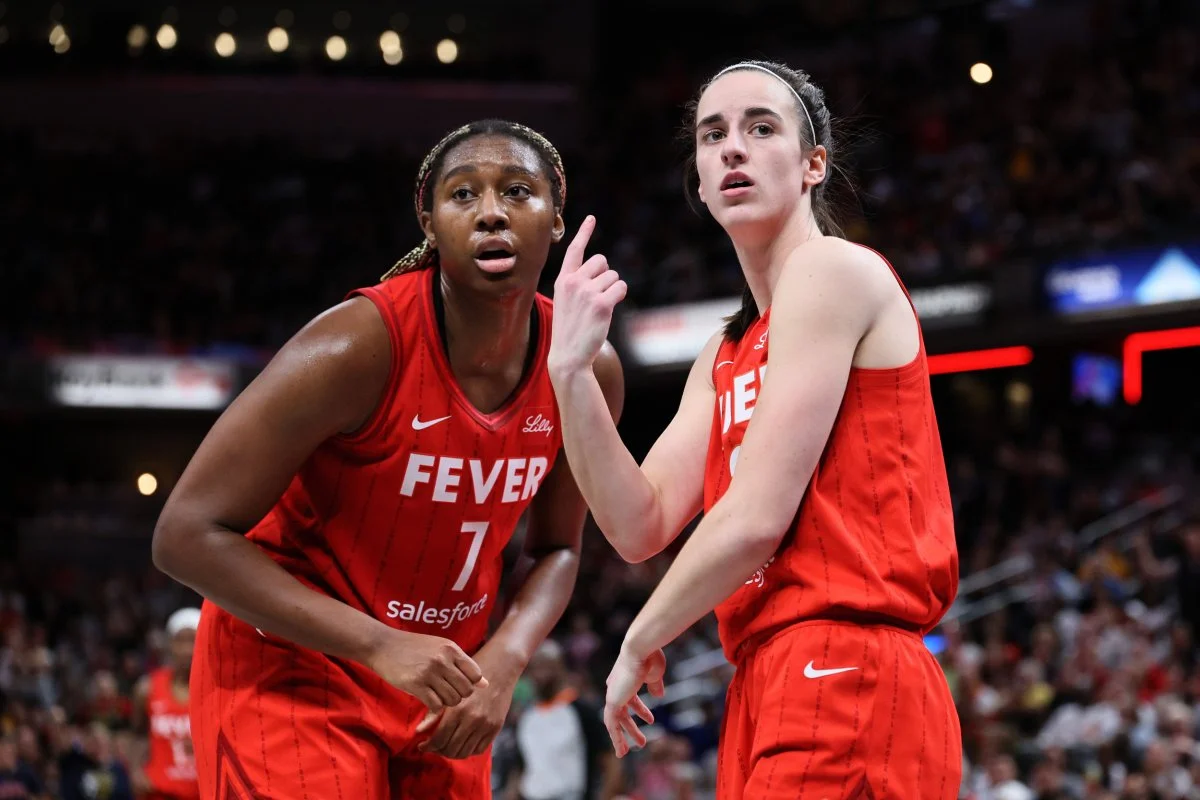

WNBA analyst Trenni Casey expressed strong frustration on Tuesday about the league’s management of Caitlin Clark’s situation and the Connecticut Sun’s potential relocation. Speaking as a guest on NBC Sports, Casey sharply criticized the league’s decision-making process, particularly their preference to relocate the Connecticut Sun franchise to Houston instead of Boston, despite an attractive bid.
Casey highlighted that Boston‘s $325 million offer, coupled with a $100 million proposal for a cutting-edge practice facility, was overlooked in favor of Houston, a city that previously lost its WNBA team, the Houston Comets, in 2008.
“I think the WNBA is really screwing up here,” Casey said. “You have an offer for $325 million plus a $100 million investment in a state-of-the-art practice facily in a major television market and a sports crazy town and you’re like … we are gonna move it to Houston where we already had a team for 11 years.”
She questioned why the league is so determined to prioritize Houston despite its past failures, rather than embracing Boston, a proven strong market ready to support a successful WNBA franchise.
“I don not understand why the NBA is so adamantly opposed to Steve Pagliuca, I do not know why they are so adamantly opposed to the Boston market. It almost feels like between this and the way they have handled everything with Caitlin Clark that they just don’t really know how to run a league,” she added.
Details around Boston’s bid and league’s relocation authority
Earlier this month, Steve Pagliuca, who is a minority owner of the Boston Celtics, submitted a $325 million offer to purchase the Connecticut Sun and move the team to Boston. Despite this substantial proposal, WNBA commissioner Cathy Engelbert did not present the bid to the league’s board of directors, which holds the ultimate authority in relocation decisions.
The WNBA emphasized that individual teams cannot decide on relocations independently, with all final approval resting with the board of governors. The league has dismissed Boston’s bid as a current priority despite the city’s rich basketball history and strong fan support.

WNBA’s expansion plans focus on other cities over Boston
The WNBA has made it clear that Boston is not a focal point in their immediate expansion plans. Instead, the league intends to grow in Cleveland, Detroit, and Philadelphia—cities that submitted expansion applications and have been given precedence due to comprehensive efforts during the expansion process.
In a June press release, the league stated Boston-based groups had not applied for a team at the time, which places Boston behind other markets currently under consideration.
“No groups from Boston applied for a team at that time and those other cities remain under consideration based on the extensive work they did as part of the expansion process and currently have priority over Boston,” the league said.
However, some sources indicate that the league might consider expanding to Boston around 2033, suggesting a long wait before the city could possibly host a WNBA franchise.
Implications of the WNBA’s choices for the league and markets
The league’s decision to sideline Boston in favor of Houston has sparked backlash from analysts and fans alike, especially given the presence of a widely celebrated player like Caitlin Clark and Boston’s established basketball culture. The league’s reluctance to embrace Pagliuca’s bid raises questions about its strategic direction and ability to capitalize on strong markets. How the WNBA addresses these challenges may affect its growth trajectory and public perception moving forward.