
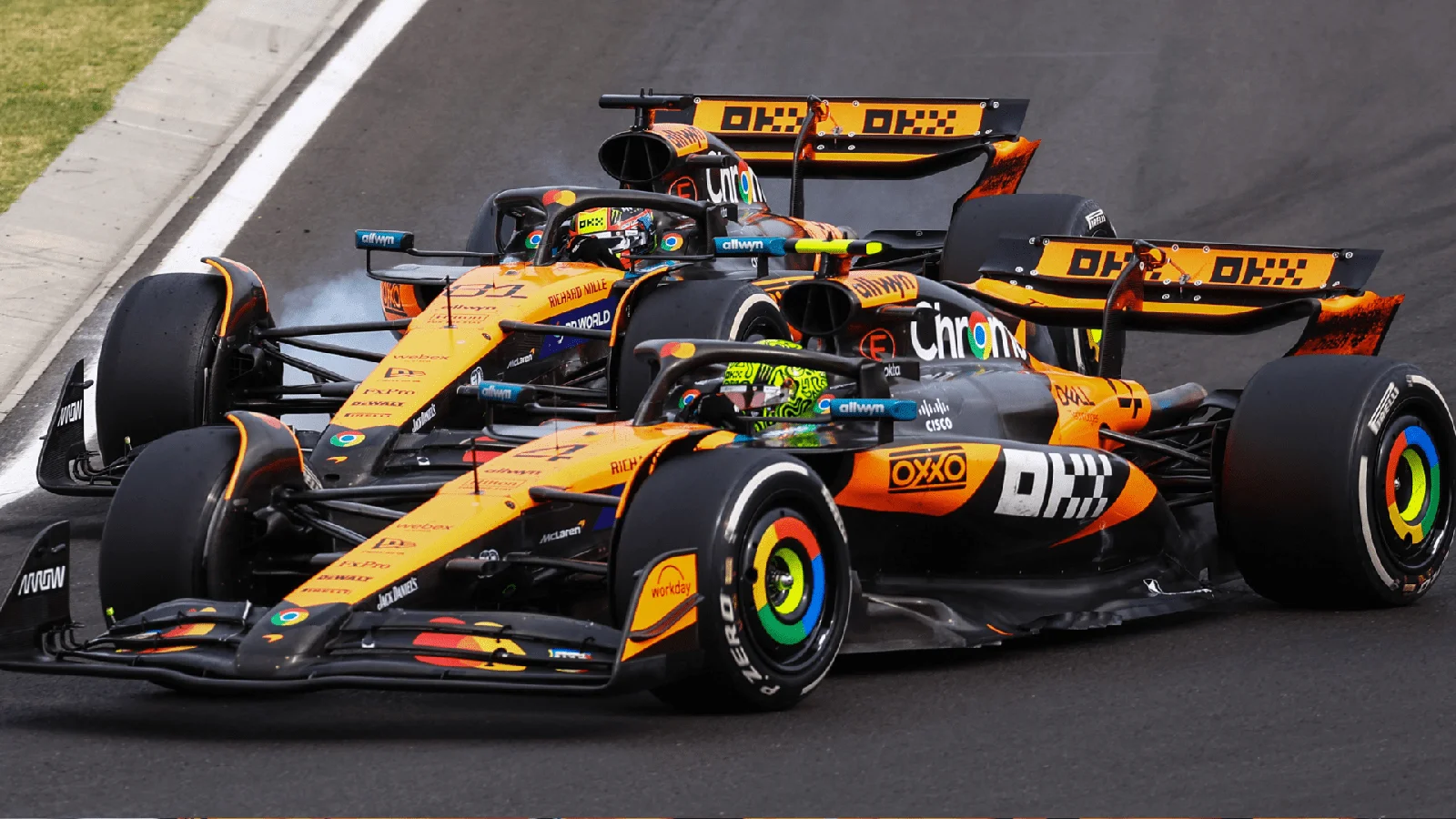

Formula 1 record milestones continue to capture fans’ imaginations, from races won to unusual statistics that may never be surpassed. Earlier this year, Nico Hulkenberg finally earned his first podium finish at the British Grand Prix after nearly 240 starts, breaking his lengthy streak without reaching the podium. This achievement shifted an unwanted record to another driver, highlighting some of the unique and enduring records embedded in F1 history.
Record for the Oldest Driver to Win a Grand Prix
While today’s Formula 1 grid is dominated by young talent, with most drivers born after 2000 and only a handful over 30, the sport’s past spoke a different story. Drivers in earlier decades often competed well into their 40s and beyond. Fernando Alonso, currently the oldest driver racing at 44, last won a race at 32, far younger than the oldest winner on record.
The record belongs to Luigi Fagioli, who clinched victory at the 1951 French Grand Prix at 53 years and 22 days old. That race, notable for being the longest in distance, ended in controversy after Alfa Romeo instructed Fagioli to swap cars with teammate Juan Manuel Fangio due to mechanical issues. Fangio went on to win by nearly 50 seconds, while Fagioli finished officially classified as both first and 11th. Frustrated by the decision, Fagioli immediately retired, making that one triumph his only win in grand prix racing.
Most World Championship Points Without a Victory
Nico Hulkenberg’s recent podium finish at Silverstone in 2025 ended his long wait, but he still holds the record for accumulating the highest number of championship points without winning a race. Over his decade-long career, Hulkenberg has earned 608 points, more than double of the nearest contender, Romain Grosjean, who scored 391 points without a win.
Although Hulkenberg has proven consistent, the victory itself has eluded him, underscoring how rare such endurance without race wins is in Formula 1. His performance and the evolving dynamics of Sauber’s transition toward the Audi works team may influence whether he extends this unusual record further.
World Champions with the Fewest Career Points
Since its inception, Formula 1 has revised its points system multiple times. Early on, only the top five finishers scored points, whereas current rules award points to the top ten. This change means it is unlikely that Phil Hill’s record for the fewest cumulative points as a world champion will ever be broken.
Hill, Ferrari’s 1961 world champion, earned just 34 points that season by winning two races and securing three additional podiums, narrowly defeating Wolfgang von Trips by a single point. Across his nine-season career, Hill amassed 98 points total—fewer than half of what Lewis Hamilton has earned halfway through a single modern season.
Today’s sprint format means a driver can collect up to 33 points in one weekend by winning both the sprint race and the grand prix, making Hill’s point total difficult to match under current rules.
Driver with the Most Career Race Retirements
Formula 1 reliability has dramatically improved since the days when mechanical issues and accidents caused frequent retirements. Engines today can endure thousands of miles without failure, unlike earlier eras dominated by fragile V10 and V12 motors. The record for most retirements still sits with Riccardo Patrese, who raced from 1977 to 1993.
Patrese started 256 grands prix, achieving six wins and 37 podiums but retiring from 147 races, more than half his starts. His aggressive style often led to crashes, and he was plagued by unreliable cars, such as the Alfa Romeo 185T. This combination kept his retirement tally historically high and likely untouched in modern F1.
Teams with Most Races Without Scoring Points
Among the records involving teams, the longest streak without scoring a single point belongs jointly to the teams Caterham and HRT. HRT, active from 2010 to 2012, started 56 races without earning points despite drivers like Daniel Ricciardo, Karun Chandhok, and Pedro de la Rosa. Their closest achievement was a 13th-place finish at the 2011 Canadian Grand Prix with Vitantonio Liuzzi.
Following HRT’s exit, Caterham continued this unfortunate trend from 2012 to 2014. While they never scored a championship point, they came close with an 11th-place finish at the 2012 Brazilian Grand Prix thanks to Vitaly Petrov. These records underline the challenges new or less competitive teams face in scoring even a single point in Formula 1.
Now as new entrants like Cadillac prepare to join the grid, avoiding these unwanted milestones will be an early test of their competitiveness and reliability in this highly demanding sport.