
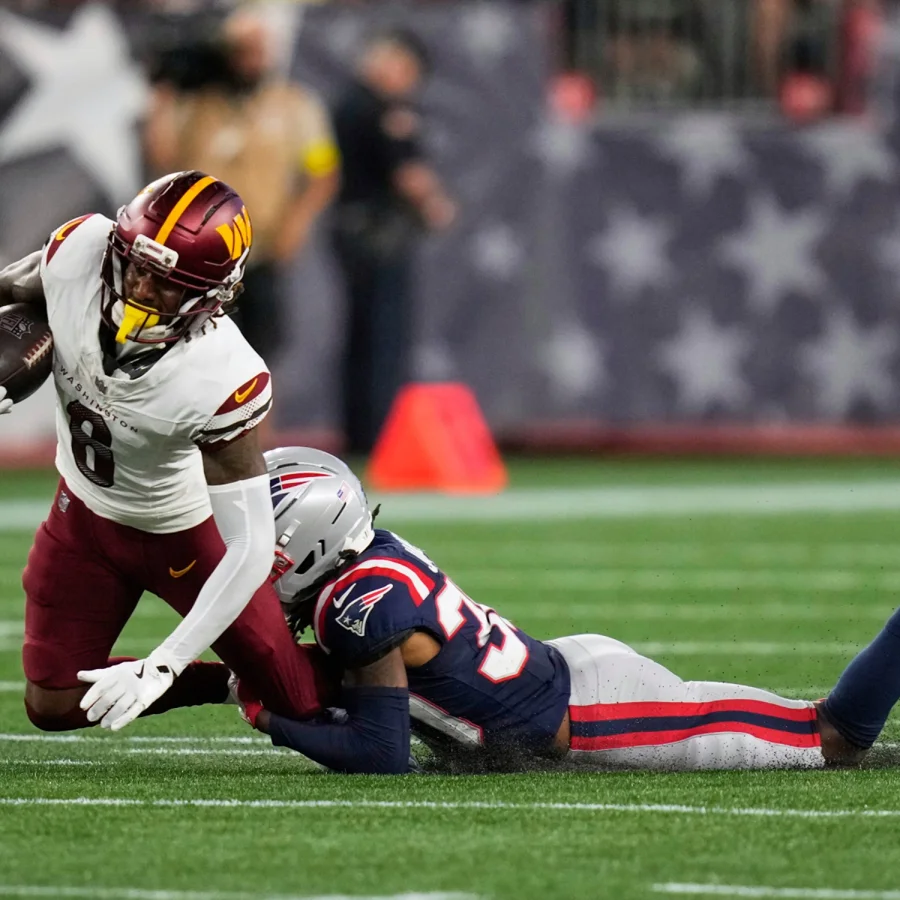

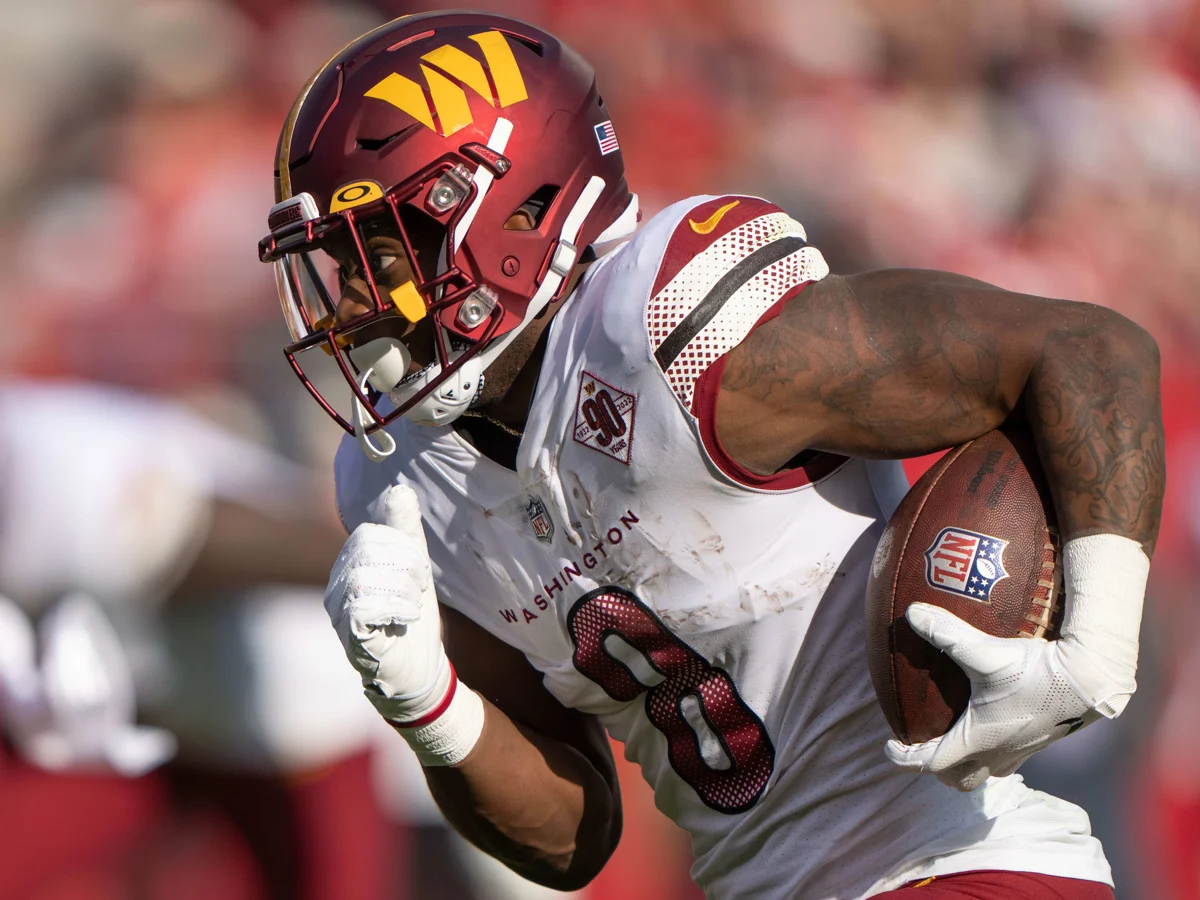
The San Francisco 49ers have strengthened their running back roster by acquiring Brian Robinson Jr. from the Washington Commanders. This trade, finalized recently, involved the 49ers sending a 2026 sixth-round draft pick to Washington, with the Commanders agreeing to cover $1.25 million of Robinson’s salary. The move was driven by the 49ers’ urgent need for reinforcements behind Christian McCaffrey, as injuries had severely depleted their depth at the position.
Behind the Trade: Missing Jordan Mason
While adding Robinson addresses immediate concerns, the trade also serves as an implicit admission from the 49ers about regretting their previous decision to trade running back Jordan Mason to the Minnesota Vikings. Although the 49ers gained safety Marques Sigle with the draft pick acquired from Mason’s trade, and Sigle has impressed during training camp and preseason, the choice to let Mason go still looms over the team’s running back strategy.
Mason, who fits the 49ers’ offensive scheme well and complements McCaffrey effectively, remains a superior player compared to Robinson at this stage. The 49ers’ confidence in Mason’s abilities contrasts with their cautious approach to Robinson, who must prove himself through consistent game performances, especially considering the last-minute nature of the trade.
Financial Considerations Shaping the Decision
One key factor in how the 49ers handled Mason’s contract was the second-round restricted free agent tender placed on him, which set his 2025 salary at $5.4 million. This tender was designed to deter other teams from signing Mason by requiring a significant draft pick as compensation. Ultimately, it also gave the 49ers leverage to trade Mason rather than keep him.
Had the 49ers wanted to retain Mason from the start, they likely would have avoided placing a costly second-round tender and instead pursued a manageable two-year extension similar to the deal made with wide receiver Jauan Jennings last year. The presence of Isaac Guerendo on the roster influenced this approach, with the 49ers initially viewing Mason’s re-signing as a luxury they could forgo.
Current Depth Chart and Impact on Team Strategy
Following Mason’s departure, Isaac Guerendo remains the team’s No. 3 running back, emphasizing the thin depth at the position. The need to trade for Robinson indicates how quickly the 49ers’ situation became urgent. This desperation underscores the potential misjudgment in letting Mason go, a sentiment highlighted in recent analysis.
The acquisition of Robinson provides the 49ers with immediate reinforcement behind McCaffrey, but the lingering question is whether Robinson can match Mason’s effectiveness and fit within the team’s offensive strategy. The 49ers’ decision now reflects both a corrective measure and a gamble on Robinson’s ability to contribute meaningfully.
What This Means for the 49ers Moving Forward
The trade for Brian Robinson Jr. is revealing beyond just the roster move; it signals a recognition by the 49ers that parting with Jordan Mason might have been premature. While Robinson brings fresh energy and cost savings—helped by the Commanders’ salary contribution—Mason’s proven compatibility and talent still stand out in the organization’s evaluation.
Moving forward, the 49ers will rely on Robinson to solidify their running back group and hope he can justify the trade. This scenario also illustrates the challenges teams face balancing player retention, salary considerations, and roster needs. The 49ers’ acknowledgment of their prior mistake might lead to more cautious decisions in future roster management, especially in critical offensive positions.