

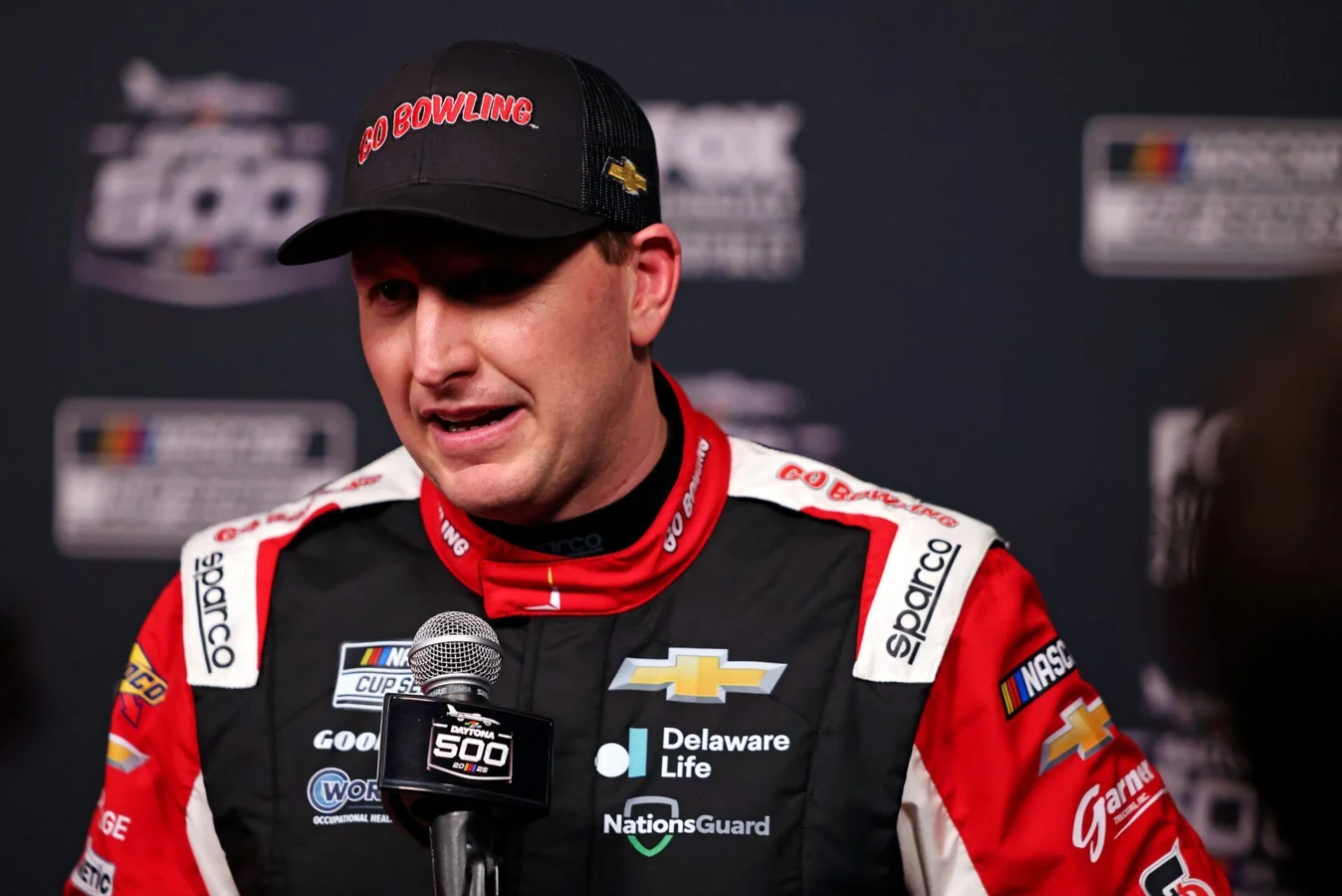
Michael McDowell, driver of the No. 71 Spire Motorsports Chevrolet, addressed the media ahead of the NASCAR Cup Series qualifying session at Daytona International Speedway, reflecting on his experience and outlook for this critical playoff cutoff event. With a single NASCAR Cup Series victory at the “World Center of Racing” coming from the 2021 Daytona 500, McDowell brings a mix of confidence and caution to this high-stakes race.
The focus on Michael McDowell Daytona NASCAR competition is heightened as teams vie for a playoff spot, knowing this race is their final chance to secure a place in the postseason starting next week. McDowell’s mindset is a balance of strategic awareness and readiness for the unpredictable chaos that the Daytona superspeedway often delivers.
Confidence Mixed With Caution: Navigating Daytona’s Unpredictability
When asked about his confidence heading into Daytona, McDowell acknowledges the complexity of the race despite his experience. He recalled the narrow escape from disaster last year when leading with just 10 laps remaining, only to finish in the 20s after a late wreck.
“Yeah, there is confidence, for sure. But we also have all been here enough to know that there’s a lot that can happen. I was just watching last year’s race here — we led with, I think 10 laps to go and we were in position to kind of control the race and ended up almost upside down and finished in the 20s, right? So I come here confident that we can be up front and put ourselves in position. I feel like situationally being aware of just how these things play out and where to be and all those things; I feel really comfortable and confident in. But it all goes out the window when things get crazy. So, you know, I think there’s a level of confidence and angst that you bring to places like this because there’s so many variables that are not controllable, but I feel good about it being the cutoff race and giving us an opportunity to go race for it.”
—Michael McDowell, NASCAR driver
He emphasized that the intensity of the race amplifies decision-making challenges amid high desperation from drivers who must win to advance, making Daytona a notoriously unpredictable event.
Expecting an Intense and Chaotic Battle for Playoff Survival
McDowell was candid about the chaotic nature of the race, given how many drivers need a victory to qualify for the playoffs.
“Like you guys do… it’s going to be a mess, right? I mean, we all know it,”
he said, pointing out that desperation pushes drivers to risk everything. The willingness to sacrifice single positions in front of the pack escalates aggression and combat for track position during the race.
Such a competitive atmosphere often leads to intense confrontations and unpredictable outcomes, further emphasizing the importance of situational awareness and strategic positioning.
Prioritizing Qualifying Amid No-Practice Format
With no practice sessions scheduled at Daytona ahead of qualifying, McDowell considers starting position especially important, though he is not overly concerned about the lack of practice laps.
“I’m not really concerned about the not practicing or not having laps parts, as much as I am about having a better starting position than what our current is with the metrics is. Pit road selection and all those things are important, but I think we’re all used to just unloading and going now and I don’t think much would change as far as what you would do for adjustments because it’s so different today compared to tomorrow. Like when you go to qualify, these cars are on the ground and drive terrible; bounce all around and shoot sparks. And then you pick it up off the ground for tomorrow and it drives nice and feels like a completely different car. So I don’t think that part matters as much as just getting a better starting spot and track position. I think it still matters… I mean, I know that there’s times where this race ebbs and flows. In the pack, you can somewhat make moves, but I would rather be starting in the top-10 than starting in 18th or 19th. I would like to get qualifying in, for sure.”
—Michael McDowell, NASCAR driver
He explained that the racing package drives very differently during qualifying compared to race conditions, making track position on race day all the more vital, especially in a field where moves can be difficult within the pack.
Reacting to the Return of Chicagoland in the 2026 Schedule
McDowell shared his thoughts on the newly released 2026 NASCAR schedule that includes the return of Chicagoland Speedway, while noting his personal preference for the Chicago Street Course to remain on the calendar.
“My honest thoughts… I would like to add Chicago Street Course back, if we could (laughs). You know, I’m obviously really biased when it comes to that,”
he said. Acknowledging Chicagoland as a track with unique character, he also lamented the loss of a road course on the schedule.
The move to include Chicagoland reintroduces a classic mile-and-a-half oval favorable to the current race package, promising balanced competition in upcoming seasons.
Strategic Decisions: Staying Ahead or Avoiding Wrecks
Faced with a race expected to be chaotic and desperate, McDowell discussed the dilemma of choosing whether to stay at the front to avoid wrecks or fall back to steer clear of trouble altogether.
“Yeah, you don’t want to be in the wreck, I know that. You know, it’s hard to answer that question. It’s a conversation that I’m sure all the teams had this week that are in that spot where they need to win. You can take the mindset of — hey, let’s miss it; let’s avoid it and get to the end. You can and sometimes that works. The problem with that is that you aren’t going to have track position. You’re going to have to come through whatever the field is left. Now if there’s only eight cars, maybe that’s okay. But if there’s 22 cars, that’s hard to pass. But you run the risk running up front and trying to get stage points… and not that the stage points are really what you’re focusing on, you just want to keep track position and stay up front. I think is the best way to give yourself a chance at winning, but it’s also the best chance of being in the crash because it normally starts up there.”
—Michael McDowell, NASCAR driver
McDowell acknowledged that while staying out front provides the best chance to control the race, it also increases the likelihood of involvement in accidents, especially in the closing laps.
He added that his approach is to “lead every lap” and adapt as the situation evolves but ultimately trusts his instincts to steer clear of trouble when it makes sense.
Teamwork Among Teammates: Balancing Cooperation and Competition
With several drivers from Spire Motorsports competing for a playoff berth, McDowell described the complex dynamic between teammates during such a crucial race. While they must compete individually, cooperation can provide strategic advantages when racing at Daytona.
“Yeah, I think that when it comes to this race in particular, you need each other. I think that the way that give yourself the best chance to run up front and have help when you need it is to have your help be your teammates. As you guys have seen, that doesn’t always work out, but it has worked out, too. We’ve seen teams execute it.”
—Michael McDowell, NASCAR driver
He emphasized that successful teamwork requires balancing personal ambitions with company goals, ensuring teammates support each other without compromising their own chance to secure a playoff spot.
McDowell referenced how other top teams like RFK Racing and Team Penske have demonstrated effective collaborative tactics, though he admitted the unpredictable nature of superspeedway racing can quickly derail these plans.
Developing Speed and Performance for Superspeedway Success
McDowell reflected on improvements Spire Motorsports has made in qualifying performance, highlighting the team’s progress after a challenging start to the season.
“Last year, we sat on six poles, so it’s hard to beat that. But I felt like we made gains from Daytona to Talladega… we qualified I think 14th at Talladega, so we made a pretty good gain at getting close to that top-10 speed,”
he said.
He acknowledged the particular strength of Ford teams in superspeedway qualifying but remains optimistic that his team is building the necessary speed to compete for wins, noting ongoing development efforts to close the gap and secure better starting positions.
McDowell pointed out that qualifying matters more than some might assume, especially at tracks like Daytona where starting up front significantly increases the chance of leading laps and ultimately winning.
Reflecting on Last Year’s Late-Race Spin: Lessons Learned
Looking back on the 2023 Daytona race where McDowell was spun out just 10 laps from the finish while leading, he offered a measured analysis of what could have been done differently to avoid the incident and improve his winning chances.
“I’m very analytical, so when I look at it, I look at it as how I could have done things differently to not get spun, where it’d be easy just to say – well, the No. 2 pushed me on the entry of turn one with a lot of speed and spun me out and there’s not a whole lot you can do to it. I felt like I was shading a little bit left. I could have been closer to the wall if I would have drugged back to him a little bit sooner. We got a push when the momentum was different… so I think about all those things and analyze them post-race because you can. On Monday morning, it’s very easy to go back and look at it, so yeah, you can learn from all those experiences.”
—Michael McDowell, NASCAR driver
He noted that while contact was unavoidable in such intense racing, there is always room for self-improvement in positioning and situational awareness to avoid similar outcomes in the future.
Challenges of Cooperative Racing in a Fuel-Saving, Gridlocked Field
McDowell discussed the difficulty of coordinating teamwork in a superspeedway race where fuel-saving slows the pack and limits opportunities to make collaborative moves.
He stressed that the key moment to work together effectively usually falls on the final pit stop, where executing strategy and maintaining proximity to teammates can maximize chances of advancing.
“It’s nice how this first stage plays out here because everybody can make it, so you can go hard and kind of hopefully get in position to manage the rest of the race from there,”
McDowell explained.
“But it always comes down to that last pit stop and that last stage, right? It always comes down to that last pit stop and how you execute pit road; what strategy you use and how many people come with you and all those things.”
Do-or-Die Mindset Defines Approach to Playoff Qualification
With many drivers requiring a win to qualify for the playoffs, McDowell stressed that risk-taking becomes a necessity rather than an option.
“Yeah, it’s a great question. I think it makes it very clear of what you have to do and how you’re going to do it, right? There are times where you go — oh that’s a low percentage move. Well, it doesn’t matter… low percentage is all you got right now, right? And so I think it changes that mindset of the risk versus reward.”
—Michael McDowell, NASCAR driver
He described how he and his crew chief treat every race like it is “do or die,” adopting aggressive strategies to maximize their chances of winning and making the playoffs despite the risks involved.
McDowell referenced previous races such as Richmond and Watkins Glen, where this approach shaped their tactics and results, emphasizing that there are no more chances left beyond Daytona as the cutoff race marks the final opportunity to alter the course of a season.
Implications for the Playoffs and Future Competitions
Michael McDowell’s outlook on this pivotal Daytona race highlights the intense pressure, chaos, and strategic complexity surrounding the NASCAR playoff cutoff. His blend of confidence, caution, and commitment to aggressive, do-or-die tactics exemplifies the challenges drivers face in these high-stakes encounters.
The outcome of this race will not only determine who advances but also set the tone for the playoffs, emphasizing the value of teamwork, qualifying performance, and the ability to navigate the turbulent dynamics of superspeedway competition. McDowell and Spire Motorsports’ continuous development efforts and adaptability will be key factors as they attempt to secure a playoff spot and compete for victories under intense pressure.