
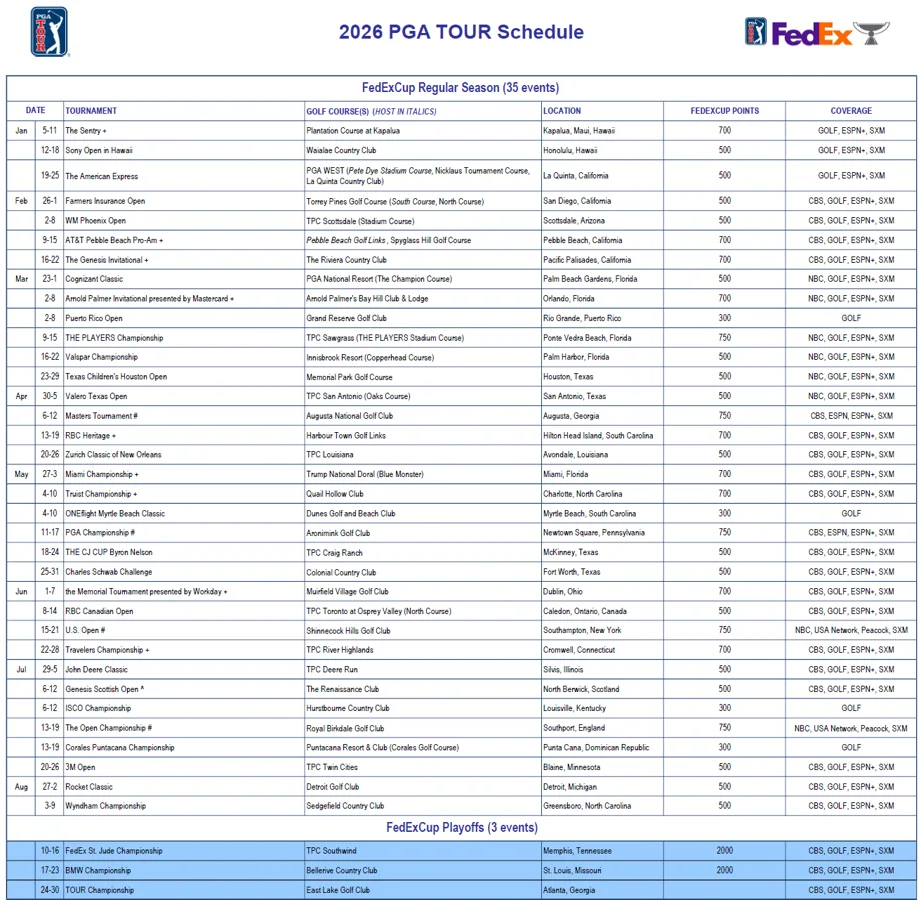

The announcement of the 2026 PGA Tour schedule has stirred discontent among several members, especially due to the introduction of a ninth Signature Event. This new tournament, the Miami Championship, will take place at Trump National Doral but currently lacks a title sponsor. The PGA Tour‘s decision to expand its lineup of Signature Events, designed to offer lucrative $20 million prize funds to a smaller field of 70 players without a halfway cut, has fueled the ongoing PGA Tour 2026 schedule controversy.
These Signature Events primarily benefit elite players, creating a divide within the Tour as many of those excluded from these fields find the changes unwelcome. The increased focus on high-reward tournaments for top-ranked golfers has generated frustration among long-standing players who feel sidelined.
Concerns Raised by Robert Garrigus and James Hahn
Veteran players Robert Garrigus and James Hahn expressed strong opinions not only about the new Signature Event but also about the broader direction of the PGA Tour. Hahn questioned the choice of location and timing, stating,
“An extra signature event without a title sponsor at a course owned by the President. This is a joke, right?”
—James Hahn, PGA Tour Player. Garrigus, practicing alongside Hahn, voiced his bewilderment with a blunt question:
“What is happening to our Tour?”
—Robert Garrigus, PGA Tour Player.
Both players highlight unease about the Tour’s increased financial commitments to a small group of top performers, which they believe undermines the broader player base. Hahn candidly joked about sponsor invites, referencing fellow player Jordan Spieth:

“So, does that mean one more sponsor invite for Jordan Spieth? Tell Spieth I’ll play him for any amount he wants. I win, I get his five invites to the signature events.”
—James Hahn, PGA Tour Player.
Spieth is expected to follow Rickie Fowler in receiving numerous sponsor exemptions after finishing outside the top 50 in the FedEx Cup standings. Fowler was granted invitations to six of the eight Signature Events last season and even made The Open, finishing in the top 50. However, that move upset other players who felt opportunities were taken away from those with higher rankings.
Criticism of the Player Impact Program and Tour Management
PGA Tour CEO Brian Rolapp praised the schedule, which was developed with input from the Player Advisory Council, but his optimism was not shared by all. Hahn criticized the Tour’s approach to planning, suggesting it lacks foresight.
“They just put it together and work it out as the problems come,”
he said.
“They’ve made so many mistakes at this point that it’s no surprise they’re still working out the kinks to the FedEx Cup.”
—James Hahn, PGA Tour Player.
Hahn also condemned the now-defunct Player Impact Program (PIP), which rewarded top players with large sums for less tangible contributions. He argued the initiative harmed the Tour’s sustainability:
“How do you bring something up that affects our Tour in a bad way and call out the BS without sounding like you’re complaining? Every time I say something like that, whoever wants to run their mouth says, ‘Play better.’ It has nothing to do with play better. I’m talking about our business.”
—James Hahn, PGA Tour Player.
He continued,
“I’m not talking about me making more money, I’m talking about our business being sustainable. We’re talking about giving away $200+ million in three years for what? For nothing. The PIP was the biggest joke.”
—James Hahn, PGA Tour Player.
Division Between Elite and Rank-and-File Players Poses Challenges
As two players nearing the latter stages of their careers, Garrigus and Hahn’s dissatisfaction is believed to reflect a wider frustration among lower-ranked participants. This division between the Tour’s leadership and many of its members could challenge Brian Rolapp’s efforts to rebuild trust within the PGA Tour’s community. With fewer opportunities and significant prize money concentrated among an exclusive group, questions remain about the Tour’s long-term sustainability and fairness.
The PGA Tour 2026 schedule controversy exemplifies larger tensions as the organization balances lucrative elite events against the needs of the broader field. How the Tour responds to these concerns will shape its future and could determine whether it maintains unity or faces further dissent.