

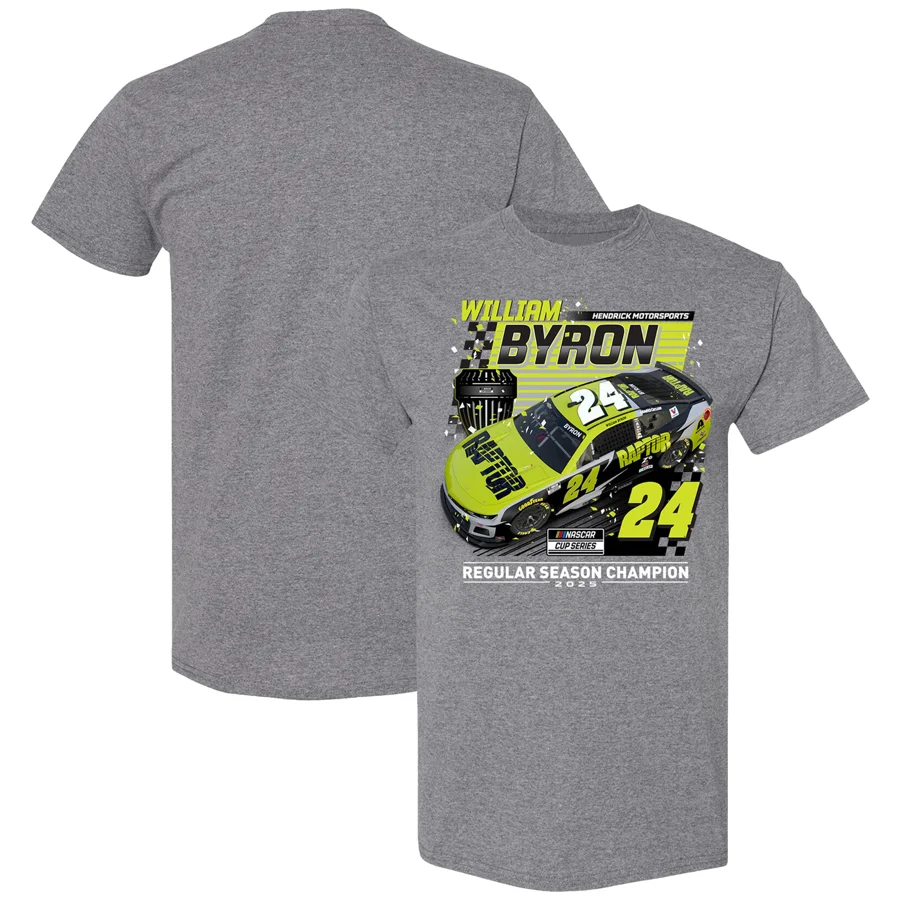
William Byron of Hendrick Motorsports secured the 2025 Regular Season championship following last week’s race at Richmond Raceway, edging out his teammate Chase Elliott, who was the closest competitor. Byron’s victory awarded him 15 bonus points for the NASCAR playoffs on top of points earned from two race wins. Despite this achievement, veteran driver Kevin Harvick expressed skepticism about Byron’s consistency throughout the season.
During a recent episode of the Happy Hour podcast, Kevin Harvick analyzed Byron’s performance, noting that while the No. 24 Chevrolet driver claimed two race wins and placed in the top 10 in 13 out of 25 events, he also finished outside the top 20 in eight races. Harvick sees this as evidence of an uneven season rather than dominant consistency.
Harvick also compared Byron’s record to other leading competitors such as Kyle Larson, Christopher Bell, Denny Hamlin, and Shane van Gisbergen, all of whom have secured more race wins than Byron. He argued that the introduction of the Next-Gen car has resulted in generally more inconsistent seasons for drivers across the board, contributing to fluctuating performances within the playoff contenders.
“When I look at it, William Byron has won two races. When I think of his season as a whole, it’s been pretty up and down. But I think they performed pretty well. I think Next Gen Racing, in general, is more inconsistent than what we’ve been used to in the past.” —Kevin Harvick, Happy Hour podcast
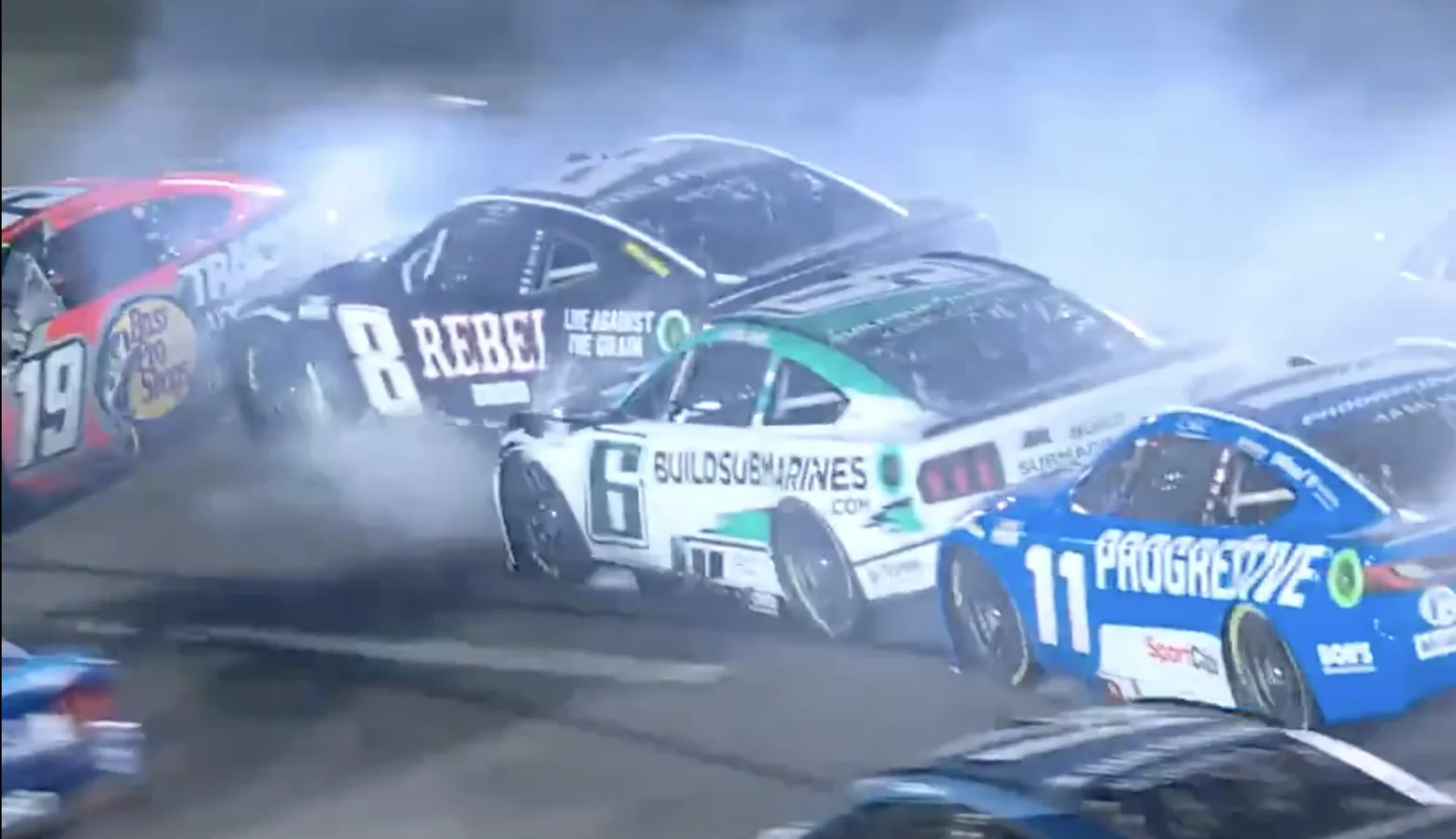
One key factor contributing to this inconsistency is the intensifying level of competition, which has tightened the margins among top-tier drivers. With closer racing and more unpredictable outcomes, many of the sport’s biggest names have experienced increased instances of DNFs (Did Not Finish) and off weeks. Only Byron and Denny Hamlin have successfully mitigated the impact of these setbacks, with Byron ultimately taking home the title.
“I think you’re going to have more DNFs, you’re going to have more off weeks, and how do you minimize those off weeks? …As I look at this list, I can’t pick anybody out that’s had a better regular season. …I think that William Byron and Denny Hamlin have probably been the best two cars.” —Kevin Harvick
What Sets William Byron Apart According to Kevin Harvick
Kevin Harvick further detailed on the podcast that Byron’s accumulation of stage points played a crucial role in his championship success. Earning points during different segments of a race helped Byron maintain a strong position in overall standings, compensating for those races where his finishes may have been lower.
Byron tallied 241 stage points this season, significantly more than Ryan Blaney, the second-highest stage points earner with 217. Harvick emphasized that a high number of stage points indicates consistent presence at the front of the pack throughout races, reflecting Byron’s ability to stay competitive even on challenging days.
“Here’s the thing that stands out to me with William Byron winning the regular season championship: he’s got 241 stage points. The driver with the second-most stage points is Ryan Blaney with 217, and Harvick said that when a driver has that many stage points, that means the driver is running up front consistently.” —Kevin Harvick
Although Byron’s eight finishes outside the top 20 drew criticism, Harvick admits that such results do not negate his overall consistency. The veteran’s criticism centers more on how Byron managed to claim the championship despite winning fewer races compared to others who posted more victories or secured more front-row starting positions.
Next-Gen Racing Raises Competition and Uncertainty
The broader implication of Harvick’s analysis touches on the impact of NASCAR’s Next-Gen car platform on the nature of competition itself. The technology’s introduction appears to have increased variability in performance, making it harder for any single driver to dominate without fluctuations.
This environment has led to more dynamic race outcomes, where strategic use of stage points and minimizing poor finishes become vital components for securing a regular season title. Byron’s success in this new landscape highlights adaptation to evolving racing formats as much as raw speed or race wins.
As the 2025 playoffs approach, the debate over whether Byron’s path to the regular season championship reflects true dominance or circumstantial advantage underlines a complex narrative facing many drivers and fans alike. The championship battle appears far from settled, especially with drivers like Denny Hamlin and others still poised to challenge in upcoming events.