
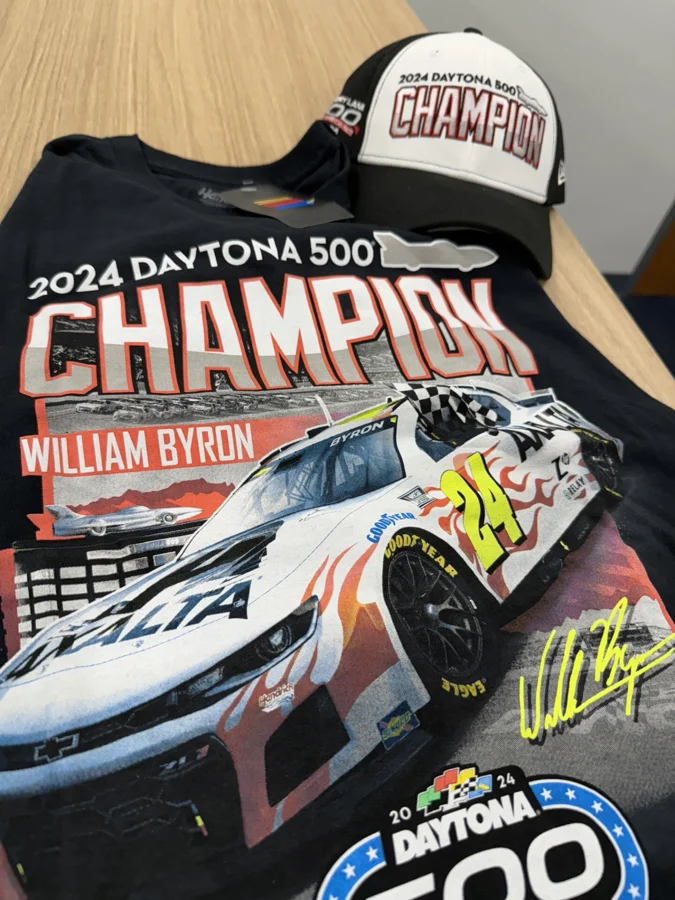

William Byron, the driver of the No. 24 Hendrick Motorsports Chevrolet and the 2025 NASCAR Cup Series Regular Season Champion, spoke with media representatives prior to the qualifying session at Daytona International Speedway. Byron, a three-time winner at Daytona, including consecutive DAYTONA 500 victories, discussed his experience at the renowned track known as the World Center of Racing. His insights offered a look into both his past achievements and strategic outlook for the upcoming NASCAR season.
Reflecting on the DAYTONA 500 Champions Walk of Fame Experience
Byron shared his feelings about visiting the DAYTONA 500 Champions Walk of Fame recently.
“Yeah, it’s really cool. I think just seeing that Walk of Fame that they have was really special; get to do it last year and see your handprints and footprints, and then just kind of getting a chance to see your name with a lot of meaningful names that have won the DAYTONA 500. Just seeing both of them there was awesome and seeing the car for the first time. I love that paint scheme. I think that’s really our best paint scheme. It just looks really nice, and yeah, it was fun. Good to remember that weekend and everything.” —William Byron, NASCAR Driver
The occasion left a lasting impression on Byron as he reflected on joining the ranks of legendary DAYTONA 500 winners and the pride that came with viewing his personalized handprints and car paint scheme displayed in a revered setting.
Navigating the High Stakes of Daytona’s Desperate Drivers
Byron addressed the palpable tension among drivers attempting to secure their place in the playoffs, acknowledging the desperation that influences decision-making late in the race. He described the atmosphere intensifying approximately 20 to 30 laps from the finish, where competitors make riskier moves in a bid to lock in victories and playoff berths.
Byron remarked on the mindset behind these aggressive behaviors, noting that while he understands the urgency driving such actions, he doubts they often lead to smarter choices. His own approach, he explained, emphasizes patience and clear-headed racing to reach the checkered flag rather than risky maneuvers that could jeopardize the outcome.
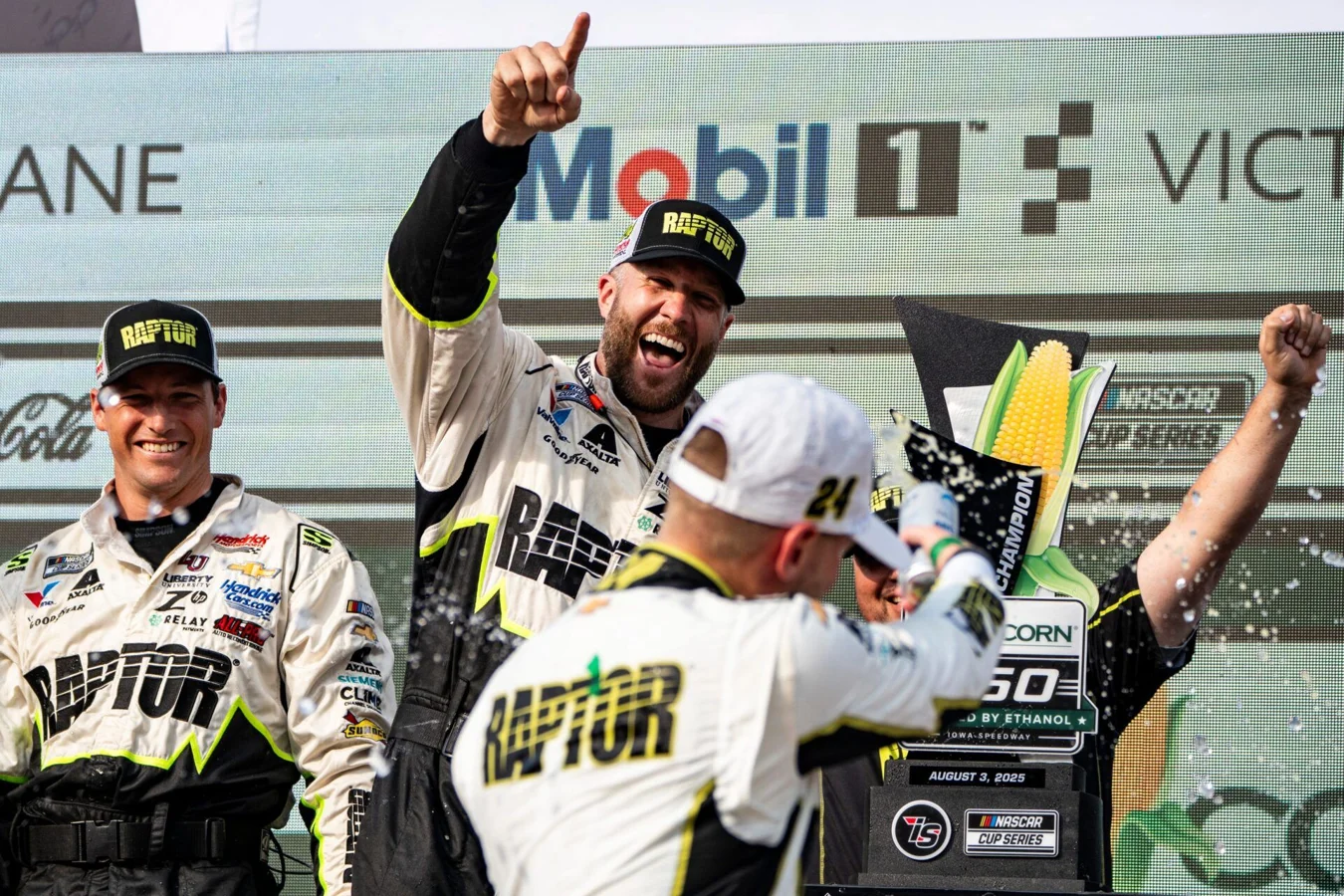
He also pointed out that drivers free from playoff pressure, such as himself this season, have the advantage of a more relaxed mentality, which often translates into better race management and fewer avoidable wrecks.
Byron recalled his 2020 Daytona win, where team strategy and well-timed execution during the final restart helped secure victory amidst tough competition from notable drivers like Jimmie Johnson and Matt DiBenedetto.
William Byron’s Strategy and Preparation for the Upcoming NASCAR Schedule
Discussing the recently released NASCAR Cup Series schedule for 2026, Byron revealed that he examines the calendar to understand the rhythm of the season rather than purely focusing on track details or dates far in advance. He pays special attention to environmental factors such as the weather conditions expected at various venues throughout the year.
For example, Byron noted that the North Wilkesboro race, potentially scheduled as a day race in July, could present extreme heat challenges similar to those he experiences living in Charlotte, North Carolina, where temperatures often reach near 100 degrees.
He also highlighted the importance of preparing differently for conditions like those at Homestead, which will serve as the championship round venue, especially given the significant time gap since the last race there. Byron mentioned the possibility of a testing session to reacquaint drivers with the track to reduce the learning curve during the crucial championship event.
The Balance Between Individual Success and Team Goals at Daytona
Byron addressed the delicate dynamics involved in competing alongside teammates, such as Alex Bowman, particularly when both drivers have playoff stakes or championship ambitions. He acknowledged the desire to win the race individually but noted the necessity of navigating team relationships carefully.
He said that while the goal is to advance himself on the track, he must also be mindful not to inadvertently benefit competitors or teammates unless strategically appropriate. The current race package, which often produces two-by-two racing formations, complicates this balance since pushing another car is necessary to gain positions.
Byron emphasized how the race situation dictates whether aiding a teammate or driving solely for personal advantage is the wisest move, and he looks to pit cycles and race flow to optimize these decisions.
Fuel Management: A Critical Aspect of Racing at Daytona
Fuel conservation remains a significant factor in race strategy, especially given the potential for overtime finishes and the unique pacing of races at Daytona. Byron discussed how drivers must carefully manage throttle input to maximize miles per gallon, aided by detailed data provided to engineers through the SMT system.
He explained that leading the entire race is seldom practical, as pitting for fuel typically causes drivers to lose track position. Instead, the focus shifts to balancing fuel savings with strategic positioning for key stages and late-race surges after pit stops.
Byron characterized fuel management as an art form, blending efficiency with timing aggressive moves when the race opens up. The chaotic nature of pit road sequences, where drivers make sudden blocks and high-speed maneuvers, demands sharp decision-making to avoid collisions.
“Yeah, for sure. If we can win a stage, great. We don’t need second place points, so we’re probably going to be smart about that and how we position for that. But yeah, if we can go out and win a stage, that would be amazing.” —William Byron, NASCAR Driver
Complexities of Teamwork During Playoffs at Daytona
When questioned about the simplicity of Hendrick Motorsports’ three-car lock on the playoffs and whether that translated into straightforward teamwork on track, Byron was quick to clarify that strategy is far more nuanced. The nature of these races, combined with playoff implications for many drivers, creates a complicated competitive environment.
“Yeah. It’s not that easy. And I don’t know if that’s the right tactic either. This thing is very complicated. You just try to be conscious of that. It’s no secret, right? Like everyone’s going to have some sort of playoff implication tomorrow night, so it’s going to be very strategic throughout the field I’m sure on who’s helping who.” —William Byron, NASCAR Driver
Looking Ahead to the Playoff Round at Darlington, St. Louis, and Bristol
Byron offered his perspective on the first round of the playoffs, which will include races at Darlington, St. Louis (Gateway), and Bristol. He identified Gateway as a track where his team has faced challenges in the past and acknowledged the benefit of recent testing efforts by teammate Kyle Larson to gain useful data.
Bristol and Darlington, according to Byron, remain consistent tracks with conditions similar to previous races, making them somewhat familiar tests for his team going into the playoffs.
Preferred Positioning in Last-Lap Situations at Daytona
Byron weighed the pros and cons of leading versus trailing during the final lap of a race at Daytona. He suggested that while leading offers the advantage of controlling the pace and when cautions are likely to occur, it can be difficult to defend that position due to the aerodynamic drag of the current race cars.
He concluded that the optimal approach depends on the specific race situation, including how many competitors remain and the overall race energy.
Appreciation for New Off Weekends in the 2026 NASCAR Cup Series Schedule
Discussing the addition of two off weekends in the upcoming 2026 schedule, Byron expressed positive sentiments about these breaks improving the overall flow and health of the season for drivers and crew members alike.
“I mean, it’s great. I feel like it kind of breaks things up a little bit. I don’t, I don’t remember exactly. I think there’s one in August or something. So yeah, I think that’s good for the guys. We’ve been rotating guys through the summer. A lot of our road crew has been different… pretty much every race we’ve had a sub in some way, so there’ll probably be a little less of that, I guess, with the off week. But yeah, that’s been the trickiest challenge of going from April to now is just trying to kind of keep everyone fresh.” —William Byron, NASCAR Driver
Byron’s remarks highlight how the extended season and demanding schedule make maintaining team freshness and consistency a difficult but essential task.