


Breece Hall entered the 2024 fantasy football drafts as a consensus top-three running back but failed to meet expectations. As fantasy managers look ahead to the Breece Hall fantasy draft 2025 cycle, questions surround whether offensive improvements and a revamped offensive line can help him regain elite status.
Despite being drafted as the overall RB2 or RB3 in 2024, Hall delivered just 15.1 fantasy points per game, a disappointing output given his prior trajectory. His rookie season in 2022 showed promise before a torn ACL halted his progress, but through seven games he was averaging 16.4 PPG. Returning cautiously in 2023, Hall’s performance improved significantly late in the season, averaging 17.1 PPG with a notable 33.2 PPG over the last three games.
These flashes of brilliance raised expectations for 2024, with many forecasting Hall as a potential overall RB1, projecting him to surpass 20 PPG. Instead, Hall’s efficiency declined, and although his snap share increased slightly, his actual production slipped.
Notably, Hall’s target share dropped from 17% in 2023 to 13.8% in 2024, even though he led the league in routes run. His yards per route diminished from 1.74 to 1.14, signaling a concerning dip in effectiveness despite a solid volume of opportunities. The Jets’ backfield also became more crowded late in the year, with Braelon Allen and Isaiah Davis receiving meaningful touches, complicating Hall’s path to elite performance.
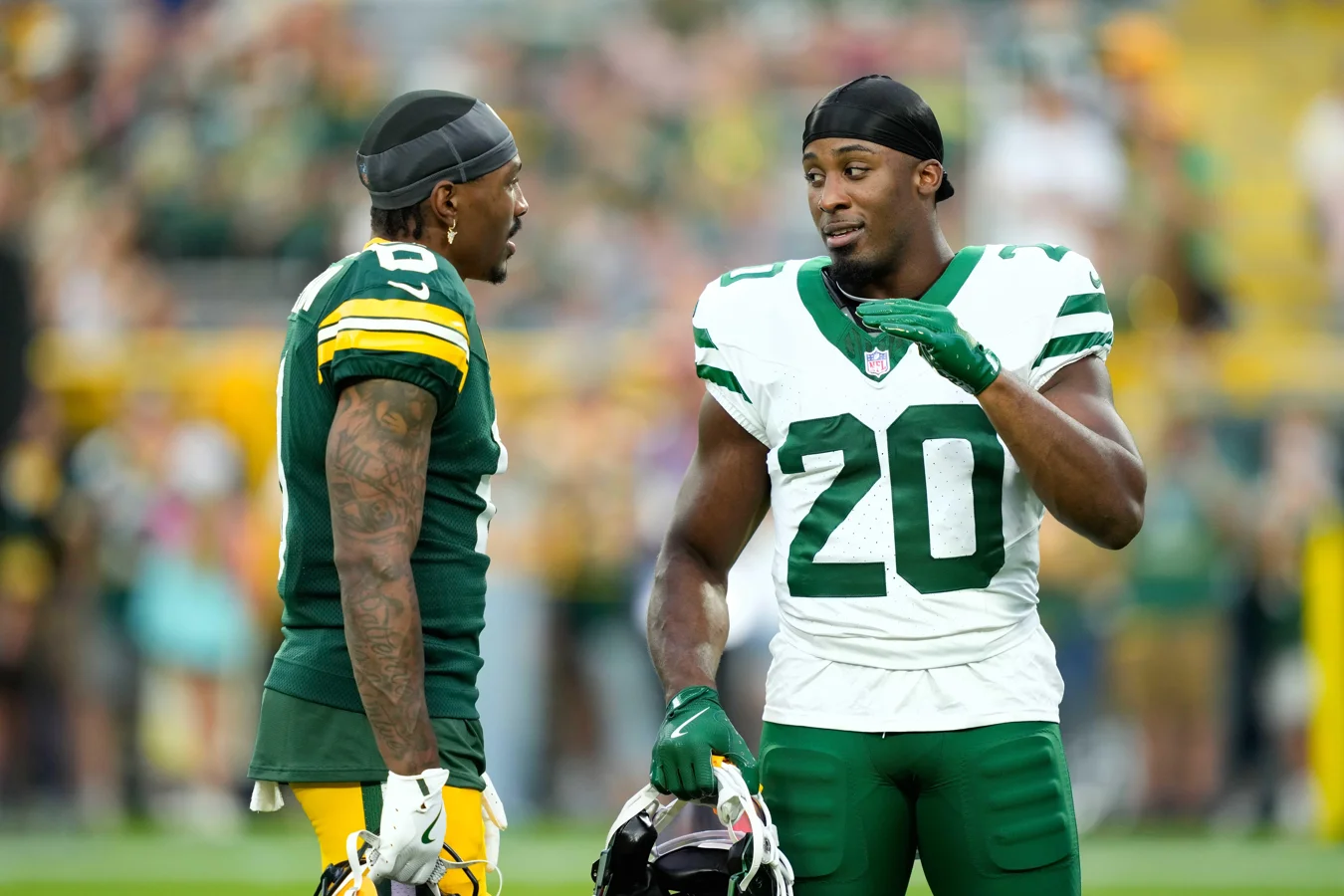
“I would say that we have three running backs on this team that we’re gonna utilize as much as possible”
—Aaron Glenn, Jets Head Coach
“It could be a 1-2-3 punch with the guys we have”
—Aaron Glenn, Jets Head Coach
The Impact of the Jets’ New Offensive Scheme Under Justin Fields
The Jets will debut a new look offense in 2025 with Justin Fields stepping in as quarterback. Fields’ running style heavily influences offensive play-calling, averaging between 24.6 to 26.7 rushing attempts per game in recent seasons, which limits passing volume. In contrast, Aaron Rodgers averaged 34.3 pass attempts per game last season, providing far more opportunities for a running back to catch passes out of the backfield.
This shift presents a mixed picture for Hall. While he has the raw talent to excel on the ground, the potential reduction in receiving opportunities may hurt his overall fantasy output. To compensate, Hall will need to deliver increased rushing efficiency and find the end zone frequently—outcomes that fantasy managers prefer not to depend on heavily.
Currently, Hall’s average draft position (ADP) places him as the RB13, usually selected in the third round. This seems a reasonable investment given his upside, especially considering the lack of highly appealing wide receivers available in those rounds. However, his role could either solidify as the lead back, dominating touches, or devolve into a timeshare, limiting his ceiling. This uncertainty tempers enthusiasm about drafting him early, even as expectations acknowledge his exceptional talent.
Expert Perspective: Frank Ammirante’s Take on Breece Hall
Fantasy analyst Frank Ammirante advises caution when selecting Breece Hall in 2025 drafts. He points out that new Jets head coach Aaron Glenn plans to use a committee approach reminiscent of Jahmyr Gibbs and David Montgomery’s usage patterns, potentially ceding red zone carries to Braelon Allen, who projects as a powerful goal-line runner.
With Justin Fields at quarterback, Ammirante expects the Jets to run a heavy ground attack, which may limit Hall’s reception volume despite his skills as a receiver. Fields’ rushing tendencies suggest a low-volume passing attack, reducing targets for Hall compared to prior seasons.
Given these factors — a probable loss of goal-line carries and a low-scoring team offense — Ammirante prefers drafting James Cook, who plays in a more productive offense, over Hall. He suggests waiting a round or so to select backs with more favorable situations.
Balancing Risk and Reward in Drafting Breece Hall
Drafting Breece Hall for 2025 represents a calculated risk. While he possesses the talent and past performance to justify a higher ranking, uncertainties surrounding his role in a multi-back committee and potential reductions in receiving opportunities require careful consideration. The presence of Braelon Allen and Isaiah Davis complicates Hall’s ability to command dominant usage, a key factor for an elite RB1 fantasy campaign.
Justin Fields’ quarterback play also reshapes the Jets’ offensive dynamics, possibly limiting passing chances but increasing rushing attempts. This unique setup places added pressure on Hall’s rushing efficiency and touchdown production to meet high fantasy expectations.
Ultimately, fantasy managers must weigh Hall’s upside against the unpredictability of his workload and efficiency. While his current ADP around the third round seems fair for the potential reward, some may opt to select backs in steadier roles, especially in offenses with better passing volume. Hall’s 2025 outlook remains one of untapped potential, making him a compelling but cautious choice in upcoming drafts.