
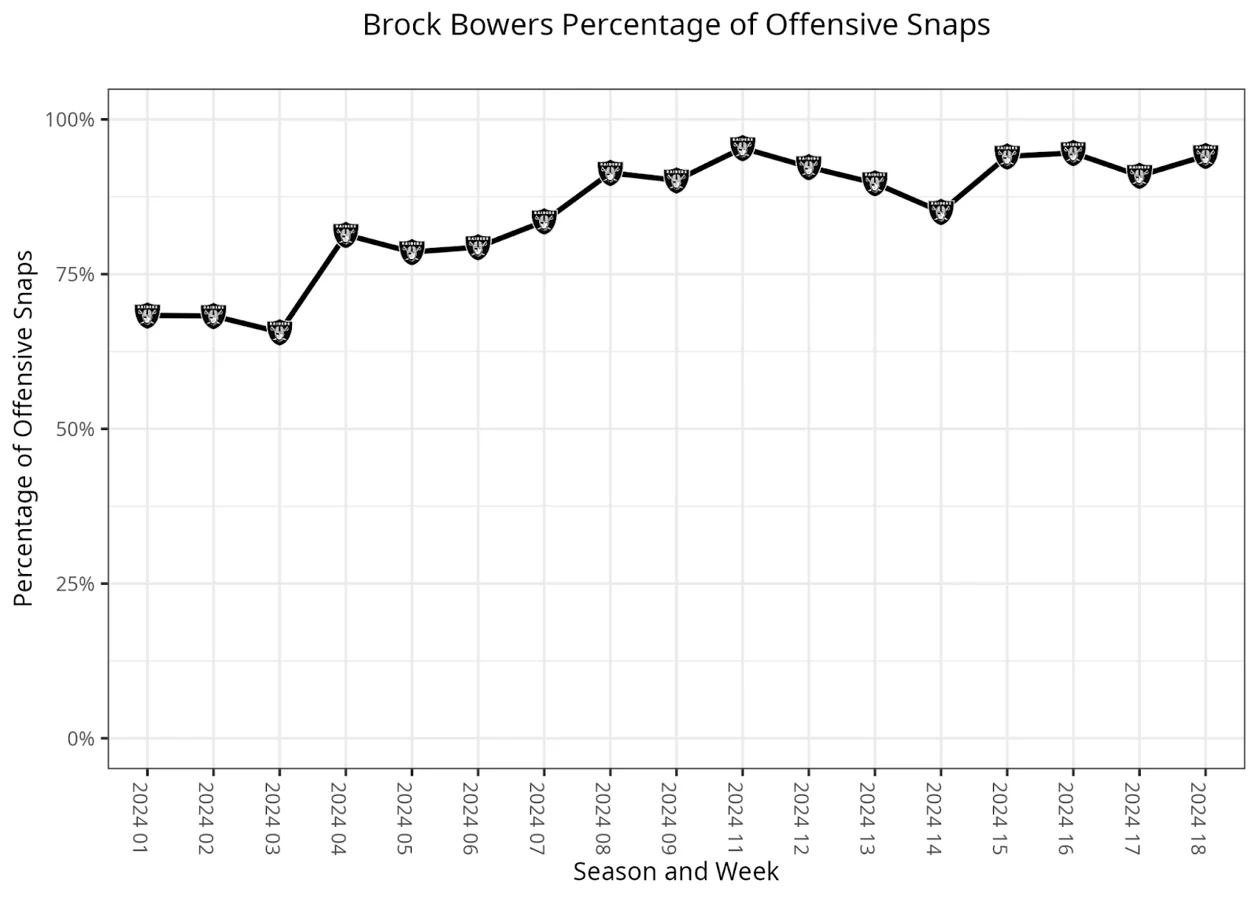

Following three years of impressive college production, with over 12.5 yards per catch and scoring on nearly 15% of his receptions at Georgia, Brock Bowers entered the NFL with high expectations. The Las Vegas Raiders selecting him 13th overall in 2023 validated his elite profile, but his rookie season far exceeded expectations, registering 112 catches for 1,194 yards and five touchdowns.
Las Vegas has revamped its offense for the 2025 season by upgrading at quarterback with Geno Smith and introducing rookie running back Ashton Jeanty to provide a boost to the running game. This offensive balance raises the question: can Bowers sustain or even surpass his rookie year success to approach the elite levels of tight ends like Travis Kelce in fantasy football?
Assessing Whether Brock Bowers Deserves a High Draft Spot
At just 22 years old, with a birthday in December, Brock Bowers has already set several NFL rookie records. His rookie reception total is the highest for a tight end in NFL history, beating Puka Nacua’s 2023 rookie record by four catches. He also set franchise records for the Raiders in both receptions and receiving yards, surpassing legendary marks held by Mike Ditka.
Despite undeniable talent and clear production, fantasy managers face a dilemma regarding how early to draft Bowers. In many leagues, he is being selected in the late second round, a costly investment for the tight end position, especially considering the depth at the position this year.
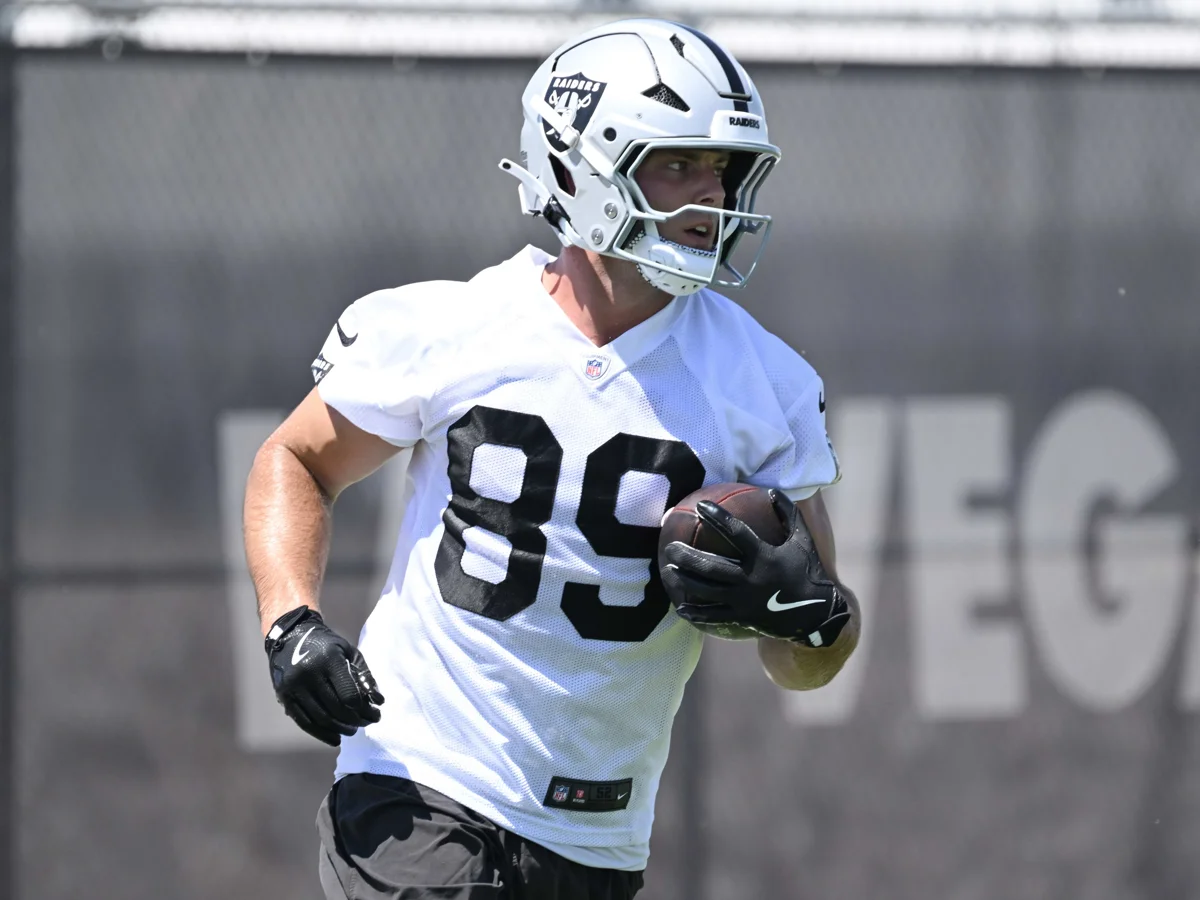
The tiers of tight ends currently appear stratified, with Bowers and McBride leading the top tier, George Kittle in a tier of his own, and a cluster of players including Sam LaPorta, T.J. Hockenson, and Travis Kelce next. Beyond those, there is a large group of tight ends valued similarly.
The critical question is whether it makes sense to spend a second-round pick on Bowers or to wait and select a proven player like Kittle later or draft a promising rookie tight end several rounds down. The answer is not straightforward.
From a historical perspective, rookie tight ends who average more than 40 receiving yards per game have had mixed success in maintaining that level, so managers must weigh potential upside against opportunity cost. High-floor players are available later in drafts, which complicates locking in on Bowers early.
For comparison, Ladd McConkey, with a similar average draft position, presents a high-upside alternative. McConkey, a rookie for the Chargers, has shown capability at this level and benefits from a more stable quarterback situation and less competition for targets than Bowers. The Raiders have undergone significant roster changes, which adds uncertainty to Bowers’ outlook.
It is also notable that Bowers will face the Chargers’ defense twice this season, a unit ranked sixth against tight ends last year, while McConkey will face the Raiders’ less formidable defense twice. This defensive matchup dynamic could impact production.
At running back, players like De’Von Achane and Bucky Irving offer appealing floor and upside, especially as running back depth diminishes quickly beyond the early rounds. Given this, some fantasy managers might prefer to invest in these positions over an early tight end pick like Bowers.
While Bowers undoubtedly remains a premier player at his position and is expected to stay productive through 2025 and beyond, there are legitimate concerns. Possible defensive adjustments after a full year of tape on him and uncertainty about efficiency in his second season create risk. For example, his catch rate dropped from 76% in the first divisional meetings to 54.5% in subsequent matchups last year, suggesting defenses are adapting.
Ultimately, draft strategy and roster construction will guide decisions. If Bowers falls below his projected draft cost, he becomes a more compelling selection. However, counting on him to replicate last year’s outstanding numbers comes with some optimism that may not be fully justified.
Expert Perspective on Brock Bowers’ Fantasy Projection
Fantasy analyst Frank Ammirante highlights that Bowers had one of the best rookie tight end seasons in NFL history, with 112 receptions, 1,194 yards, and five touchdowns. Despite these numbers, Bowers’ fantasy draft position places him ahead of several proven top-tier wide receivers like A.J. Brown and Drake London, as well as notable running backs including Chase Brown, Bucky Irving, and Jonathan Taylor.
In half-point PPR formats, Bowers averaged 12.2 fantasy points per game during his rookie year, whereas Taylor posted 16.8 points per game, raising the question of whether the positional advantage Bowers offers is worth compromising overall scoring potential.
Another factor to consider is the Raiders’ offensive approach. Last year, the passing game was heavily skewed, leading to more targets for Bowers in a broken system. With Ashton Jeanty expected to improve the running game and promote a more balanced offense, the volume for Bowers may decline, potentially impacting fantasy production.
Implications for Your 2025 Fantasy Football Draft Strategy
Determining Brock Bowers’ value for 2025 fantasy drafts requires a nuanced look at his extraordinary rookie performance and the shifting offensive landscape of the Raiders. While his talent and upside are undeniable, the cost of selecting him in the second round demands careful consideration against other high-upside and stable options available at wide receiver and running back.
Matchups, offensive balance, and roster composition will influence Bowers’ fantasy upside, but the greater efficiency concerns and defensive adjustments make taking him at or near his average draft position a speculative move. If he slides down the draft board, he becomes significantly more attractive for fantasy managers.
As the 2025 season unfolds, watching how Bowers adapts to increased defensive attention and a more balanced offense will be key to determining if he can join the ranks of elite tight ends who justify an expensive fantasy roster spot or if managing opportunity cost will steer drafters toward other positions.