
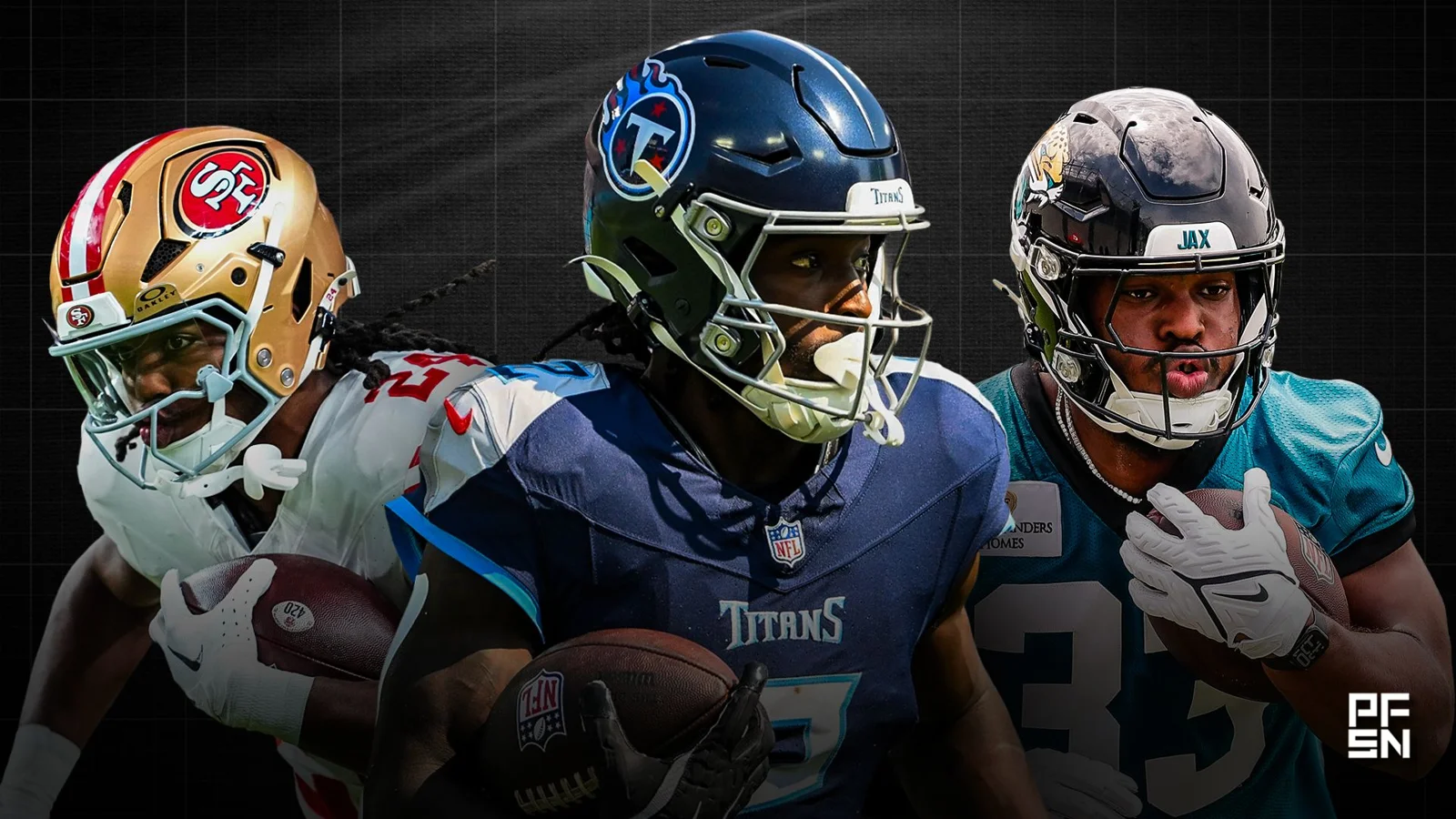

The Tennessee Titans transitioned from a projected shared backfield to a dominant usage of Tony Pollard in the previous season. As the team aims to balance the workload more evenly this year, fantasy football managers face the question of whether the Tyjae Spears fantasy football draft is a worthwhile late-round investment. Spears, who operated in a supporting role behind Derrick Henry as a rookie, could see increased opportunity despite Pollard’s strong presence.
Spears averaged 9.1 fantasy points per game as a rookie while commanding just 34.8% of the backfield opportunities. With Henry no longer on the roster, expectations were that Spears would naturally step up to a larger role, even with Pollard joining the team. However, Pollard emerged as the favored back, and Spears’ snap share only modestly improved to 42.5%, while his opportunity share edged up slightly to 38%. These figures include the final three games of the season when Spears played about 60% of snaps and notably earned 24 offensive opportunities in Week 17 before a concussion sidelined him.
Spears’ Efficiency and Performance Metrics
While the volume was limited, Spears demonstrated notable efficiency. His 4.11 yards created per touch ranked 11th across the league, highlighting his ability to generate significant yardage whenever he had the ball. Additionally, despite his 9.9% target share falling short of Pollard’s 12%, Spears’s 1.81 yards per route run substantially outperformed Pollard’s 1.08. This efficiency contributed to Spears averaging 9.5 fantasy points per game, representing only a slight increase from his rookie campaign despite hopes for a breakout sophomore season.
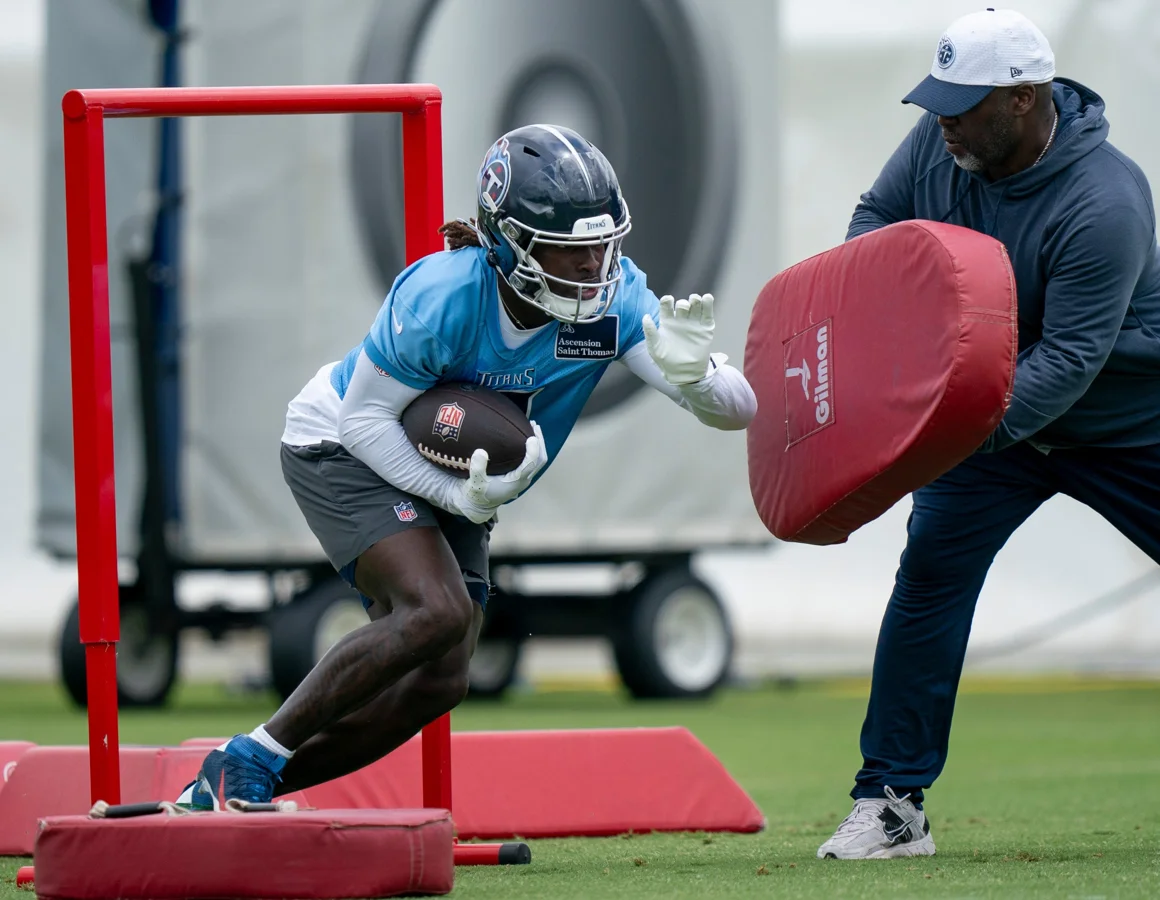
The upcoming fantasy football season reflects a clear hierarchy within the Titans’ backfield: Pollard comes off as the presumptive starter with an average draft position (ADP) near RB28, whereas Spears is generally selected much later, around RB41. Yet, the Titans’ head coach Brian Callahan has suggested a desire to share the workload more evenly between the two backs this season.
“I think in a perfect world, it’s a healthier division of labor… I like, really, both of those players a lot. I think we can do a better job of managing that load so they both play a little more evenly.”
—Brian Callahan, Head Coach, Tennessee Titans
Although coach optimism is sometimes met with skepticism from fantasy managers, Spears remains an intriguing player given his demonstrated upside. He is currently available at a value-priced ADP that reflects his floor rather than his ceiling, making him a compelling option for managers seeking potential breakout value.
Potential Scenarios That Could Boost Spears’ Fantasy Value
Spears’s value in fantasy football largely depends on his usage. At his current drafting cost, he represents a viable Flex play with upside. If Tony Pollard were to sustain an injury, Spears demonstrated last season that he can shoulder a significant workload, pacing towards nearly 30 touches in a game where Pollard was absent. In such a scenario, Spears would likely emerge as a volume-based RB2 in fantasy terms.
Even without an injury to Pollard, a more balanced distribution of carries could elevate Spears’s fantasy output beyond his current draft position. If Spears manages to outperform Pollard in the backfield competition—although this may be an optimistic expectation—he could serve as a weekly RB2 or solid Flex option at a much lower draft cost than traditional starting backs.
Expert Analysis: Frank Ammirante’s Perspective on Spears’ Outlook
Throughout the offseason, fantasy analyst Frank Ammirante identified Spears as one of the top handcuffs with independent value. He anticipated an improved Titans offense under the leadership of new quarterback Cam Ward, with Spears sharing duties alongside Pollard in a committee approach.
However, Spears’s high ankle sprain heading into the season complicates his outlook. The injury is expected to cause missed games early in the regular season, casting uncertainty on his availability and effectiveness upon return. This has contributed to a notable dip in Spears’s ADP, while Pollard’s stock ascends as the projected lead back ready to carry the workload.
Ammirante expressed caution regarding Spears’s fantasy value due to the injury concerns and historical durability issues, which temper enthusiasm about his upside. Consequently, Ammirante favors other running backs available in Spears’s ADP range, such as Jordan Shipley, who serves as the clear secondary option behind Saquon Barkley and may represent a safer investment.
Weighing the Risks and Rewards Ahead of Draft Day
Tyjae Spears presents a classic risk-versus-reward scenario in the Tyjae Spears fantasy football draft conversation. With evidence of high efficiency and flashes of breakout potential, he offers upside for managers willing to target a late-round running back who might outperform expectations. However, injury risks and a backfield situation still controlled by Pollard dampen his certainty as a dependable starter.
Fantasy managers should consider Spears’s multiple paths to value: a potential injury to Pollard, a more balanced workload sharing, or a surprise leap over the incumbent. For those who value upside and can tolerate volatility, Spears might be a valuable addition to a roster, particularly as a bargain pick late in drafts. Following the Titans’ early-season usage and Spears’s health status will provide clearer signals on his fantasy viability as the season develops.