
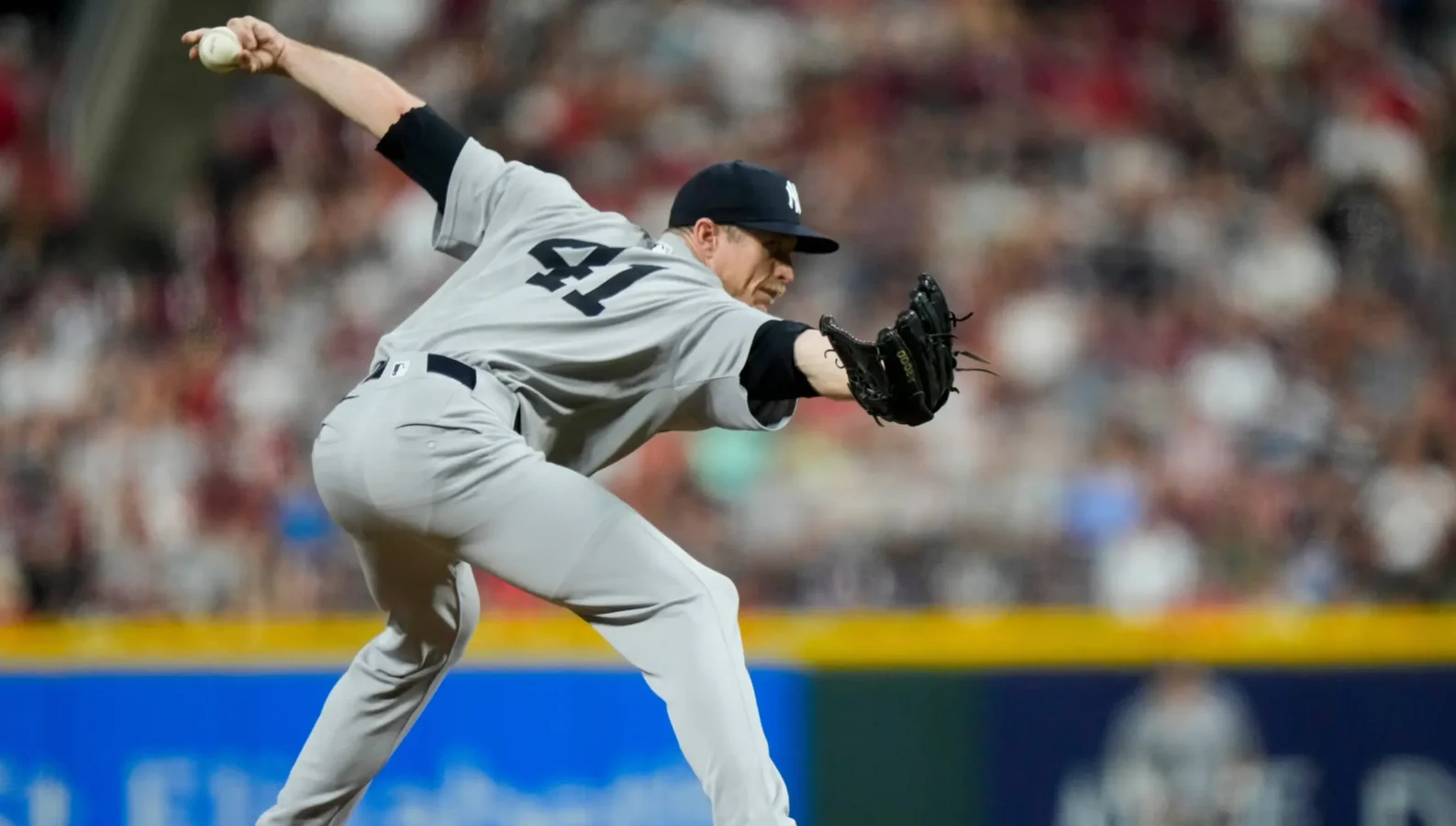

In Major League Baseball, speed on the mound is often equated with dominance, yet Tim Hill of the New York Yankees is rewriting that narrative. At 35 years old, this left-handed reliever is proving that velocity alone does not dictate success, as his sinker now averages 88.2 mph—a noticeable drop from 91.1 mph recorded four years earlier—without diminishing his impact on the game. This season, Hill’s unique mastery of the pitch is emerging as a defining feature of his role in the Yankees’ bullpen.
Significant Changes in Hill’s Sinker Movement
Despite the reduction in speed, the effectiveness of Hill’s sinker has increased substantially. According to FanGraphs data, the vertical drop of his sinker has grown from 34.9 inches in 2021 to 42.0 inches this year. This dramatic change positions him second among all pitchers in Major League Baseball for sinker vertical movement, just behind Tyler Rogers of the San Francisco Giants, whose pitch achieves a remarkable 53.1-inch drop. Hill himself finds this transformation somewhat puzzling and attributes it to natural changes over time rather than deliberate adjustments.
I think things just change from year to year,
Hill explained.
Your body changes as you get older. Another year of throwing baseballs. [Stuff] just changes.

Adaptation and Strategy Define Hill’s Role on the Mound
Hill’s sinker dominates his pitching selection, accounting for roughly 80% of his deliveries, which underscores how pivotal this pitch is to his effectiveness. His recent outings, including a performance where he quickly retired two batters against the Baltimore Orioles, highlight his reliance on this pitch. Discussing his evolving pitching approach, Hill remarked,
I would say the sinker has been more depth-y, but the four-seam hasn’t had as much lift. You’ve got to deal with what you’ve got.
This statement reflects his pragmatic approach to the game, emphasizing adaptation amid the inevitable changes brought by age and physical condition.
Career Trajectory and Contributions to the Yankees
After beginning his MLB career with the Kansas City Royals in 2018 and subsequent release from the Chicago White Sox, Hill signed with the Yankees and has since become a reliable figure in their bullpen. Over 35 appearances this season, he has maintained a strong 2.45 ERA, providing vital support to the team’s pitching staff. His consistent performance has earned respect from both teammates and analysts, reinforcing his status as a valuable veteran presence.
Experience Shapes Hill’s Philosophy on Pitching
As Hill navigates the challenges of aging and sustaining performance, his experience deepens his understanding of pitching dynamics. While he recognizes a decline in the performance of his four-seam fastball, he remains committed to making the most of his abilities. Hill candidly shared,
In a perfect world, I’d still have the lift on the four-seam,
and added,
But again, everything has shifted down. You’ve got what you’ve got, and you have to make it work.
His perspective underscores a resilient, adaptable mindset essential for longevity in professional sports.
Implications of Hill’s Evolving Pitching Style for the Yankees
Tim Hill’s approach provides an important lesson: effective pitching does not always hinge on sheer speed. His success with a slower sinker that exhibits greater movement illustrates the value of control, pitch variation, and adaptation. As the Yankees continue their season, Hill’s unique skills could play a critical role in tight situations, especially given the highly competitive nature of the bullpen. Observers and fans are likely to monitor how he further refines this pitch and navigates the remainder of the year, representing a broader trend toward versatile pitching strategies in modern baseball.